Let’s Normalize Lube in Sexual Media!

It comes out of nowhere. I’m never expecting it. Why would I?

A reference to lube? In a mainstream piece of media? Really? Are you sure?

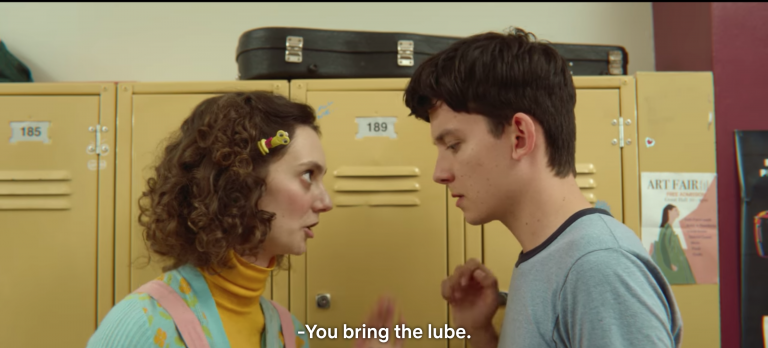
This time, it’s the character Lily on my favorite show of the moment, Netflix’s Sex Education. “I’ll bring the condoms,” she says, while negotiating an upcoming sex-date. “You bring the lube.”

There are a lot of parts of the queer, kinky, asexual-spectrum experience that are not represented accurately, or at all, in media depictions – so I’m not exactly surprised when on-screen sex has little in common with my real-life encounters. But lube seems like such an amazingly basic thing to leave out of fictional sex altogether. It would be like if an entire cinematic universe flat-out refused to acknowledge condoms exist (which, I suppose I should note, the mainstream porn “cinematic universe” often seems to do). It is not only inaccurate to many people’s experience of sex, but also irresponsible – because anyone learning about sex should simultaneously learn about lube.

It should show up in so many movies, books, shows, podcasts, and magazines we’ve consumed by the time we become sexually active that we add it to our carts when we drop by the drugstore to pick up condoms – a no-brainer. Its usage should be one of the standard pieces of advice we give to every teenager in sex ed classes and “the talk.” Doctors should bring it up alongside birth control when counseling soon-to-be-no-longer-virgins.

I argue this, in part, because I myself didn’t discover the wonders of lube until I was about 19. Sure, I’d read about it in the occasional erotica story or informative article, and had heard folks discussing it on the Sex is Fun podcast, but somehow I assumed that someone like me didn’t need to worry about it. I got plenty wet enough on my own, thank you very much.

But then I started reading sex blogs, and I noticed the fervor with which some of my favorite bloggers used lube every single time they masturbated or had sex. I bought a bottle of my own (water-based, IMO the best kind for beginners because of its versatility) and started using it religiously. And it, indeed, changed my life.

With the addition of a good lubricant, bad sex got better, and good sex became amazing. Masturbation was easier, and I did it more often because I no longer had to wait for my body to get all the way turned on before sliding a dildo inside me. It even worked well for external stimulation – I experimented with using it on my clit, labia, and nipples, and found it was far preferable to my previous “lube” of choice, spit. The clouds parted and angels sang upon my genitals.

This has been an overall theme in my process of learning about sex: even though (as a budding sex nerd) I always knew way more about this stuff than my peers did while I was growing up, it’s often been the simplest lessons that took me the longest to learn, and that I had to push myself the hardest to absorb. I was hesitant, for example, to touch my own clit during intercourse even though I knew it would feel good, I was initially scared to give handjobs or blowjobs because I worried being bad at them was a breakup-worthy offence, and somehow I didn’t realize just how much a good lube could improve my sex life until I tried one. Oh well – better late than never.

One of my big takeaways from this experience is that, as I said, we need to incorporate lube into more sex ed curricula and media. It would make people who don’t self-lubricate “enough” feel less broken, and people who have sex involving non-self-lubricating holes (including many queer and trans people) safer and more comfortable. It would go beyond the dry (no pun intended), safety-focused information so often given to teens and would teach them about pleasure – because as far as I’m concerned, additional pleasure is the main benefit of using lube. Maybe that’s why it’s so rarely talked about in comparison to condoms and birth control.

Kudos to Sex Education, not only for mentioning lube several times (including in a memorable scene where our sex-genius heroine Jean advises a young gay boy that water-based lube is the best choice for anal sex), but for mentioning it in the context of pleasure. Sex advice shouldn’t make sex seem scary or intimidating – and I really feel that spreading the good word about lube can go a long way toward diminishing sexual shame and raising the overall global quotient of sexual pleasure.


Thanks so much to the lovely folks at Promescent for sponsoring this post! They have a new collection of lubricants out, including a water-based one, a silicone-based one, an organic aloe-based one, and a peppermint-infused arousal gel.

The Fine Art of the Romantic Bruise Selfie

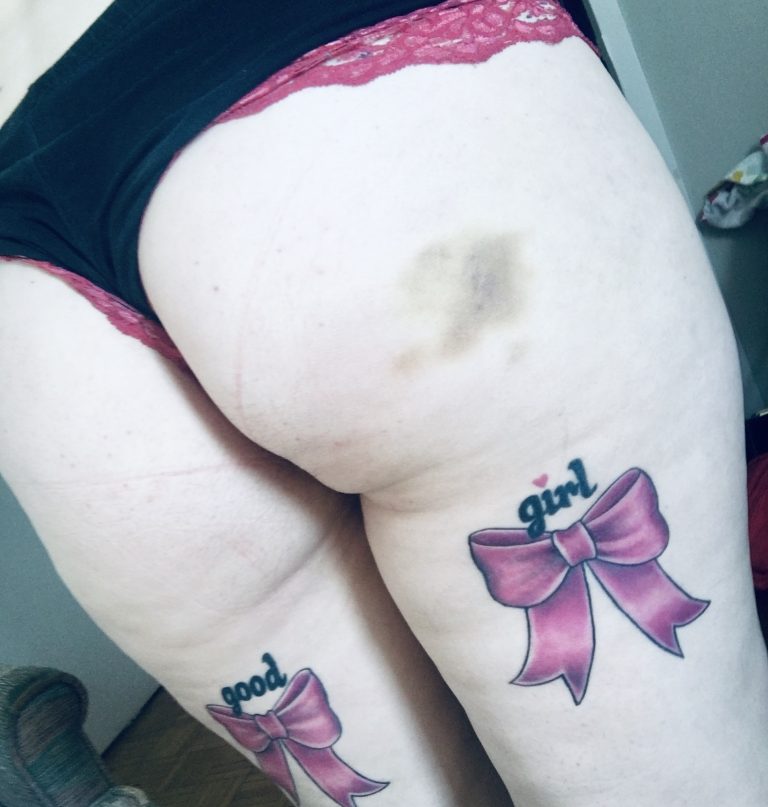
Content note: this post discusses, and contains photos of, bruising – only the happy, consensual kind, but bruising nonetheless. I encourage you to take care of yourself and skip this one if that’s tough subject matter for you.


“Aftercare” in kink is a somewhat nebulous concept, deliberately so: its definition varies from kinkster to kinkster, as do its purpose and scope. I know people for whom aftercare is, by necessity, a lengthy cuddling session filled with kisses and compliments – and I also know people for whom it is “Thanks for the good time; see ya!” followed by street meat and a volley of texts to a friend. It can be whatever you want it to be, as long as it works for everyone involved.

It’s important to remember, too, that aftercare can be an immediately-afterwards thing, or it can be a quite-a-while-afterwards thing, or both. The blissed-out cuddle sesh after a kink scene might satisfy your body and your snuggly neurotransmitters, but your rational brain might want additional aftercare a few days later in the form of, say, a text dissecting what went right and what went wrong. Sometimes those texts contain pictures of bruises.

It’s been said (I think by Jillian Keenan?) that bruises are to kinksters what hickeys are to vanilla people: tangible proof that a particular encounter happened, that someone likes you enough to have marked you in this very romantic and/or erotic way, that you are desired and desirable. Sending “bruise selfies” the day after a scene – like sending “hickey selfies” the day after a makeout session – can convey a flirty message: I like you and I like what we did together.

But bruise pics also serve another, more kink-specific function: they’re a way that a submissive or bottom can communicate more info, post-scene, to their dominant or top. “Even though what you did to me probably would’ve looked scary, dangerous, or even abusive to an uninformed outsider,” these photographic missives seem to say, “I loved it, I’m glad we did it, and I love the results.” Tops are being immensely vulnerable and brave when they communicate their desires and then act on them; sending bruise pictures is one way of showing them that their bravery was well-received and was worth it. This can teach them, over time, that it’s okay to be even more brave, even more often.

“It makes me proud of our time together and I love knowing they’re thinking of me.” -@stryker_von

“When topping, it’s an affirmation that they had a Really Good Time and are still thinking about it. That’s a great feeling! As a bottom, it feels like a little wink to our complicity in a scene – “Look at what we did to my body, together. Isn’t it pretty?” -@tinygorgon

“I sometimes get self-conscious and worry that I have hurt them too much. My other reaction is wow, they endured that much for me and were so wonderful 😍” -@cewa1308

Once you go out into “the real world” with your bruises, you’re apt to encounter all kinds of pushback – family might scoff or stare if they spot the damage, doctors might pry or even assume you’re in an abusive relationship, and your other partners (if you have any) might wonder why you didn’t leave them more real estate on your skin for marks of their own! But in those first, pure moments of mutual bruise enjoyment that ensue when you snap a pic the morning after and send it to the bruise’s creator, you don’t have to feel guilty or self-conscious about the perverted masterpiece that has bloomed on your body – you can just bask in its beauty together.

Taking pictures of your bruises is also a gift to your future self, because – if you’re anything like me – someday you’ll love having a record of your kinky journey over the years. I’m less prone to bruising now than I was in my early twenties, in part because I simply don’t play as hard as I used to, so I love paging through my old bruise shots as a reminder of how strong I am and how much I am capable of enduring. The people who gave me those marks have mostly disappeared from my life, but the memories, and the photographic evidence, remain – allowing me to celebrate my own resilience whenever I revisit them.

I’m insecure and perpetually unsure if I’m actually a “good submissive.” But in those photos, I can see evidence that I am, in stark black and white. (Or black and blue, as the case may be.)


This post was sponsored. As always, all writing and opinions are my own.
5 Reasons to Buy Sex Toys in Person at a Sex Shop

With Valentine’s Day just around the corner, you might have a sex toy purchase in mind, whether you’re hoping to wow your partner or just have a nice night getting sexy solo at home. While it may be tempting to hop onto an online retailer’s site (like those of my lovely affiliates and advertisers whose banners you see in the sidebar!), overall I think the physical sex shops in your area are a better bet – and in many ways, more pleasant and fun!

If you’re not sure where to go, don’t fret – lots of websites publish sex shops listings in your city, like my friend JoEllen’s Superhero Sex Shops series. Here are 5 reasons I would counsel you to go to a physical store rather than shopping online…


1. The salespeople are knowledgeable. I mean, if the store is worth its salt, anyway. A good sex toy salesperson will be able to recommend toys within your budget that meet your needs. They often also know useful info about material safety, lube compatibility, and product warranties. And if you come across a toy that makes you go “???” it’ll definitely be much easier to get an explanation out of a real live person than it would be to parse the sometimes-vague sales copy accompanying that same toy on a website somewhere. A helpful sex toy pro can be a godsend!


2. You get a better sense for the toys. Even when a toy’s measurements are listed online, it can often be hard to really understand just how big it is until you’ve seen it and held it in person. The internet also doesn’t allow you to feel how strong or rumbly a toy’s vibrations are, how firm or squishy its material is, how solidly or shoddily it’s constructed, how ergonomic it is to hold, and many other factors that could tangibly contribute to how well a toy will work for you and your body. Touching and looking at a toy you’re considering buying “in the flesh” can be a game-changer!


3. It’s faster. This close to Valentine’s Day, who has time to wait around for an unreliable postal service to get your toys to you?! When I worked in sex toy retail, I noticed that a lot of customers came in because they needed something immediately, whether it be a box of condoms, a bottle of lube, an enema to prep for an impromptu anal sex session, or (in one memorably gorgeous sex worker’s case) a cheap vibrator to use with a client. When you’re in a pinch, sex shops can help you out – and even driving to a shop in the next town over is likelier to be faster than ordering from any website.


4. It helps keep shops open. For the same reasons I’d encourage you to shop at local bookstores rather than loading up your cart on Amazon (which is demonstrably evil), I also think you should give your money to local brick-and-mortar sex toy stores when you can. They are an invaluable community resource, especially in a world which demonizes and suppresses factual sex education. Even if you don’t personally care whether these shops stay open or not, think of the 16-year-old girl who wants to buy her first vibrator behind her parents’ back so she can enjoy sex with her boyfriend more, or the 14-year-old trans kid looking for his first binder or packer, or the 72-year-old woman who doesn’t know what a modem is but wants to finally learn about her clitoris. Physical sex shops can be life-changing for these kinds of people and so many more.


5. It’s fun! Seriously, if you’ve never taken a partner to a sex shop, you are missing out. It can be flirtation and negotiation rolled into one, as you stroll the aisles and ask each other, “Would you ever use this?” or “What do you think of this?” Even if you go solo, shopping in person is very different from doing it online, because you’re more likely to stumble upon things you might have never otherwise considered but that pique your interest nonetheless. Introduce a little serendipity and spontaneity into your day – and your sex life – by strolling into a sex shop and seeing what’s on offer!


This post was sponsored. As always, all writing and opinions are my own.

5 Ways to Support Sex Workers

Have you heard? Sex workers’ rights are being eroded more and more every day, and they were pretty scant already in most places. The shitty laws known as SESTA/FOSTA – ostensibly designed to prevent sex trafficking – have only succeeded in fucking with sex workers’ lives and livelihoods (in addition to jeopardizing the free internet for everyone else). This cannot stand.

Here are 5 things you can do right now to help sex workers. They need help more than ever.

Donate to organizations that fight for sex workers’ rights.

Red Light Legal, SWOP Behind Bars, and the St. James Infirmary are three of the most popular ones I’ve been hearing about. They are doing important, difficult work, and they need money (as well as, in many cases, volunteers) in order to keep doing that work. If you’ve got enough extra cash that you can afford to donate to causes you believe in, consider picking one of these.

Contact your political reps to demand action on sex workers’ rights.

Communicate clearly to your representatives that you are against SESTA/FOSTA and pro-decriminalization. (If you need some help understanding why decriminalization is preferable to “the Nordic model” and legalization/regulation of sex work, Google ought to set you straight.) If enough people kick up a fuss, they’re likelier to listen, and to actually do something about it.

Speak out against whorephobia.

When you hear someone talking shit about sex workers – even if they think they’re being hilarious, which they often do – push back! It might seem small, but popular perceptions take a long time to shift, and one-on-one persuasion can be a big part of that. Let your shitty bro know that it’s not okay with you when he mouths off about escorts and strippers. Share facts about sex workers’ struggles and the massive positive impact they can have and have had on the world, and maybe even on you personally.

Boost sex workers’ voices on social media.

A lot of non-sex-industry people are afraid to do this, at least on their main accounts, because on some level they’re embarrassed or ashamed to be publicly affiliated with sex work. But SWs need allyship and support now more than ever. You don’t have to retweet porn onto your vanilla coworkers’ timelines (!), but don’t be afraid to retweet and share stuff about decriminalization and SESTA/FOSTA. You never know who could see it and potentially get on-board with the mission.

Book sessions with sex workers!

The “sex trafficking” laws are making this harder than ever, by eliminating many of the boards where sex workers used to be able to advertise their services, like the Craigslist personals section and Backpage. Twitter and Switter still have lots of SWs (though Twitter is getting shittier and shittier about adult content), so take a look there. If there’s a SW you’ve been wanting to see for a while, now is a great time to do it – they’re probably struggling under these laws. And if you don’t actually want a sex worker’s services but want to support them anyway, consider just… giving them money! That’s definitely an option.


This post was sponsored. As always, all writing and opinions are my own.

12 Days of Girly Juice 2019: 5 Sex-Savvy Superheroes

Hello, friends! I’m back with another instalment of 12 Days of Girly Juice. Today we’re talking about the 5 people who have had the biggest impact on how I think and feel about sex and relationships this year. Let’s jump in!

Clementine Morrigan is doing some truly incredible work. Their zines, workshops, and books are always profoundly thought-provoking, but it seems like the most popular thing they made this year was Love Without Emergency, a zine based on their constantly-sold-out workshop on trauma-informed polyamory. As Clementine thoughtfully notes in the zine, there are almost no resources out there for people who want to be polyamorous but struggle with it due to mental health issues and/or a history of trauma. Too many poly resources assume we’re all “sane” and “in good working order” mentally and emotionally – and that’s just not realistic or fair. We need more people like Clementine out there creating a model for what polyamory can look like for those of us who are anxiously attached, trauma survivors, or both. I’m so appreciative of the work she did this year to bring more attention to this issue.

Jimanekia Eborn is a force to be reckoned with, and a constant inspiration. Her podcast miniseries Trauma Queen focuses on healing from assault and trauma; the frank conversations therein are always refreshing and illuminating. More recently, she’s been raising funds for Tending the Garden, a retreat for women of color who are survivors of sexual assault. She also collaborated with Tango to design an Art of Healing kit, full of sexy and sensual items aimed at promoting sexual mindfulness. The work Jimanekia does is so, so important and I’m so glad she’s doing it.

Raven Kaldera has written, co-written, or edited about a zillion books, but this year, one in particular came to my attention and rocked my world. Kneeling in Spirit is about submissives with disabilities, and the ways they manage to pursue power exchange and kinky sex despite physical difficulties. I picked up this book because my chronic pain has been getting worse by the year, and so has my anxiety about whether my pain will one day make it impossible for me to have the kinds of sex I like to have. Raven’s book contains stories from many different kinksters about how they work around their disabilities – or sometimes actively incorporate their disabilities – in pursuit of their preferred types of sex and kink. I found it deeply inspiring and comforting. Along similar lines, Broken Toys is Raven’s book about submissives with mental illness, and that one’s a great read too. I’m so grateful to Raven for creating these resources, and for all the other education work he does.

Sleepingirl is a hypnokink genius; there’s no other way to put it. Her podcast Two Hyp Chicks delves into ultra-nerdy sub-topics within the world of erotic hypnosis, all backed by her many years of extensive research on how hypnosis works in the brain. Earlier this year she released The Brainwashing Book, a high-level tome on how to combine hypnosis with classical and operant conditioning to achieve your kinky brainwashing goals. Her other writing about hypnokink is less technical, more romantic: she elucidates the intimacy of hypnosis better than anyone I’ve ever read. I’ve learned so much from her this year about what hypnosis is and what it can be.

Dr. Liz Powell‘s book Building Open Relationships is, as far as I’m concerned, the best existing book on non-monogamy. It gave me immense comfort this year many times over, and I still pick it up now and again when I need a kernel of poly wisdom. This year, concerns were raised about the misconduct of a co-author of one of the most popular polyamory books out there, so I felt extra grateful this year for Dr. Liz’s compassionate, open-hearted, inclusively-written book. I’m sure I’ll be recommending it to poly newbies and veterans alike for years to come.

Who were your sex-savvy superheroes this year?