5 Things That Surprised Me About Camming

I haven’t done a lot of cam shows, but there was a period in my life where I was being paid to do them once or twice a month or so, and even had regular clients who would book my services again and again. It wasn’t my favorite way to make money, but it did indeed make money, and was certainly much better than some other gigs I could’ve taken, so it made sense to do it when the opportunity arose.

However, despite having long admired the work of cam performers (like those on AnaCams.com) as well as other online sex workers, there were things about camming that I just couldn’t have known until I was doing it myself. Here are a few of those things.


1. There sure are a lot of time-wasters.

This is a common complaint you’ll see if you follow any sex workers on social media, but I didn’t truly understand how annoying and disheartening these time-wasters are until I experienced them for myself.

A classic example is the person who, still to this day, sends me emails every so often, asking me what my rate would be for a cam show in which I’d wear “closed-toe business shoes” on camera. Every time this person emails me, I politely send them my rates, along with a note that if they have a specific style of shoe in mind that my current collection does not contain, they are welcome to buy me a pair and I’ll wear them during the show. And every single time, this person neglects to email me back, likely because (if my 15+ years of dealing with internet creeps have taught me anything) they are jerking off to the fantasy of what they have requested, but don’t get off as much on the actual follow-through. Sigh. Please don’t be like this person.


2. Cam show prices are variable.

As with many services, while there is a range of standard rates that clients may be more used to, there’s no rule that says you have to charge a standard rate. It’s all about managing supply versus demand and setting a price that doesn’t scare away too many clients but that also respects your time and labor.

Back then, I was always scared of overcharging, thinking that clients would see me as entitled or self-important if I charged “more than I was worth.” But many of these clients had sought me out because they liked me and me specifically, so I imagine they would have been willing to pay more than the relatively low amount I charged. These days I wouldn’t do a cam show for less than $300, but that’s because a) I don’t really like doing them that much and b) I know that it’s okay to set a rate that feels good and tell clients to take it or leave it, provided that I have the privilege (as I fortunately do) to be able to make ends meet either way.


3. Not everyone wants to see you do explicitly sexy stuff.

I had regulars who preferred, for example, to hear me tell stories about sex I’d had with other people. This makes sense, given that I tell sex stories for a living (albeit usually in other mediums) and would therefore tend to attract people who are into that.

I liked doing this type of show, because it didn’t require me to take my clothes off and touch myself for a stranger – something that I sometimes found fun but sometimes found terrifyingly vulnerable – and because it made me feel powerful to recount tales of being desired, pursued, and fucked, all while a stranger was paying me for the privilege of hearing these stories.


4. Sometimes it’s educational.

One of my favorite regulars was a newly-out-as-queer woman who wanted to learn more about how vulvas worked – anatomy, sexual responses, preferred types of stimulation, etc. Since I’m deeply passionate about sex education (and, arguably, much better at it than I am at being sexy on camera), I delighted in explaining this stuff to her, and was thrilled every time she booked another show.

These days I’d be interested in doing kink education or live sex toy reviews on cam, if someone paid me enough to make it worth my while. Edu-tainment at its finest!


5. Sometimes there’s orgasms.

I had initially assumed I would be faking a lot of my cam-show orgasms because I usually just can’t get off within a 15-minute window, especially if I’m aware of the proverbial clock ticking and I’m naked in front of a total stranger. Hello, anxiety!

But while I certainly did fake some orgasms during my shows (mainly in situations where the client had asked me to do something that definitely wasn’t gonna get me off, but there seemed to be an implicit expectation that it would), I also had many real ones on cam. This was particularly likely to happen if a client’s sole instruction was, “Do whatever feels good for you, and I’ll watch.” I’d grab my favorite toys du jour and go to town on myself. Sure, sometimes I had to totally tune out my surroundings and fill my head with fantasies in order to get there – but whenever I did, I was always proud of myself, and (naturally) left the session glowing with endorphins. Yay orgasms!


This post contains a sponsored link. As always, all writing and opinions are my own.
5 of My Favorite Sex Scenes in Movies

I’ve been a movie fanatic since I was a kid. My mom was an entertainment reporter for most of my childhood, so when other kids were playing pretend at daycare, I was seeing movies like Cast Away and Artificial Intelligence in theatres. (And quite possibly playing pretend on my own later, inspired by the stories I’d seen on screen.)

But while my mother’s focus in her media career was on entertainment, mine is on sex – and so, of course, I’m often captivated by sex scenes in movies and television. This has become even more true in the years since “intimacy coordinators” became common fixtures on film sets; sex scenes are all the more interesting now that I know someone has (in many cases) carefully choreographed them and helped the actors discover as much authenticity, intimacy and vulnerability as they are willing to bring to their roles.

There are websites like https://www.mrskin.com which compile screenshots galore of cinematic sex scenes, but many of these scenes are so seared into my brain that I don’t even have to look at pictures to remember exactly what happens. Let’s talk about some of my favorites.

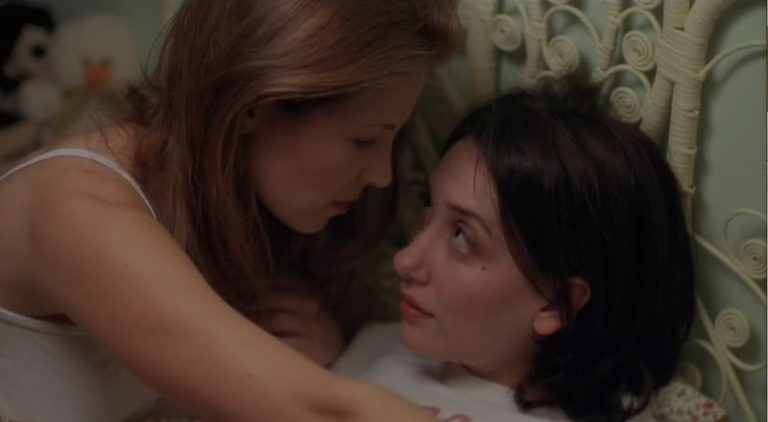
Kissing Jessica Stein is one of my favorite queer flicks. It’s about a neurotic, ostensibly straight woman – the titular Jessica – who, after a string of romantic rejections and mishaps with men, impulsively responds to a newspaper personal ad… written by a woman. That woman is Helen, a feisty and brilliant art gallery manager who is also dabbling in bisexuality for the first time.

Beyond being a deeply funny and relatable story of sexual and romantic exploration, this movie has so much heart, and captures so well the thrill of pushing your own limits sexually. The sex scenes are some of the best scenes in the whole movie. One of them begins with Jessica showing up to their date with a bunch of educational pamphlets about lesbian sex – she’s been doing research! Helen has to talk her down, suggesting that they try it “the old-fashioned way” rather than jumping straight to strap-on gadgets and gizmos.

Both women are nervous about having sex with one another, especially Jessica – and so there’s a great montage where the two women gradually, over the course of several dates, work up to kissing with tongue, and then touching above the waist, and then touching below the waist, and so on. There’s a ton of good communication in these scenes, and they’re so funny and adorable. If only all queer newbies could have a first partner as patient and encouraging as Helen.

Moonstruck is a favorite of my mama’s, so I’ve seen it many, many times. If you’ve never seen it, mainly what you need to know is that it’s a rom-com starring Cher and Nicolas Cage. Intrigued yet? Yeah, you should be.

Nic’s character, Ronnie, is a burly caricature of toxic machismo with a sensitive underbelly. He also happens to be the brother of the man Cher’s character, Loretta, is engaged to, so there’s an added layer of forbiddenness, making it all the more hot when they get together.

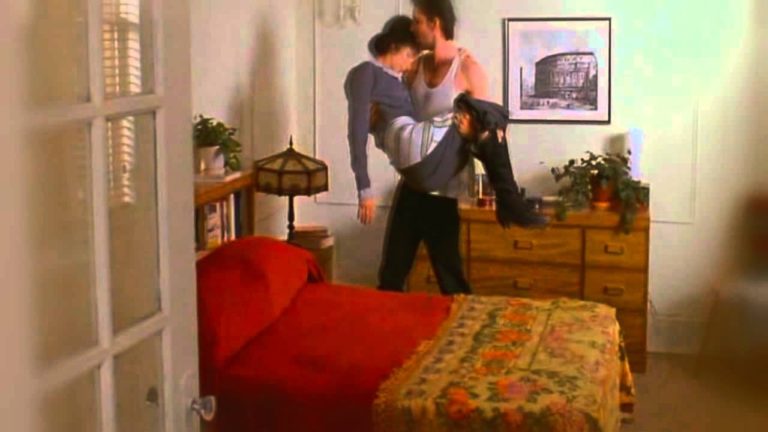
In one of the hottest scenes, Loretta and Ronnie are arguing outside his apartment after a fancy date night at the opera, and he yells, “Now, I want you to come upstairs with me, and get in my bed!” In another scene, they’re in her kitchen and they’re arguing again (it’s a recurring theme) and Ronnie literally tips the whole kitchen table over in a flight of passion/rage, kisses Loretta passionately, and physically picks her up in his arms. “Where are you taking me?!” she shouts. “To the bed,” he replies. And he does. 🔥

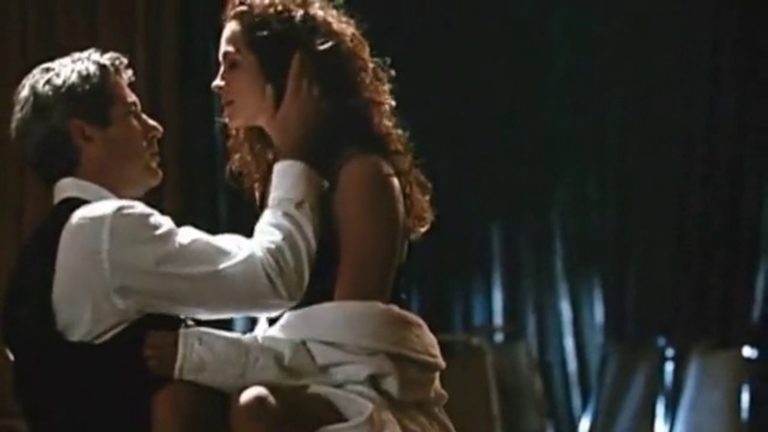
Pretty Woman is a super problematic movie as far as its representation of sex work, but its two stars, Julia Roberts and Richard Gere, are so gorgeous that I can’t help but find it hot and charming.

My favorite sex scene in this movie is one where Julia’s character, a sex worker named Vivian, walks in on Richard’s character, a rich businessdude named Edward, playing the piano late at night in the hotel they’re staying at. She’s wearing nothing but a bathrobe, which he takes off of her in a slow, sensual way. And then, presumably, they fuck on top of the piano.

It’s because of this scene that having sex on a piano is on my bucket list, though I’m not sure that anyone who owns a grand piano would be willing to let me “borrow” it for this purpose!

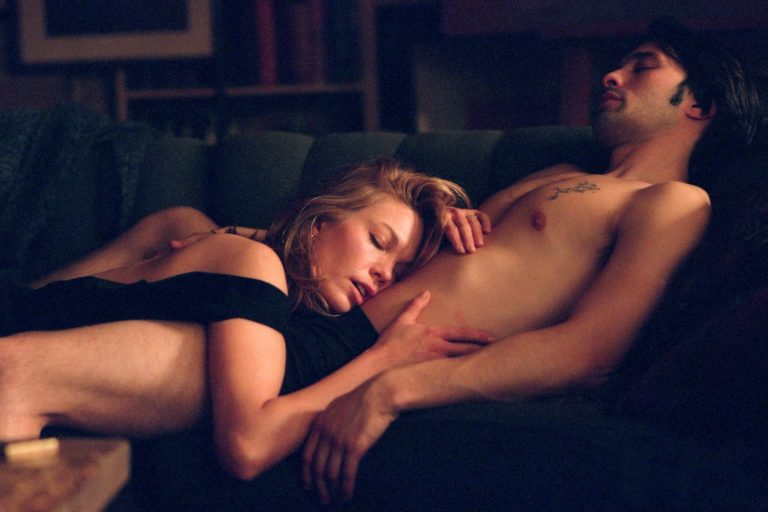
Unfaithful is another Richard Gere movie… However, the sex scenes I’m most drawn to in this movie don’t involve him. It’s an erotic thriller about a middle-aged wife and mother, Connie (played by Diane Lane), who randomly meets a hot young Frenchman, Paul, when he tends to an injury she sustains on a dangerously windy day.

An affair begins, and before too long, Connie is routinely sneaking away from her husband Ed (played by Richard Gere) to see her loverboy. He’s a bookseller, and they have many tawdry encounters in his bed, surrounded by towering stacks of books. It’s all very, uh, literary.

In one particularly hot scene, Connie finds herself stuck having lunch with some other married women she knows from whatever suburban middle-class organizations she’s a part of, and Paul walks into the restaurant, surprising her. They both sneak away to the bathroom and fuck in one of the stalls. When Connie comes back out, her friend points out that her blouse is partially unbuttoned. Whoops.

Blue Valentine has a famous scene in which Ryan Gosling’s character, Dean, goes down on Michelle Williams’s character, Cindy, seemingly to the point of climax. While you can’t even see any genitals, this one scene caused the movie to be given an NC-17 rating, though it was later changed to an R rating after pushback from the distributors.

Many critics have noted that it’s likely the scene’s focus on female pleasure that earned it the more mature rating, and that this points out the inherent sexism still prevalent in many industries, including movie-making. But regardless of Hollywood politics, the scene itself is hot as fuck and I will admit I have jerked off to it many times!


What sex scenes in movies have you found the hottest and most memorable?


This post contains a sponsored link. As always, all writing and opinions are my own.
Safety: A Secret Ingredient of Arousal

I’ve been in this situation many times, and maybe you have too:

I’m ostensibly about to hook up with a person I find very attractive, both physically and emotionally. We’re kissing, groping, grinding, etc., and while I feel like I should be aroused, I’m just… not. It feels like staring at an equation that says “1 + 1 = 0” and trying to figure out how that can possibly be true.

More often than not, there’s a secret ingredient that’s missing. And that ingredient is a sense of safety.


As the sexologist Emily Nagoski has pointed out in much of her work, stress has a real, measurable impact on our libidos. It actually alters your ability to get aroused, both psychologically and physiologically.

This makes sense if you think about how evolution works. If pre-civilization humans could just keep on fuckin’, even while the threat of an imminent tiger attack loomed in their peripheral vision, they never would have survived long enough to make babies and carry on their genetic line. So, naturally, we evolved to treat cues of danger as more important inputs than just about anything else, including sexual desire.


However, in modern times, even in places where tiger attacks are rare-bordering-on-unheard-of, our stress responses can still get in the way of arousal. These responses can occur due to a vast number of stressful inputs, including stuff like:

  • Worrying about whether it’s safe to be naked in the bed of a person you just recently met
  • Worrying about whether you might accidentally get pregnant or contract an STI
  • Worrying that your sex noises or sex faces are unattractive
  • Having been sexually assaulted or harassed in the past and worrying it’ll happen again
  • Wondering whether your date thinks you’re a slut for hopping into bed with them
  • Not yet knowing whether your date cares about your pleasure and comfort

A lot of these types of worries fall disproportionately on the shoulders of women, especially women who date men, due to the rates of sexual assault and other forms of abuse being heavily skewed along gender lines. In my view, this is a huge part of why so many guys struggle with knowing how to make a girl wet; they may be modeling their understanding of her arousal on the way they view their own arousal, and so they may not realize how important these mental and emotional components of sex are to the people they sleep with, if those aspects are not as much of a make-or-break factor for their own arousal.

I find it interesting, though disheartening, that this circumstantial difference is often written off as “Women are just more emotional in general, and their libidos are fundamentally different from men’s!” I don’t think this is inherently true, but I think a lot of systemic factors have made it seem that way, and people have simplified it in order to understand it better.


In any case, regardless of the gender(s) of the people you have sex with, it’s worth keeping in mind that a sense of safety is probably a component of what helps them get aroused. You can cultivate a safer-feeling environment by doing things like:

  • Asking them about their day and making them feel listened to
  • Always respecting their sexual boundaries, no matter what
  • Being proactive about determining what their boundaries are, so you can respect them
  • Setting the scene with calming music, dim lighting, etc.
  • Holding space for them to discuss their sexual anxieties openly so you can assuage their fears and avoid their triggers
  • Helping with housework and other tasks that may be weighing on their mind before sex
  • Asking them what helps them relax and feel able to get aroused – it may be different than what you’d have guessed!

You can keep these strategies in mind when you’re struggling with arousal while you’re alone, too. What stressors are present, and how can you address them, at least enough to feel comfortable setting them aside for a while?

It’s unfortunate that we live in a world where so many people feel unsafe so much of the time, largely for structural reasons that would be lessened or nonexistent in a more just society. But we’ve gotta work within the system we’re stuck inside, for the most part – and sometimes that means giving your partner a backrub while telling them you’re there for them, so that they can feel safe enough to open up to you, sexually and otherwise.


This post contains a sponsored link. As always, all writing and opinions are my own.
Why “Amateur Porn” is My Fave Kind of Porn

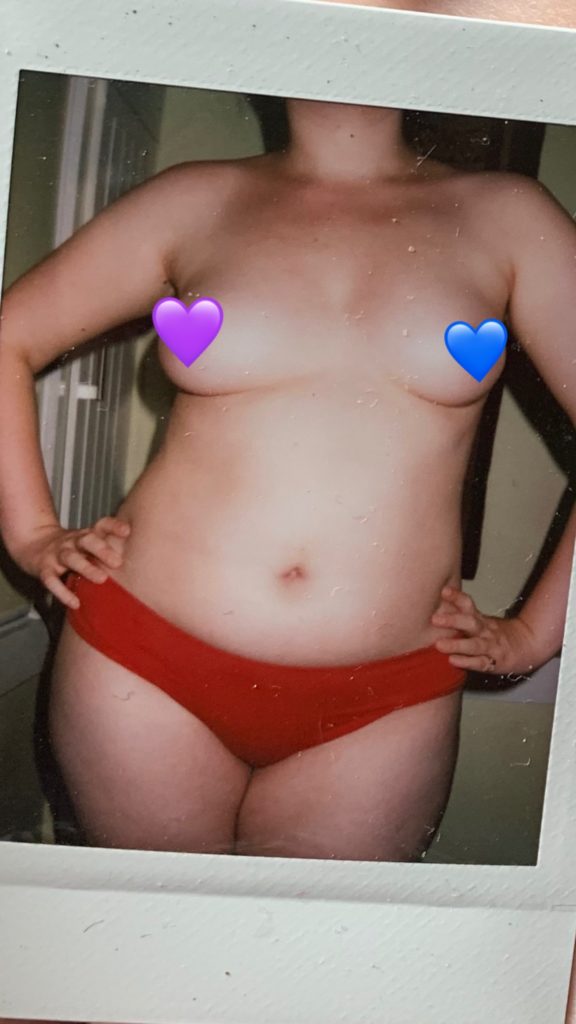
An Instax photo taken of me in my twenties. BTW, if you want more like this, click here, here, and here. 😇

It took me a long time to start enjoying porn. I had already been masturbating and reading erotica (especially erotic fanfiction) for several years before porn became a regular part of my solo sex routine.

Up until then, it just… hadn’t really interested me. What little I’d seen of it, online or while flipping through TV channels late at night, had seemed ridiculous to me: over-the-top, unrealistic, melodramatically acted. I’d never had sex, so I didn’t know what sex was “really like,” but I knew that the images in those videos didn’t resonate with me (or my vagina) anywhere near as much as the flirty banter in a great fanfic story, or the frisson I felt when talking to a crush at school. If devising fantasies and replaying memories felt more exciting than watching porn, why bother watching it?

There were a few exceptions; I liked the punk-rock pinup pics on the website SuicideGirls, and I had watched that one notorious Nina Hartley cunnilingus tutorial so many times that it had eventually earned a place of honor on my iPod Video. (Now there’s a throwback!) But most porn, especially most straight porn, was off-putting to me. I just didn’t get it.


Eventually, though, I discovered amateur porn. In comparison to the slick overproduction of mainstream studio porn, these amateurs making sexy videos from their bedrooms or basements felt like a revelation. Their work turned me on, not just because their bodies and lives looked closer to my own, but because – what with so many amateur porn makers being real-life couples – they showed me a vision of what a future sex life could look like for me: intimate, fun, sometimes a little silly, and hot. Very hot.

I was always the type of anxious kid who would Google things like “how to know if someone wants to kiss you” and “what do dicks taste like?” so there was something calming about watching real couples have the kinds of sex they apparently regularly had, even when the cameras were off. They showed me that you didn’t have to be an industry professional to be “good at sex” and to be thought of as sexy. That comforted me.

I’ve also always been turned on by the idea of someone knowing your body so well that they can get you off easily and consistently; I eroticized the thought of being known that deeply. And there’s no better place to watch that fantasy unfold than in amateur porn, where performers are often intimately familiar with one another’s bodies and know all the right buttons to press. This seemed romantic to me, and helped me dream about the sexual futures I wanted for myself.


While “amateur porn” is still an extremely popular porn category, the term itself has evolved over time. Its popularity prompted many mainstream porn studios to adopt an “amateur” aesthetic in some of their work, hoping to draw in some viewers who (like me) had previously been unimpressed with big-studio porn.

Meanwhile, the internet continued evolving, eventually empowering some performers to attract bigger and bigger audiences and to use more powerful platforms to reach new people. Both then and now, it almost feels disingenuous to call some of these people “amateurs” when they may have as much industry knowledge as, if not more than, many performers for mainstream companies because they’ve always been responsible for doing their own lighting, filming, editing, etc.

Some purists might argue that the well-lit and well-marketed independent performers on OnlyFans, ManyVids, etc. aren’t amateurs in the true sense of the word, because their production values are too high or their videos are too pre-planned and performative. While it’s fine if you prefer the low-res, low-lit amateur videos of yore, I actually think it’s wonderful that video technology has become accessible enough that you don’t have to have big studio bucks to make porn that looks great. And I also know – particularly from talking to friends of mine in the industry – that just because something is “performed” doesn’t necessarily mean it’s inauthentic. Some people find exhibitionism exciting, and so, in their videos, you may see performativity and authenticity blended together seamlessly into something gorgeous and hot.


Still to this day, it’s incredibly rare that I watch porn made by mainstream studios. Most of it just doesn’t interest me and doesn’t turn me on. I can’t relax and enjoy myself if I don’t feel that the performers on-screen are also relaxed and enjoying themselves, ideally with someone they like to fuck off-camera as well. And sure, that kind of thing can be found in some mainstream porn, but it’s much more readily available (and more believable to me) in the “amateur” category.

I want to feel like what I’m watching could plausibly happen in my bedroom, or my friends’ bedrooms. I want to feel the performers’ real flirtation and attraction and deep knowledge of one another’s bodies. I want real orgasms, real squirting, real giggles and real romance. And I want to pay creators directly (or as directly as possible) for what they’ve made, with no bigwig middle-man standing between us. I want to feel connected to the porn I watch, and to the people in it, almost as much as I feel connected to my actual sexual partners and my friends.

And so, I still love amateur porn, and probably always will – although I hope it’s eventually given a name more befitting of the immense work and expertise that can go into making real-life sex look real damn beautiful.


This post contains a sponsored link. As always, all writing and opinions are my own.
Q&A: What It Was Like to Write & Record 52 Songs in 52 Weeks

I’ve been having some convos with friends and family lately about the songwriting challenge I did this year, and have enjoyed explaining what made me want to do the challenge, what went into it, and what I took away from it. I found that lots of folks, especially other creatives, were interested in hearing about this – so I thought I’d write a blog post to wrap it all up!


Q. Wait. Did you really write and record 52 songs in 52 weeks?

A. Weirdly enough, I did.


Q. Why, though?

A. A fair question. A couple things happened within close proximity of each other last December: I wrapped up an educational program called “Meaningful Activity” that I’d been doing at my local chronic pain clinic, which had been leading me through a process of identifying my core values and the things that bring me the most joy, and figuring out how to do more of those things, more often, despite living with chronic pain and chronic fatigue. It came up over and over again in my worksheets and journal entries for that program that I missed music, cared about music, loved making music, and hadn’t been making nearly enough music. At the time that I did this program, I hadn’t written a song in nearly 4 years. In high school I used to crank out multiple songs a month sometimes. I realized I missed that and wanted to be doing significantly more of it.

The other thing that happened was that I spent a solid couple weeks living alone that month because my roommate had gone to stay with her family for the holidays, and I realized that a lot of my reticence to play music lately had been self-consciousness about being heard, but that I didn’t really need to worry about that because my sweet roommate had always expressed supportiveness about my music-making. So I started playing more songs, and even wrote a couple, and then thought, hey, wouldn’t I be happier if I was doing this every single week? So I assigned myself the challenge.


Q. Did you really think you’d be able to complete the challenge when you started it?

A. Honestly, no. I thought fatigue, pain, and/or apathy would get the better of me at some point and I’d call it quits. It felt equally possible that I would quit 7 months in or that I would quit after the first week. I think I just don’t believe in myself as much as I should, especially when it comes to professional goals.


Q. Where did you get ideas for your songs? Did it ever feel like you were running (or had run) out of ideas?

A. Coming up with conceptual/lyrical ideas is one of the hardest parts of the process for me, which is partly why I sometimes don’t even start with a conceptual/lyrical concept – I’ll start by improvising some lyrics and melodies over a chord progression and kind of just free-associate about what the music reminds me of. This approach can feel more like the song is revealing its theme to me, rather than me coming in with a predetermined theme of my own.

Aside from that – often I would see something in media that would inspire a song: “The Museum” was based on some lines lifted from an Oliver Sacks essay, “Love is Blind” is about the Netflix dating reality show of the same name, “Does He Know?” was inspired by a love triangle on the TV comedy Superstore, “Credit Card” was written soon after I watched The Tinder Swindler, “The Stage” was based on a scene from a documentary about the musical Spring Awakening, “Celia” was an ode to a character from the book The Seven Husbands of Evelyn Hugo, “Grandmaster” was a love song for a cult leader inspired by NXIVM’s Keith Raniere, and “Sisyphus” was about Nick Drake and some biographies I’d read of him.

Sometimes songs were inspired by conversations I’d had with people in my life: “Bi Enough” came out of a conversation with my therapist about bisexual impostor syndrome, “Doll” was based on a story a friend told me about his sex doll, and “Amicably” was about a friend’s relatively civil breakup.

Sometimes I would ask my Instagram or Twitter followers to submit a theme, quote, or idea to inspire a song; “Brave Little Girl” was one of those. Sometimes I would pull two tarot cards and ponder their meanings, separately or together, until a song idea appeared; “Mr. Mean” and “What If?” were some of these. Sometimes I would go to RandomWordGenerator.com and have it give me 3 random words to inspire a song; “Notice Me” and “Nobody Likes Me” were some of those. One time, a dream inspired a song; I wrote “Stay” after waking up from a terrible nightmare.


Q. What did you learn about songwriting from doing this challenge?

A. A WHOLE LOT. As with any artistic discipline, you definitely get to know your own creative process much more intimately when forced to spend time on it every week. I kept notes on what I learned/observed over the course of the year; here’s a few highlights:

  • I used to have a bad habit of recording and posting new songs immediately after writing them, rather than going through subsequent stages of editing and practicing the song to polish it up. You would think that having to crank out a song every week would’ve made this worse, but it actually made me better at letting songs breathe for a day or more after writing them, and practicing them enough that I could perform them well on camera, because I would always feel like, “Well, I have until Sunday to get this done. Might as well make it as good as I can within that timeframe.” By the end of the challenge, I would pretty much always listen to my initial demo a few times for 1-3 days after writing the song and make changes to anything that started to seem awkward or unpolished. I would also practice the song a lot more before recording it.
  • I quickly realized that it was CRUCIAL for me to have a reliable and searchable repository of ideas that I could pull from when I had writer’s block. I use the Notes app for conceptual ideas and lyrical fragments, and another app called Voice Record Pro to record and organize musical ideas, as well as demos to help me remember a song I’m writing/have already written. Realistically, I won’t always be able to immediately develop an idea that comes to me, because I have a job and stuff. So I had to get very disciplined about documenting even the tiniest snippets of ideas so that they’d be available when I needed them.
  • You’ll make some of your best art when it feels safe to make bad art. And because it was a weekly challenge, I knew that it was fine for some of the songs to be less good than I might otherwise prefer (though I think almost all of them are at least pretty good). Jonathan Mann, who has written a song every day for 14 years running, estimates that “70% are mediocre, 20% suck and 10% are awesome.” Sitting down with my list of 52 songs and ranking them, I did the math and found that I think 33% are great, 37% are good, 19% are mediocre and 11% are bad. I’m pretty happy with those numbers!
  • Whenever I felt stuck, I almost always found that switching things up helped inspire me. I’d play around on different instruments, try writing to loops in GarageBand, go to a different location to write, etc. It really helps.
  • Songwriting boosts my self-esteem! I admire great songwriters and their craft a lot, and it makes me feel so good about myself to write songs that I think are good. All the more reason to do it more often! I think this was also largely the reason I never really “half-assed” a song during this challenge – any time I considered taking the “easy way out” (like writing a song that was really simple, bad, or based on a song I’d written before), I knew I’d be disappointed with myself if I did that, so I didn’t.
  • Creativity requires rest. The resting phase is part of the creative process, not separate from it. After I write a song, I typically need to take at least a few days off from trying to write another one, or it just won’t work. I can use that time to “refill the well” by consuming media on a broad range of topics that might later inspire a song.


Q. What are your favorite songs from the challenge?

A. Sorry, they’re my babies; I refuse to pick just one. Instead, I will pick eight.


Q. But your whole thing is that you write about sex. What are the sexiest/kinkiest songs from the challenge?

A. If you want sexy and sex-adjacent, you want these:


Q. Are you going to keep writing and recording a song a week?

A. I actually have been. I don’t know how long I’ll continue it, but I felt a little sad that the challenge was ending and decided there was no reason I had to stop if I didn’t want to. You can always see the latest ones on my YouTube!