Hello, friends! If you read this blog regularly, maybe you’ve noticed I haven’t been posting at my usual clip lately. I thought I’d update you on why that is, and what I’ve been up to.
The main thing is that I recently got a new gig reporting on sex for MEL Magazine, one of my all-time favorite publications. I’ve been reading and loving their stuff for at least 6-7 years, so it’s delightful that I get to write for them now! Here’s a highlight reel of some of my favorite pieces I’ve written for them over the past few months (you can peruse my full archives by clicking here):
No Pain, No Gain (a conversation about masochism with Hurts So Good author Leigh Cowart)
In addition to that, I’m still writing my weekly newsletter containing intimate essays and thoughts on sex and love, Sub Missives, for premium subscribers (it’s 5 bucks a month or 50 bucks a year). Some recent faves:
I’m also still doing my “A Song A Week” challenge, writing and recording one new song every week for the duration of 2022. Here are some of my favorites lately:
I’ll still be posting on this blog once in a while – I’m definitely not shutting it down or anything! But with all these projects on my plate, the blog is no longer my top priority, so I thought I’d let you know what else I’m up to so you can check out my other work if you’re so inclined.
Love always, and thank you for the support! 💖 -Kate
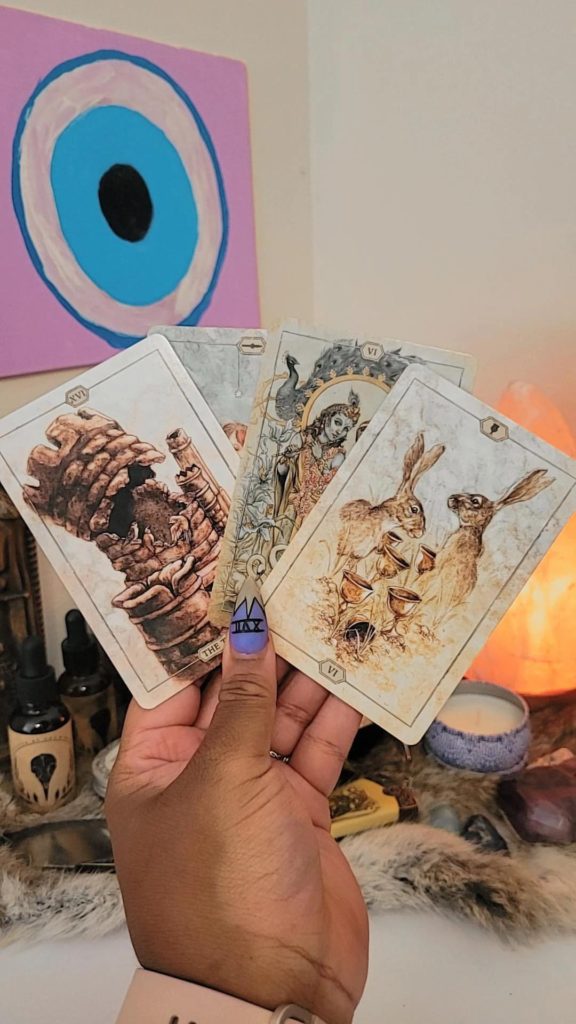
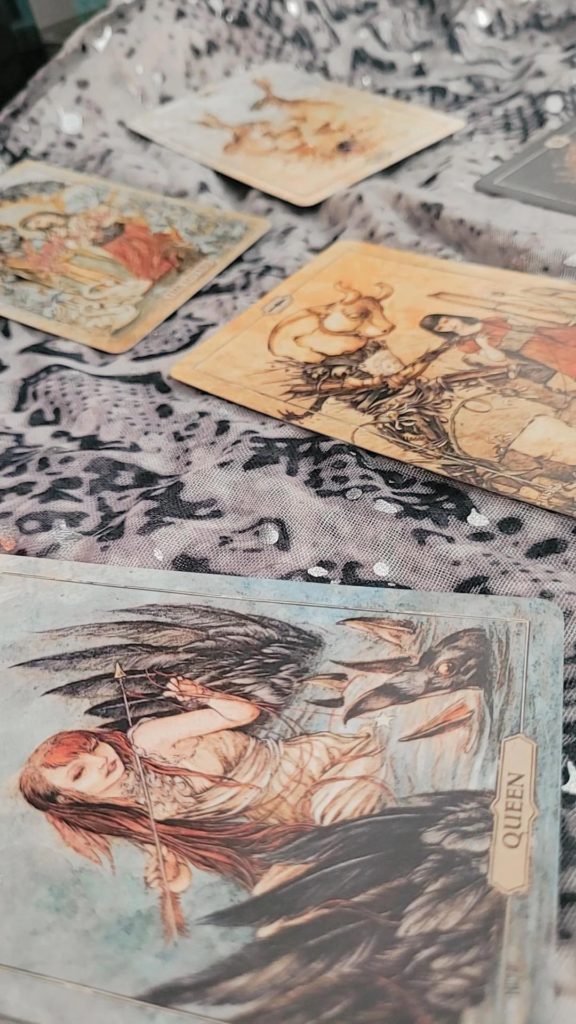
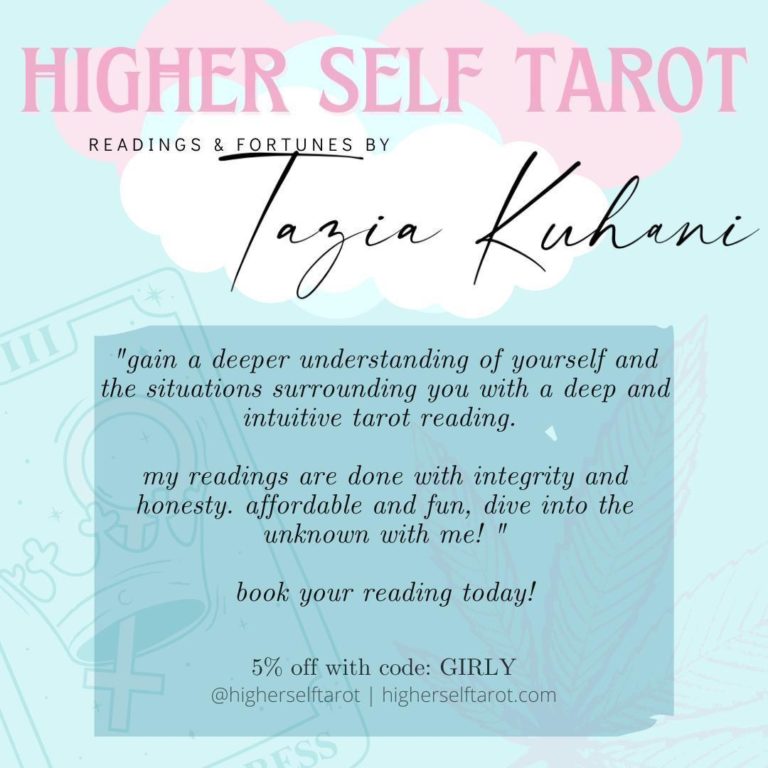
All images in this post are courtesy of Tazia from Higher Self Tarot
When people ask me whether I “believe in tarot,” I don’t really know what to say. I’ve gotten tarot readings at some of the most critical times in my life, times that felt like a crossroads toward different potential versions of my future, and the cards – or, more accurately, the people reading the cards – have given me advice that shaped how I moved through my life’s next chapter.
For instance, in 2016, I sought counsel from a tarot-reading acquaintance of mine because I had gone through multiple romantic disappointments in a row: unrequited love, rejection, revelations of a partner’s abusive tendencies. I felt off-kilter and like I was attracting these terrible experiences into my life through something I was doing, or not doing. The reading told me pretty decisively that I needed to speak up more assertively about my boundaries and expectations in relationships going forward, and to be more guarded rather than letting people in right away. That advice has served me well ever since.
A year later, I sought another reading from the same person because I wanted some guidance with regards to my sex life. The cards declared that I should pay more attention to the wisdom of my body when making sexual decisions – i.e. if someone gives you a bad feeling, it’s probably for a reason – and that I should be more intentional in the way I approached dating. Again, this advice was exactly what I needed to hear and helped me turn my life around. I met my now-spouse later that year, by which time I had gotten much better at trusting my gut feelings about people and pursuing the people I liked with deliberate intention.
Obviously, tarot has been pretty transformative for me in how it’s allowed me to reflect on my own patterns – regardless of whether or not the cards actually have mystical properties like some people say (I really don’t know!). So I was delighted to get a reading earlier this week from Tazia Kuhani of Higher Self Tarot, and I wanted to write about it here.
I’m going through kind of a tough time lately, both personally and professionally. On a personal level, my mental health has been really tumultuous as I’ve been working through my traumas in therapy and getting actively confronted by triggers on a regular basis. Professionally speaking, I started a new gig recently that is taking up most of my time, so I’m struggling to balance my energy levels appropriately – and I’m having a lot of impostor syndrome about whether I “deserve” such prestigious bylines, even though I’ve worked for over ten years to get here. Needless to say, it felt like a good time to ask for some wisdom from a tarot pro!
I explained these issues to Tazia when she asked me what I wanted our reading to focus on, and we decided we’d do one short reading for my work life and one for my personal life.
The work-focused reading validated some things I already knew but hadn’t quite articulated to myself: that the expectations my editors have of me are high, but that I am skilled enough to meet or exceed them; that there might be an annoying adjustment period while I get used to a different work schedule and workload; and that doing my work with integrity and passion is my best route forward.
I found this astonishing because I hadn’t actually told Tazia anything about my new job or the things about it that I’ve been struggling with, but her interpretations of the cards she pulled were spot-on nonetheless. Tarot is wild!
As for the personal reading – Tazia pulled 3 cards that identified problems I’m dealing with, and 3 more cards that contained some advice for those problems. The actual issues I wanted advice on are too vulnerable and fresh for me to feel comfy sharing them here, but again, I was blown away by how accurate and specific the reading was. As someone who’s pulled tarot cards for myself as well as gotten professional readings, I can say that paying a professional has always been worthwhile for me. The cards alone can give me some information, or at least help me reflect more clearly and deliberately on the struggles I’m facing – but when an experienced pro can interpret the cards for you, especially a pro who knows a bit about you and your life, it’s a game-changer.
At the end of the reading, Tazia asked if there was anything I wanted clarification on. We had touched on my work in trauma therapy at one point in the personal reading, and I asked for some additional advice on how to move forward in the therapeutic process without feeling stuck or stalled out.
Tazia pulled two additional cards for me, both of which were meant to be advice on my trauma therapy process. The first one was The Fool, which she said meant that I should approach therapy as if I know nothing and am learning it all afresh. The Fool encourages us to listen and open up to what we don’t know, even if it seems foreign or strange. This card was telling me to become a student of my own trauma rather than trying to beat it into submission or speed through the process.
The second card she pulled was the Queen of Cups. Tazia said this card spoke to the role of creativity in my healing process – that I should lean into art-making, whether that be music, writing, or anything else, as a route through which to unpack my trauma.
Both of these cards felt super resonant and relevant to me, and gave me the little push I needed to feel like working through this stuff is still worthwhile. As my therapist told me when we began trauma therapy together two years ago, typically it gets harder before it gets easier, because you’re uncovering some old, raw stuff and it can be painful and destabilizing. But the important thing is to be patient with yourself and to keep going – which, of course, is easier said than done. This tarot reading helped me feel, more than ever, like that’s the right thing to do, even when it feels incredibly challenging.
If you want to book a reading with Tazia for yourself – and I would highly recommend you do so if there’s any situation in your life right now that you could use some guidance on – you can click this link to learn more. Tazia’s offering 5% off her already wildly reasonable prices for Girly Juice readers when you use the code “GIRLY” – go go go!
Content note: This post contains some non-explicit, not-super-detailed descriptions of times that I was sexually creeped on by adults when I was a teen.
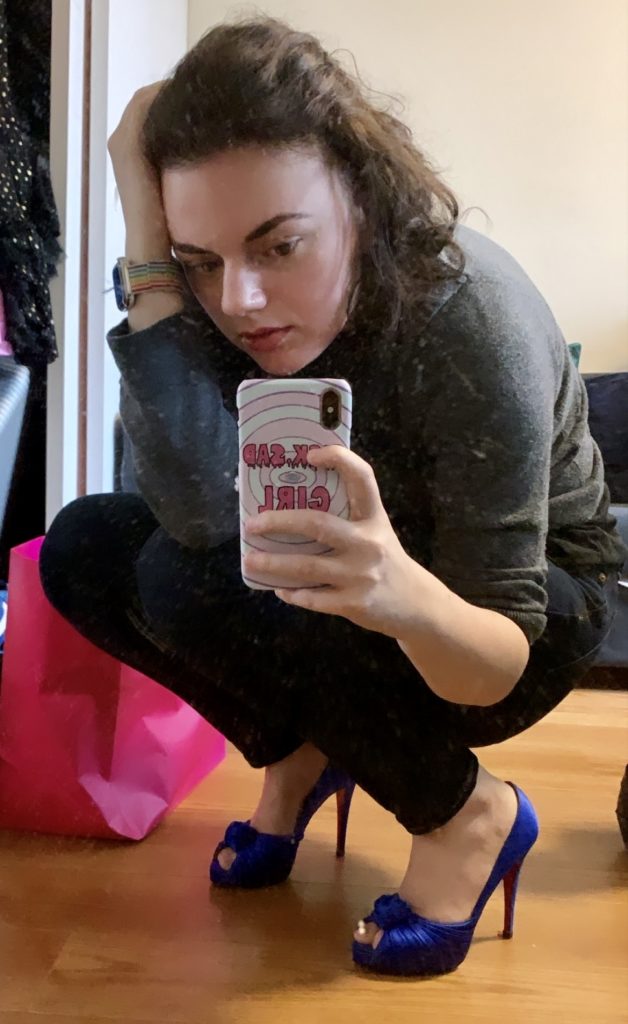
I’ve always had a complicated relationship to the foot fetish community. Some of my earliest memories of feeling creeped out and sexually taken advantage of are related to foot fetishism, unfortunately. But that just means I have to work harder to overcome my biases and embrace kinksters who approach this fetish in fully consensual, 100% respectful ways – unlike those who started harassing me online when I was 14.
I’ve been posting outfit photos on-and-off since 2006, and one thing that happens when you post outfit photos to an audience of any significant size is that you attract people who fetishize the stuff you wear. People flocked to my Flickr page to fawn over my leggings, my corduroy shorts, the leather gloves I’d occasionally put on for fancy events. Pretty much anything I ever wore, there would be somebody who’d fetishize it.
But unfortunately it was often the foot fetishists who were the most extreme in this behavior. Even when I was literally 14 years old, I would receive comments and messages from them regularly, demanding that I post more barefoot pics, wear more sandals, or even send them my old and unwanted pairs of shoes. Some of them would lie to me in order to achieve the result they wanted; I’ll never forget the one who told me he ran a “recycling plant” for old sneakers and would be happy to accept my donations. Even at 14, I saw right through that shit and called him out – but it made me feel deeply uncomfortable and violated nonetheless, to be so intensely sexualized by strangers who clearly just saw me as a body for their visual consumption.
It’s been 16 years since I first started posting outfit photos online, and I have a lot more perspective on human behavior now – not to mention, a lot more knowledge about the shame and secrecy that run rampant in fetish communities. It actually makes total sense to me that people who’ve had their deepest sexual desires shamed and stigmatized for many years would turn to unsavory tactics to get their needs met. I’m not saying it’s okay – it’s deeply, deeply not okay at all – but I do understand where the impulse comes from. It’s just not a good impulse, because it involves prioritizing your own pleasure and gratification over someone else’s personhood and safety – and that’s never acceptable, no matter how difficult it may have been to live with the fetish that you have.
These experiences have made me extra appreciative in adulthood of fetishists who are straightforward and respectful, e.g. those who politely request sexy feet pics from me with the clear knowledge that money will need to be exchanged in order for those photos to materialize. (If that’s something you’re interested in, by the way, you should click here.)
It’s not that paying for foot-related media is the only way to access it respectfully; it’s just that it’s the only way for an internet stranger to get foot-related media from me, specifically, and I know many others feel the same. That’s why websites like FunWithFeet.com are so cool – they connect people who want foot content with people who are willing to provide it, for an agreed-upon fee.
I always wished for something like this when I was in my late teens/early twenties, because it frustrated me to no end that random men would demand I post more pics of me in sandals, or whatever, and not even offer to buy me the sandals in question. I longed for platforms where consensual, ethical fetishism could be expressed and enjoyed by anyone who wanted to participate, and where no one would ever feel even remotely pressured into doing something they didn’t want to do. So it’s pretty awesome to me that FunWithFeet and other such foot-focused hubs exist.
Another aspect of all this is the way foot fetishism manifests in my personal life, as opposed to my professional life. I’ve had a few partners who were into feet to some degree, including my current partner. It was educational and weirdly cleansing to satisfy real-life partners’ desire for foot pics after having been lied to, used, grossed out and taken advantage of by so many foot fetishists as a teen.
A beloved partner politely requesting pictures of my feet felt completely different from a faceless internet stranger one-handedly and irately demanding I post foot pics for free. It still made me nervous at times, but in different ways: I was nervous about whether my feet were pretty enough to be fetishized, whether they needed a pedicure, whether they’d somehow be a turn-off instead of a turn-on.
Luckily, though, all my foot fetishist partners have been incredibly complimentary about my feet and have never made me feel the way those online strangers did – like my feet were my entire value and the rest of me didn’t matter. Even now, when we’re lying on the couch together watching a movie at night, my partner will sometimes sweetly ask if they can remove my socks and massage my feet while we watch – and though it still sometimes feels vulnerable, or embarrassing, or tickly, I usually say yes.
It can be healing to encounter something that used to make you feel scared, sad, used, and unimportant, and to find ways to feel exactly the opposite about it. I’m reminded, once again, of one of the central lessons I’ve learned about sex as a whole: consent makes all the difference.
This post was sponsored. As always, all writing and opinions are my own.
It has been more than five years since my first (and, so far, only) trip to Italy, and I still think about it pretty often.
It was a glorious few days that my mum generously tacked onto the end of a trip we were taking to Malta for a cousin’s wedding. We figured, “when in Rome” (or, more accurately, “when in the Mediterranean”), might as well splurge on ourselves as a fun, once-in-a-lifetime kind of thing. We stayed in the gorgeously ornate Bernini Bristol hotel. Our room overlooked the Piazza Barberini, which contains the famous Fontana del Tritone (Triton Fountain). At night, after luxuriant dinners of rich pasta and fine wine, we’d visit the fountain, throw coins in, and make wishes.
Once, I wished for romance, but it was already all around me; the city itself was romance. Earlier that evening, we’d been winked at by a waiter, who’d asked us after our meals if we wanted “dessert, or anything else.” We’d strolled down the street to a gelateria and had a wine-flirty conversation with the nervous employee behind the counter as he scooped up our treats. And now, at the fountain, as I breathed in the cool night air and contemplated my wish for romance, a dark-haired man approached us and handed me two red roses. He said something in Italian that I didn’t understand, but I think I heard bella somewhere in there. I said Grazie, grazie! and wished I knew more words to thank him as he walked away.
Everything in Rome seemed sensual and quasi-sexual to me in a way I rarely felt at home. Maybe it was just the excesses of vacation, but it felt woven into the fabric of the city, too. The resplendent meals. The ambient chatter of people passing you in a piazza. The click of cobblestones against your heels.
There was a slick salesman at a leather goods shop who sweet-talked us into buying leather jackets. I know his flirtation was a sales technique, but it felt more like seduction or sex giochi (that’s Italian for “sex games,” mio caro!). Our interaction lasted at least an hour, and was far longer and more relaxed than any sales transaction I’d ever experienced – he made us feel like we were visiting his home. He pulled jackets and skirts and boots in our sizes from the racks all around us, and implored us in his elegant accent, “Just try it on.” And every time we emerged from the dressing room, he’d make us feel like runway models, with the intensity of his gaze and the specificity of his compliments.
We wore those leather jackets the day we sprinted to catch up with our tour group so we could traverse the Roman Forum, explore the Colosseum. The chill in the air wasn’t depressing, like on dark Toronto nights that portended cold Toronto winters; the crisp breeze in Rome actually felt flirtatious, caressing our skin, reminding us we were lucky to be able to feel such things, lucky just to be alive in this world.
Our lunches and dinners were so obscenely pleasurable that I still think about them five years later, like the indelible look in a long-lost lover’s eyes that you still recall fondly after they’ve gone. The endless embrace of butter and cheese. The free-flowing wine, encouraging us to laugh, light up, and look around with gratitude at our lovely lives. The waitstaff, who acted as though any kind of restraint or self-flagellation related to food would be not only misguided but in fact not worth talking about at all.
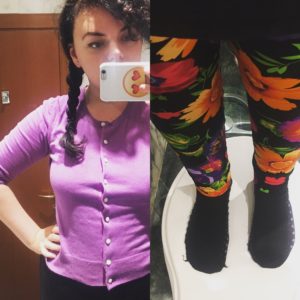
I remember the day we planned to go to the Vatican; I realized in horror that the clothes I’d packed were deeply ill-suited for the hallowed institution’s conservative dress code. Pants and long sleeves were required, but these were rare in my relaxed hyper-femme aesthetic, so instead I wore a prim cardigan buttoned up to the top, and loud floral-print leggings under my black dress.
Perusing the statues, paintings, and altars, I felt bowled over by all that history – like time itself was topping me in a hardcore kink scene and the only thing to do was surrender.
When we filed into the Sistine Chapel and gazed up at the ceiling, I felt a peacefulness and rapture I’d previously only ever experienced after taking a lot of pain in a scene. The stillness and reverence in the room were overwhelming. I barely dared to move or even breathe. The art had a message for me: that I should appreciate the present moment, drink in beauty wherever it shows up, savor every second of precious life. I felt humbled by the holiness of the chapel, rendered more whole by its wholeness.
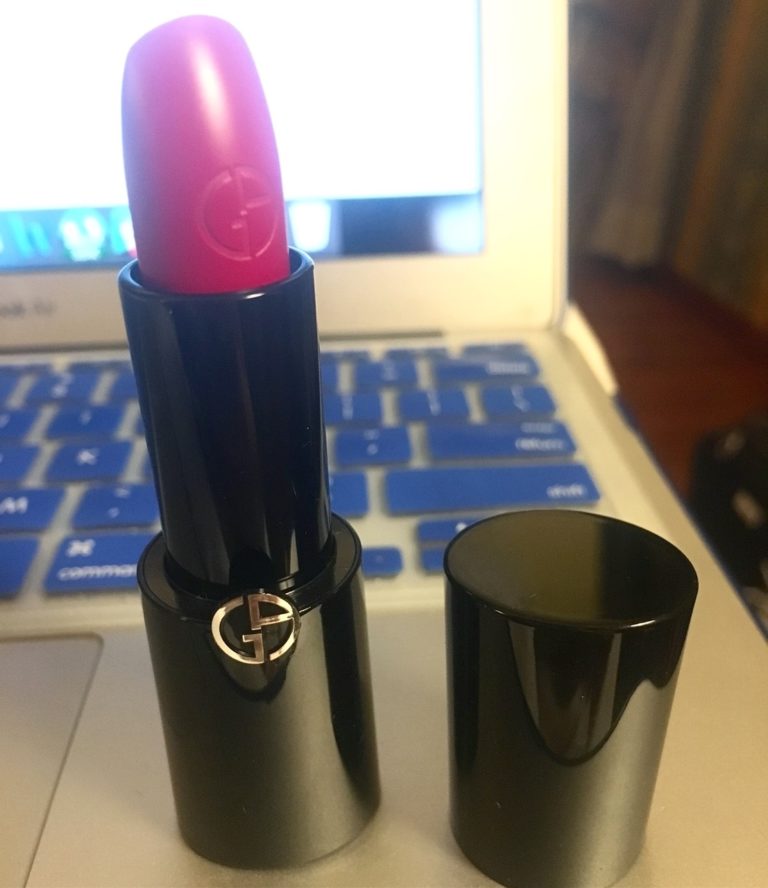
Sometimes I watch media set in Italy and feel, once again, that creepy and comforting feeling of being in a place so old and well-worn that it takes on a godly quality. I look at the red lipstick adorning so many Italian women’s faces and think of the Armani lipstick I bought in the Sephora opposite the Spanish Steps, and the way applying it felt like casting a magic spell. I flip through my photos of lush countrysides and ornate architecture, longing to live that life again.
Someday I’ll go to Italy with my spouse, I suspect, and we’ll make new memories every bit as juicy and jubilant as these. But until then, I’ll keep visiting Rome in my daydreams, learning its lessons again and again: to enjoy the here and now, to revel in pleasure without guilt, and to view myself always as a powerful temptress capable of anything, even summoning red roses with the toss of a coin and the whisper of a wish.
This post contains a sponsored link. As always, all writing and opinions are my own.
Sometimes my traumatized heart feels like a stormy sea.
In mid-2017, I started having weird episodes when my then-boyfriend would go on dates with one of his other partners. I’m using the phrase “weird episodes” here because I wasn’t sure what to call them at the time – they felt more panicky and distressing than mere jealousy, but did not manifest like actual panic attacks, as far as I could tell. During those episodes, I felt like I was dying, and like I was an ugly failure, and like I had just been informed by the love of my life that they didn’t care about me and were leaving. Those emotions felt entirely real and immediate to me, and made me utterly unable to function. They would often continue for hours or days.
I was very confused, and frankly, so was my partner. I had been polyamorous before, and this had never been an issue. Sure, I’d felt twinges of jealousy or irritation now and again when my partners would spend time with their other sweethearts, but those had always felt manageable, momentary, and easily dismissed. These new episodes were entirely different in character, and were much more debilitating to my relationship and my everyday functioning.
What I later learned, through tons of therapy, reading, journaling, chatting with polyam friends, and reflecting on my experiences, is that I am a trauma survivor and that these episodes were a trauma response. Childhood experiences of emotional abuse had amped up my nervous system and had made me hypersensitive to the threat of being unloved, unwanted, and not good enough. These feelings came up more acutely in that particular relationship because we were in a DD/lg dynamic, which brought my deepest desires to life but also brought the most vulnerable and helpless versions of me to the surface psychologically.
So when that boyfriend/daddy dom started dating someone else, without checking with me first and without taking the time to make sure both Adult Me and Little Girl Me felt okay with that decision and felt safe in our relationship, of course I started getting triggered all the time. I had deep-seated childhood trauma and was being re-traumatized repeatedly by the embodied sense that my “daddy” liked someone else better than me – a situation which wasn’t exactly helped by him constantly texting with his other partner while we were together, conveying more enthusiasm about that relationship than about ours, and telling me I was overreacting and harming him by being triggered.
Needless to say, that relationship didn’t last. But what it taught me was invaluable. The intensity of my reactions in that relationship eventually led me to seek out trauma therapy and start finally unpacking my issues. So, even though that boyfriend treated me badly, in a way I have to thank him for showing me exactly what parts of myself I needed to work on in order to someday become my truest, highest, most healed self.
Learning about the ways that trauma impacts polyamory has been completely transformative for me, because it has given me the tools to understand my past experiences and a road map toward happier ones. When I first entered the non-monogamy world around 2012, there was an almost libertarian-esque fervor about “taking responsibility for your own feelings.” The general prevailing attitude in the community, so far as I could tell, was that if you felt jealous, that was your issue to deal with, and your issue alone. There was very little nuance in the conversation and very little room for the idea that people’s emotional responses are not always the result of a toxic monogamy mindset and are not always fully within their control.
This can cause traumatized polyamorists to feel that they’re “broken” or “bad at polyamory” for having these responses. In many cases, they think that because they’ve been explicitly told that by judgmental partners who didn’t understand what was going on. Triggering a shame spiral in this way helps no one, and yet it was the customary approach most polyam people seemed to take when dating a traumatized person at that time.
So I’ve been delighted to see more discourse about trauma and polyamory over the past few years, and more resources popping up to explain these concepts to folks and help them have happier, healthier relationships regardless of their trauma history. I’ve gathered some of those resources below for you to peruse if you need ’em, or if you think my tale of woe sounds like something your partner or friend has gone through, or if you’re just curious. Whether you want to be non-monogamous yourself and have struggled with it due to trauma, or you just want to work through trauma that affects your relationship(s) regardless of monogamy status, I hope you find these resources as helpful as I have.
Workshops
• Bar none, the most helpful resource on this topic for me personally has been Clementine Morrigan’s “Trauma-Informed Polyamory” workshop. While Clementine does teach it in-person sometimes, it’s also available online as a 2.5-hour video (with optional captioning) that you can purchase, download, and watch. What’s really remarkable about this class is that it brings together a variety of modalities I think are crucial for understanding and overcoming trauma responses in polyamory. These include nervous system work (i.e. understanding how and why your nervous system gets triggered and how to get it back into a place of safety) and attachment theory (i.e. the ways that our relationships with our caregivers in childhood can affect the way we approach relationships for the rest of our lives). If you choose to only explore one resource on this list, I think it should be this one, unless something else I recommend here sounds like it would resonate more for you.
• While not trauma-focused, Reid Mihalko’s “Battling the 8-Armed Octopus of Jealousy” workshop was super helpful for me in learning more about jealousy triggers. There are a lot of different reasons why people experience jealousy, and it can be useful to understand your own triggers in this area so you can learn to work around them or create relational structures that prevent them from occurring as often. For example, I learned in this workshop that one of my biggest jealousy triggers is not feeling “special” to my partner, which is one reason why we have specific honorifics, kinks, and sex acts that we reserve only for each other and don’t do with other partners.
Books & Zines
• The book Polysecure: Attachment, Trauma and Consensual Non-Monogamy by Jessica Fern has gotten a lot of attention in polyamorous communities over the past year, and for good reason. It’s a must-have guide to navigating polyamory when you or a partner is attachment-injured, i.e. experienced some kind of trauma related to their caregivers or other attachment figures at some point which continued to affect the way they feel and behave in relationships. If you’ve routinely struggled with anxiety and/or avoidant behaviors in your relationships, you might be attachment-injured and this book might help you. The thing I love most about it is that it emphasizes finding relational security through the quality of the connection, rather than through extraneous things that provide the illusion of relational security, like monogamy or strict rules. You should read this if you’re an attachment-injured person who wants to be polyamorous, or if you have a partner or potential partner who fits that description; it’ll give you a lot of strategies for calming attachment-related inner turmoil and finding a feeling of safety in your relationship(s).
• In addition to their polyamory workshop (above), Clementine Morrigan also wrote a zine called Love Without Emergency: I Want This But I Feel Like I’m Going to Die about their personal experiences with these issues. (That link is to the physical version of the zine; click here if you’d rather buy a PDF copy.) It’s less of an instructional resource and more of a calming, validating one. Sometimes I leaf through my copy when my partner is on a date, to remind myself that 1) other people experience what I’m feeling and so I’m not alone, 2) my trauma does not make me broken, and 3) there are ways out of those terrible feelings.
• The Body Keeps the Score by Bessel Van Der Kolk is widely regarded as one of the best books on trauma, such that my partner and I frequently make jokes about the title when we need a moment of levity during a trauma episode (e.g. “damn, my body’s really keeping the score today, huh?!”). I haven’t had the emotional strength to read it yet, honestly, but I know that it’s largely about the ways that trauma manifests physically in the body, which is useful stuff to understand when navigating any kind of triggering situation, including those that can come up in polyamory.
• One of my all-time fave non-monogamy books in general is Building Open Relationships by Dr. Liz Powell. This one isn’t primarily trauma-focused but it does contain a lot of practical advice for navigating emotionally difficult situations that come up in polyamory, like what to do if you get anxious while your partner is out on a date or what level of detail you want to hear when your partner tells you about their dates.
I’ve written before about how I used the filtering tools on PsychologyToday.com to find my therapist, by searching for practitioners who were LGBTQ-informed, kink-informed, and polyamory-informed, and who specialized in trauma. You can use that same method to find a therapist, or you can just voice a preference for particular modalities when searching for a therapist in whatever other ways are available to you. I’m no expert, but here are some modalities and strategies I’ve found helpful in healing from these issues:
• Internal Family Systems is a therapeutic model which emphasizes the existence of different “parts” of our personalities, which can be integrated through therapy. I never really used to believe in this stuff, but as I’ve been healing my trauma with the help of my therapist, I’ve noticed that my “inner child” is very wounded and needs a lot of love and compassion, which I had long been denying her by dismissing those sad, unloved feelings as stupid and irrational. Doing IFS work with my therapist is helping me reconnect with that inner child so I can “re-parent” her and help her feel safe, even when she experiences abandonment anxiety or insecurity because of my partner dating other people. If you’re interested in IFS but can’t afford/access therapy or just want to learn more, Dr. Tori Olds has an incredible series of videos about the basic principles of IFS; her work has helped me understand how this modality functions, not only emotionally but neurologically as well.
• “Somatic therapy” is a pretty broad term, as there are many therapeutic modalities that focus on the somatic, i.e. what our bodies are feeling and how that connects to our minds. However, I mention it here because it was something I specifically sought out when I wanted to heal from trauma, having noticed that modalities based on words and emotions (such as cognitive-behavioral therapy) weren’t easing my trauma responses at all. This, I learned, is because trauma is stored in parts of the mind that aren’t always consciously accessible to us, and because many people find that trauma manifests in their bodies, not just their minds. Doing somatic exercises with my therapist has been way more helpful for my trauma than CBT. Some examples of these exercises are locating the physical locus of anxiety within myself and having a “conversation” with it, or noticing while triggered that the bigness of my body means I’m an adult now and am not a powerless child anymore.
• Compassion and mindfulness. These are components of many therapeutic modalities, but I think they’re important enough to be mentioned specifically here. A lot of the work I’ve done on mindfulness, whether with the guidance of an expert or just in my own research and exploration, has been about accepting everything I’m feeling and experiencing at the present moment, including the things about myself that I normally dislike. Accepting yourself the way you are right now is a type of self-compassion, and self-compassion is vital for healing the anxieties and insecurities that can make polyamory feel impossible.
Other Resources
• I think reading polyamory blogs and forums can be super helpful when you’re feeling shitty about yourself for struggling with polyamory, because a lot of other people struggle with it too and have written about their struggles online. Kevin Patterson’s excellent blog Poly Role Models and the ever-insightful Poly.Land are great places to start.
• Sex educator and trauma expert Jimanekia Eborn hosts a podcast called Trauma Queen which is super validating to listen to as a trauma survivor. It’s not always focused on polyamory or relationships, but I think there’s a lot to learn from it in terms of trauma more generally.
• Jessica Fern, the author of the aforementioned book Polysecure, guested on my podcast and we had an interesting conversation about the monogamy mindset, nervous system regulation, healing from trauma, and more.
I’ll leave you with a metaphor that my therapist used in one of our sessions recently. Imagine you have a friend who went through a traumatic house fire as a kid. No one died or was seriously injured, but it was extremely scary and they’ve found fire very triggering ever since. But imagine that because of their ethics and values, they decided they wanted to become a firefighter. As they started training for the job, and then started fighting actual fires, what would you say to them when they kept getting triggered every day at work? What would be your advice for this person? Would you tell them to quit, or would you tell them to continue?
When my therapist asked me this, the answer seemed immediately obvious to me. “I’d tell them that the right decision would depend on whether or not they felt willing and able to put in the work to overcome that trauma,” I said. “I’d tell them they would have to think carefully about whether their values are more important than avoiding their trauma triggers. There’s no wrong answer, but they should think about it.”
My therapist said, “Exactly. And it’s the same with you and polyamory. Polyamory is very triggering for you. But you also know that you want to be polyamorous, because of your values and priorities. So the question becomes: Do you want it enough to put in the work of healing from your trauma so you can achieve your goal of being happily, healthily polyamorous?”
For the time being, I have decided that I do. So I will continue to revisit these resources, go to therapy, and work on myself. I will continue, at least for now, to fight those fires. I will continue to do the hard work I signed up for. Even when it hurts. Even when it feels impossible. Because I’m tired of being so damn scared all the time. I want to be brave and strong and healed, and I know that I can be. I just need help to get there – and, as this list has shown, there’s plenty of help to be found.
Do you have any resources to recommend on the subject of trauma’s interactions with polyamory? Feel free to share ’em in the comments, or let me know if you’ve enjoyed the ones I’ve recommended here. ❤️
 Content note: This post contains some non-explicit, not-super-detailed descriptions of times that I was sexually creeped on by adults when I was a teen.
 It has been more than five years since my first (and, so far, only) trip to Italy, and I still think about it pretty often.
 There was a slick salesman at a leather goods shop who sweet-talked us into buying leather jackets. I know his flirtation was a sales technique, but it felt more like seduction or
  I remember the day we planned to go to the Vatican; I realized in horror that the clothes I’d packed were deeply ill-suited for the hallowed institution’s conservative dress code. Pants and long sleeves were required, but these were rare in my relaxed hyper-femme aesthetic, so instead I wore a prim cardigan buttoned up to the top, and loud floral-print leggings under my black dress.