Rest is Crucial, Sacred, & Sexy

I recently quit my part-time social media job after 4 years of working there. I’ve long called this gig my “dayjob” because it did the thing for me that dayjobs do for creative types: it gave me a steady, reliable income that tethered me to the working world and afforded me the time, money, and brainspace to do my passion projects on the side. But in recent months, my “dayjob” had begun to bring in only about 7% of my total income, while taking up about a quarter of my working hours – and with book deadlines and health issues weighing heavily on me, I decided it was time to move on.

This was a challenging decision for me, in no small part because I have loved working at that company and with the people there, albeit remotely, these past 4 years. I had other resistances to leaving, though, and spent a whole hour discussing them with my therapist recently. I worried that my other projects would dry up, leaving me regretful to have quit – although there’s no evidence that will happen. I worried that without time-sensitive morning tasks to complete each weekday, I’d let my depression get the better of me, lazing about in bed into the afternoon. I worried that firm daily deadlines were the glue holding my life together, and that without them, I’d lack the conviction and self-direction to manage my time effectively.

But as my therapist reminded me, this is internalized ableism, internalized capitalism. The discourse around “laziness” is too often aimed at people whose systemic struggles and marginalizations are framed as personal failures. The freelancer community’s obsession with “hustling” is borne of capitalistic imperatives. A person’s “hustle,” or lack thereof, says nothing about their inherent value as a human being. Not all people have the same abilities; we can’t all hustle as hard as we think we “should.”

It feels shameful to admit that one of the reasons I quit my job was so I could rest more. I feel like I already rest a great deal, certainly more than my friends who work long hours at cafés or retail stores. But this mindset comes from holding myself to able-bodied standards despite being increasingly, invisibly disabled. My chronic pain and chronic fatigue are worse and more frequent than they’ve ever been. I often need a 3-hour nap just to get through the day, or to “catch up on sleep” into the luxuriant afternoon hours on weekends. The simple fact of living in a pain-wracked body is uniquely exhausting. I can’t pretend that away.

I have to banish culture-borne ideas of “laziness” in order to plan a schedule that actually works for my body and my brain. Now that I’ll soon be fully self-employed, with most of my deadlines being self-imposed or flexible, I can rearrange my schedule as needed to fit with my lifestyle and desires – something I’ve longed for my entire adult life. I’ve been fantasizing about “Weekend Wednesdays” and impromptu staycations and “the 4-hour work week.” It feels blissful, in the truest possible sense of that word, to envision the freedom my self-employment will now afford. And I know it is an enormous privilege, one that comes from my position in society as an educated white person as well as my many years of hard work to establish this lifestyle for myself. But I can’t shake the feeling that it’s wrong somehow to rest as much as I do, or as much as I want to. That I “should” work more, to “earn” the happiness I get from having a career that genuinely delights me.

My therapist told me, “You’re working as much as you comfortably can, and you’re earning enough money to live on. That’s all that matters here.” I felt my body relax when she said this. It’s so wild that capitalism instills in us, from birth, the belief that our work, our productivity, and our output are what define our value as human beings. Even sworn anti-capitalists sometimes still struggle to unlearn this. It’s as if we’ve forgotten that “jobs” and “careers,” as they are defined in modern times, did not always exist and do not need to exist. If human didn’t need to work in order to survive, what would we do instead? Would we make art, socialize, have sex, eat, drink, sleep, think? Would we feel fulfilled then? Would we feel we had done “enough” at the end of each day?

It’s impossible to say. But I’m working on accepting that my rest time is every bit as valid and important as my work time. When my achy, sleepy body demands a 1 p.m. nap, I need not admonish it or deny it. When my inner child pipes up to say that Wednesdays should be days off for playing in the sunshine, I can and should listen. When all I want, at a bone-deep level, is to stay in bed all day playing Pokémon games and listening to comedy podcasts, that’s likely a signal I should heed. This feels sinful and embarrassing to even type out. But that’s because it’s a new belief system for me, one that butts up against bullshit I’ve been inundated with my whole life.

We need rest to survive. That’s especially true for disabled folks. I feel no sensuality and sexiness in my body when my nose is constantly pressed to the grindstone. I get precious little joy from life when my every waking minute is mired in work and worry. I have no time or energy left over for the fun things, or even the necessary things, when work swallows me whole.

Rest is crucial. Not all of us have the ability, or the privilege, to honor that fact and live it out fully. But don’t let anyone tell you it’s not. You deserve the rest you need – and the rest you want.
I Miss Strip Clubs (…But I’ve Only Ever Been to One)

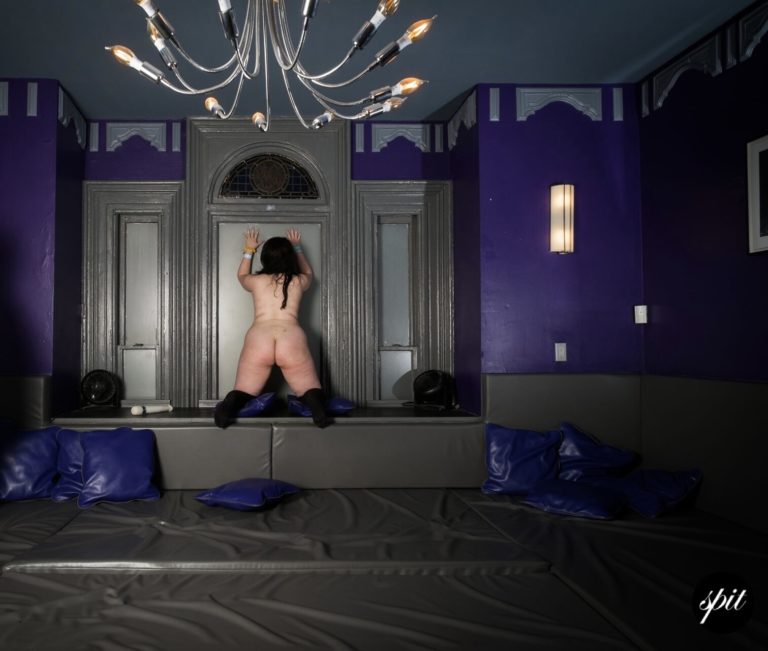
I don’t have any photos of strip clubs, but I do have this picture of me naked at a sex club… Close enough, I guess?!

One of the first things I learned about Portland upon arriving there was that it apparently has some of the best strip clubs in the country. I didn’t know how or why this was true yet, but my friends who lived there insisted that it was. I believed them wholeheartedly. I put on a low-cut dress and some sparkly shoes, and off we went.

It turns out that the reason Portland’s strip clubs are so great is partly a legal one: unlike clubs in some other states, they’re allowed to show you full nudity on stage – and to serve alcohol. While I’m sure that’s a combination that can get messy at times, on the night I took advantage of these two freedoms, it was nothing but bliss.

My friends and I crowded along the tip rail, clutching dollar bills and cocktails. Boobs were shoved in my face. Thighs were parted directly in front of me. I could hear the squeak of hot skin against the metal pole. My glasses – worn so I could see the dancers’ beautiful bodies better – were complimented and then removed from my face to prevent them from getting smashed by errant legs. It was a whirlwind of soft flesh, big beats, sweet drinks, and good vibes. I threw money onto the stage with abandon during every dance, mesmerized.

I thought of this recently when I read sex journalist Tracy Clark-Flory’s new memoir Want Me, in which she recounts – among numerous other things – many a night spent as a customer at local strip clubs, drinking in the atmosphere, tipping dancers, and intermingling bittersweetly with the raucous dudes in the crowd. While acknowledging that strippers are people and that sex workers don’t deserve to be reduced to stereotypes or props, Tracy also notes that being in that type of sexually charged space made her feel empowered and excited, in a way that may be unique to female clientele at strip clubs. It’s a very particular experience, and one that I miss, despite only having tried it once.

That’s right – I, a seasoned sex writer, have only been to a strip club ONCE!! This is 100% just because of social anxiety – I basically can’t go to unfamiliar places without someone to accompany me, and such plans have never lined up quite right for me to be able to check out a strip club in Toronto, where I live. I dearly wish I was the type of woman who could be brave enough to stroll confidently into a strip club, solo, but that’s just not who I am (yet?). I could always look into making a private exotic dancer booking, for a less nervewracking experience, but I miss the atmosphere of a strip club itself just as much as I crave seeing strippers show off their talents.

The pandemic has been a potent time for reflecting on regrets, and fantasizing about the future. Everyone I know seems to have a mental list of things they want to do, people they want to see, and places they want to go – whether for the first time or the hundredth – when they’re safely able to again. The more that I think about it, the more I realize that going to a strip club is one of those wistful wishes for me. In many ways it feels like the polar opposite of what the pandemic has entailed: people crowded closely together, maskless, eating and drinking and staring up at charismatic naked beauties on stage. I’m no expert, but I would imagine that a lot of the people who regularly go to strip clubs do so in part because they like the bustling and in-your-face vivid vibe of that environment – otherwise, wouldn’t they just stay home and watch striptease videos? – and all these months of social distancing have given me an increased appreciation for that type of energy.

I’ll still be deeply nervous when I eventually go to a strip club again, I’m sure. This year of lockdown hasn’t magically transformed me into a shameless extrovert. But I think I’ll have an even greater appreciation for strip shows now than I did before, especially having seen how much sex workers – an already profoundly stigmatized and marginalized group – struggled to make ends meet during these lean times.

I’m not really religious, but I could see how going to a strip club after a pandemic could be a spiritual experience. What secular act could be more church-like than gathering in a darkened room with other congregants, imbibing sacred libations, and tithing dollar bills to dazzling goddesses dancing under dappled lights?


This post was sponsored. As always, all writing and opinions are my own.

Protocol Diaries: I’ll Have What They’re Having

Wouldn’t it be great if you could order your ideal sexual experience off a menu? Well, in certain sex work contexts you can… but that’s not exactly what I’m talking about here.

For a couple months or so, my partner and I have been using two shared notes in our Notes app to basically do exactly that. It’s a communication tool that has helped us both, particularly in these stressful times when it can be hard to drum up the energy for good sex, let alone good, clear, useful communication about sex. The two notes are called the Sex Menu and the Porn Menu, and I’ll talk about them both here incase any of you find this idea useful and want to “yoink” it for your own sex life. (All credit goes to mb for inventing these innovations – I’m blessed to have a spouse just as sex-nerdy as I am, and much more tech-nerdy than I am, who comes up with inventive and sexy usages for things like the Notes app!)


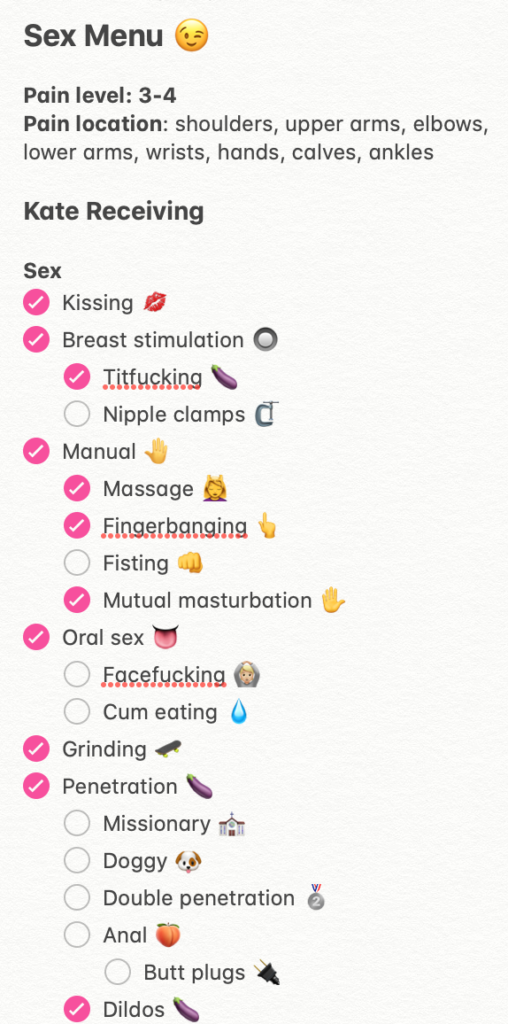
The Sex Menu is a checklist of all the sex and kink acts that my partner and I do regularly, ranging from the tame (kissing, breast stimulation, oral sex) to the wild (watersports, electrostimulation, ruined orgasms). As I’m the more submissive/bottom-y person in our dynamic, usually I fill it out to give my partner a sense of all the things I’m up for during a particular session, so that they don’t have to individually ask me about each and every thing they’re considering doing.
However, sometimes we switch it up by having them fill it out so that I can then go through it and uncheck anything I definitely don’t want to do. I tend to have more limits and limitations than my partner does, just due to the nature of our differing brains and bodies, so this works best for us, though of course you can adapt it to suit your particular dynamic.

This tool is especially wonderful for those of us who have a hard time asserting our boundaries and/or stating our desires; it gives me a way to express those things without feeling like I’m being rude, demanding, or overbearing. It also helps remind me of all the acts and toys I tend to forget about; on a stressful day I might not remember that a wax-play scene could help reduce my anxiety, until I see wax on the list and go, “Oh yeah! That could work.”

Because I have a chronic pain disorder, we keep a spot at the top of the Sex Menu for me to fill out my pain level du jour and the locations of the pain. This gives my partner a clear picture of what my body might be capable or incapable of on a particular night. Communicating about my pain can be difficult for me, especially when I feel I’ve been complaining about it a lot lately (which is usually the case these days, tbh), so I like having a built-in spot to describe it; it takes the pressure off me to be my own proactive health advocate.


The Porn Menu is another document, in which one of us will prepare a set of links to 2-3 porn videos for us to watch together before having sex. I have found shared porn-viewing to be a super useful pre-sex practice for me this past year, when pandemic stress has made my already-finicky libido even tougher to coax into action. Since my desire is responsive (à la “dual-control model of sexual response” as laid out in Emily Nagoski’s book Come As You Are), I usually need a little help – or a lot of help – to get turned on, and porn has almost always been a big source of that help for me.

My partner and I are both not the biggest fans of mainstream porn with high production values, and tend toward buying clips from indie creators instead. (Pay for your porn if you want porn to keep existing!) Usually we’ll try to match up our porn choices to what we’ve selected on the Sex Menu, so if I said I want oral, I’ll look for cunnilingus porn, and if I said I want to be fucked with a dildo, I’ll scroll through dildo porn sites – you get the picture!


Used in tandem, these two “menus” help me and my partner get on the same page about the sex we want to have, and get turned on together even when our lives are stressful. They’re also a reminder that sometimes the simplest communication tools are the best ones!


This post was sponsored by the folks at MyPornAdviser – feel free to check out their Anilos review if you’re curious about MILF porn! As always, all writing and opinions in this post are my own.
Selling Nudes Scares Me, But I Do It Anyway

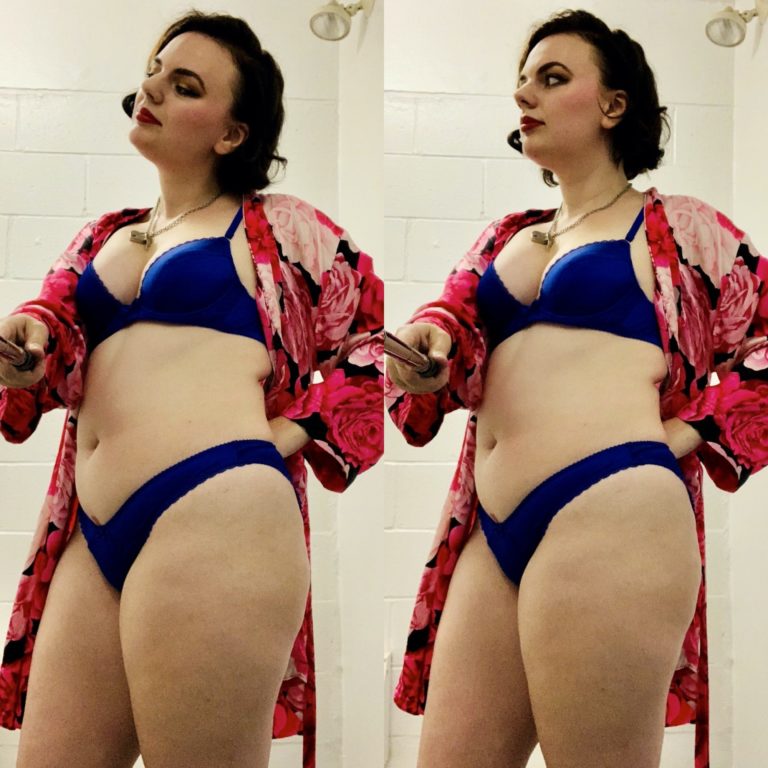
The first time I ever sold a nude photo wasn’t like a first kiss or a first fuck; it didn’t stick in my memory that concretely, a fully-fledged moment recalled with multidimensional sensory details. It was much plainer than that. Probably some random person sent me a DM, I pulled a list of rates out of my ass, they picked what they wanted and sent a payment, and I scrambled to snap some nervous nudes in my attic bedroom. Not exactly an auspicious start, but hey, it’s something.

Looking through amateur porn galleries always wows me. These people are so brave. I know sometimes “You’re so brave!” is slung condescendingly at people who have chosen unconventional paths, even when they’ve chosen those paths out of necessity rather than courageousness – but I really do think anyone who makes porn of themselves and puts it on the internet is braver than most of their fans will ever even realize.

I know this because my own nudes are available for purchase and it is simultaneously one of the most empowering things I’ve ever done and one of the scariest. Most laypeople’s main worry, when I mention that there is porn of me on the internet, is how it might affect my future employment opportunities, but I feel pretty firmly that that ship has sailed: I’m not going to go into childcare or politics, and I’m not trying to write for conservative publications, so on that level it doesn’t really matter that you can find pics of my genitals online.

No, the thing that still scares me most about being publicly naked is the sheer vulnerability of nudity itself. The likelihood of people saying (or thinking) mean things about my body. The way that internet commentators sometimes speak with such unearned authority that their criticisms creep coldly into my brain and stay lodged there, overriding any calming compliments from loved ones.

But as prevalent and understandable as these fears are, I also know that I have overcome them before, and I can do it again.

When I went quasi-viral a few years ago for writing an article about how some abusive men twist feminist rhetoric to get women to trust them, I was hounded by misogynistic trolls for weeks. They sent me death threats, told me to kill myself, left cruel comments for me across multiple platforms. I was scared for my physical safety. But one of the things that snapped me out of my fight-or-flight daze was seeing these men mock photos of me in a strap-on. They spoke as if this was an inherently disgusting sight, like they didn’t even need to explain why it was grotesque to see a chubby woman looking happy and confident while strapped into pink leather and wielding a glittery dildo. And I laughed and laughed, because… I looked hot in those photos. People whose opinions I actually cared about had told me so, and I thought so myself.

If this was really the best they could do – telling me I looked stupid and gross in a photo where I looked verifiably happy and hot – then they had no real power over me. They had tried to humiliate me and had failed. The spell was broken.

I was reminded of the famous Eleanor Roosevelt quote, “No one can make you feel inferior without your consent.” I have a lot of problems with this quote, most notably that it contributes to victim-blaming rhetoric when survivors get understandably upset about being objectified or harassed or assaulted. But, I do still think that your attitude about your own victimization can contribute to (but isn’t at all solely responsible for) how you end up feeling about that victimization. And since these trolls were sad weirdos whose rage toward me was probably borne from resentments they held toward women they actually knew in their actual lives, rather than being due to anything I’d really done or said, it felt relatively easy to shrug off their bad-faith attacks once I’d seen that they really had no ammo.

I was proud of the things they wanted to shame me for. I loved the things about myself that they claimed were worth hating. My life was full of love and sex, despite their projected insistence that someone like me could neither deserve nor acquire either of those things. Their arguments had no teeth, no real impact, no basis in reality. What they were saying was far more about them than it was about me, and that had been true the whole time.

It still makes me nervous every time I hit “publish” on a new batch of nudes. But it helps to know that all the arguments I’ve ever heard for why I shouldn’t post them are essentially meaningless. I’m not trying to get an office job. I don’t give a shit about impressing misogynist trolls. No decent partner of mine would ever be threatened by me being naked in public. And most crucially of all, although I have my bad body image days like everyone else, I know ultimately – in my heart of hearts and pussy of pussies – that my body is beautiful and worth celebrating. The “someone just bought your nudes!” notifications that show up in my inbox are just one of the many pieces of evidence proving that to be so.


This post was sponsored. As always, all writing and opinions are my own.

Protocol Diaries: Music to My Ears

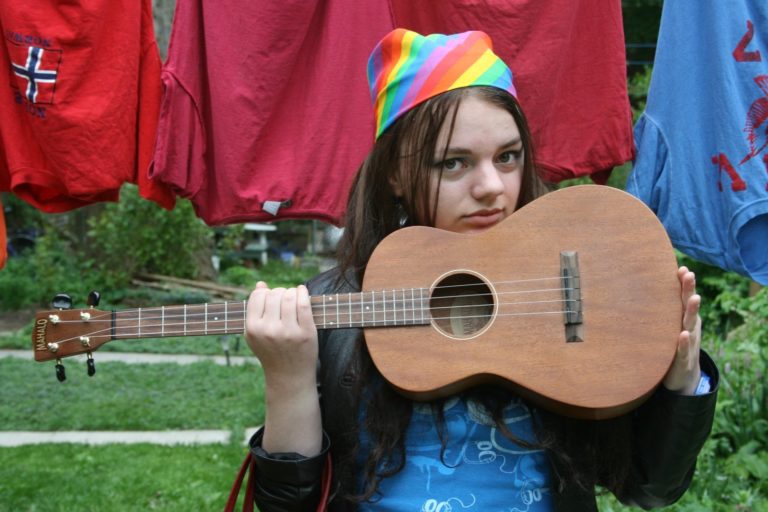
Posing with my baritone ukulele in 2010

I have a classically millennial problem, which is that I keep monetizing all my hobbies, thereby draining a lot of the joy out of them. I’m sure many of you can relate.

Professionalizing what was once a creative diversion isn’t inherently a bad thing – I love writing and am happy almost every day that I get to make a living doing something I enjoy and am good at. I just think it’s a mistake to turn all your hobbies into income sources (keeping in mind that being able to avoid this is, of course, a function of financial privilege and is not an option for everyone). It’s much, much easier to get burned out on your work when you have very few non-work avenues for creativity, playfulness, exploration, and growth.

One way I’ve tried to combat this problem in my life is to create a protocol with my partner that “forces” me to make music more consistently. See, when I was younger, music was my life. I sang in choirs from a young age, studied violin and ukulele in school, took piano lessons, guitar lessons, voice lessons, auditioned for musicals, performed in revues, played shows at coffee shops, busked in parks, opened for local musicians, laid down tracks in recording studios, tickled the ivories at theatre festivals. There was a period of time when I very seriously planned to play music for a living. (You can watch me playing songs dating back to ~2005 on my YouTube channel if you want.)

Playing at the CanStage Youth Arts Jam in 2009

Writing my own songs and performing them, in particular, nourished my soul. In high school I would write as many as 8 new songs a month, many of which were actually pretty good. (Here’s a collection of some of my favorites if you want to take a listen.) There was something deeply satisfying about crystallizing a particular emotion or experience into a sonically appealing piece of art, and then being able to play it for people. Even on my saddest nights, after breakups or rejections or awkward parties, I could cobble together a song from my tears and wounds and failures, and it would make me feel better without fail.

However, then I went on hormonal birth control, and what followed was a period of three and a half years when I was wracked with mental health symptoms worse than any I’d previously experienced – plus, notably, a total loss of my creative drive. I wrote zero songs for years, and it hurt. I’d sit at the piano, or hold my ukulele protectively against my chest, willing new music to occur to me magically and near-effortlessly the way it once had – but my songwriting impulse was totally gone.

Upon going off the NuvaRing, I hesitantly wrote my first song in years – called “Anxiety,” since that was my main emotion at the time – and more songs started to come after that. But the writing process was slow, stilted, forced. I rarely seemed able to recapture the frenetic energy that had propelled me to write literally dozens of songs a year, way back when.

Anyway, back to the present, and the protocol. I told my spouse a while ago that I really missed playing and singing – that I felt I’d lost part of myself when I’d lost the music. I’d moved out of my parents’ big old house, with its big old piano, and into a small apartment where my roommate and neighbors could hear every note I played. I was paralyzed by self-doubt, worried that my voice was rusty and so was my musicality in general. So with my permission, mb made a protocol dictating that every month, I would have to learn (or write) one new song, and make an audio or video recording of myself playing it.

In my room, probably writing emo songs, in 2008

It may seem counterintuitive to try to “force” yourself to do something that is “supposed” to be about joy, freedom, play. But sometimes it works. I still only play music once or twice a month, which pales in comparison to my high school days when I’d play almost every night – but that’s better than nothing.

Over the past several months, at mb’s behest, I’ve covered a ton of songs I admire and love: “Jeremy’s Wedding” and “Where Are You, Judy?” by Andy Shauf, “Vines” by Hippo Campus, “Alone Again, Naturally” by Gilbert O’Sullivan, “Saw You in a Dream” by the Japanese House, “Brooklyn” by Brotherkenzie, “Harvey” by Her’s, and “Girlfriend” by Daniel Bedingfield. Playing other people’s songs isn’t quite the same creative rush as setting my own words to my own melodies, but it nonetheless feels like a breath of fresh air after so many years of keeping my music at a distance emotionally, like a lover you’re about to break up with. I’m tiptoeing my way back into what used to be my greatest joy, and it may not feel exactly the way it used to, but nothing really does. That’s the nature of aging.

In adulthood, sometimes we have to schedule our recreation, plan our playfulness, put our aimless meandering on a calendar – or it simply won’t happen. This protocol has taught me that prioritizing my own creative expression (OUTSIDE OF WORK, crucially) is imperative for my happiness, and is an extremely basic act of self-care. I may not be able to become that starry-eyed, ukulele-wielding teenager I once was, but when I make music, I can almost touch her again, can almost hear her. And it sounds like she’s telling me to sing louder.