Love Addiction, “The Pisces,” and Me

I’ve never been addicted to a substance. I’ve never been over-reliant on booze or weed or pills. But I have been addicted to romantic fantasies, and let me tell you, the compulsions and withdrawal can feel surprisingly tangible – like something vital is missing from your blood, your bones, and you’d do anything to get it back.

In the last few dying weeks of 2016, I went on a Tinder date which was completely unremarkable, except for what I learned from it. My pre-date banter with this boy was fast and easy, creating the sense of chemistry where perhaps there was just empty charm. The date itself was boring, one of those classic Tinderludes where you work painfully hard to pull dry conversation out of a monosyllabic, nervous stranger. The sex that followed was boring, too: our bodies didn’t fit together right, we didn’t take each other’s hints or make each other giggle, we just loped through the encounter as if on hookup-culture autopilot. The boy left around 2AM and I snuggled up in my bed, alone.

It took me until the next day to realize something was wrong. I felt a profound heaviness in my body, like when I’m hit by depression, yet even more acutely needling. It felt like something I loved had been abruptly taken away from me, even though – much to the contrary – someone I didn’t love had left me alone.

Dissecting these feelings in my journal, I saw that I’d put a lot of stock into this boy in the few days we’d known each other. I’d extrapolated wild compatibility from his brief texts and bland emojis. I’d spun our present into a plausible future. I’d imagined he wanted more from me than just sex, and I’d imagined wanting anything from him. So when the date itself was a disappointment and the boy left, I was shaken – not by the loss of the boy, but by the loss of the fantasy.

This had become, I realized, a pattern in my life. Compulsive swiping was how I dealt with any uncomfortable emotion, from boredom to sadness to fear. No matter what, it felt safe and sparkly to return to a reliable old fantasy: that this next swipe, this next match, this next message would lead me inevitably closer to the love of my life. That I was moments from a meet-cute that would cure my every sore spot. That someone perfect would come along and relieve me from the mundane inadequacy of myself.

The trouble is, when romantic fantasy gets you high, you crash spectacularly hard whenever your romantic hopes are dashed. I saw this in the months to come: a sexting pal told me he was unavailable for a more romantic situation, and I cried; a Tinder match told me he wasn’t actually interested in me because our views on polyamory differed, and I cried; a new FWB stated clearly that he didn’t want me in a romantic way, and I cried. A promising OkCupid boy ghosted me after less than a day of scintillating texts, and I had a total meltdown: nausea, panic, weeping, unsalvageable despair. When the pain of that rejection became unbearable, what did I do? I hopped on Tinder to find someone else to fantasize about. (That next distraction eventually ghosted me too.)

I was in therapy all the while, and probably not being altogether honest about the extent of my addiction. But my therapist, ever-perceptive, asked me once, “How much time would you guess you spend on online dating every week?” and I couldn’t quantify it. There were the hours I spent swiping, and the hours I spent moonily fantasizing, and the hours I spent going on dates, and the hours I spent crying and journaling when the dates didn’t go perfectly. The total seemed incalculable – partly due to the shame of that calculation.

Somewhere around this time, a friend of mine started going to weekly meetings for sex and love addicts. I was surprised to hear this; she had always seemed so level-headed. But looking back, I saw places where maybe our kinship and connection had been based on a shared addiction: we loved debriefing about boys and dates and minute flirtations, and we encouraged each other in these fancies. Where was the line between healthy fun and self-destruction?

Though I wasn’t sure whether my friend’s condition was anything like mine, the phrase kept returning to the forefront of my mind: love addiction. It seemed to fit. The highs of my fantasies were euphoric, like that first sweet hit of a new drug – and the subsequent devastations felt all-consuming, closer to rock bottom every time. In those depressed states, I’d hunt for something, anything, to relieve my sense of loneliness and failure. Alcohol, drugs, shopping, self-harm, exercise, bad TV, more Tinder time – nothing could fill the void. It felt like I needed love, but really what I needed was a healthier relationship to love.

I went to see another friend of mine who had struggled with multiple addictions in the past, and had been through a couple of twelve-step programs. As we sipped milkshakes in my pal’s apartment, they told me, “When I find myself wanting to do something rash, I always just tell myself, ‘If I still want to do it in 15 minutes, I can.’ And I almost never do.” I took their advice to heart: distraction, I knew, was not a long-term strategy, but maybe it could help shake me out of my addiction just enough that I could start recovering.

And recover, I did – slowly, non-linearly, with the help of a therapist and my friends and intermittent partners and lots and lots of writing. Nowadays I can browse Tinder occasionally without hanging my entire livelihood on each swipe, and while I haven’t been on a first date in months, I gather the day after a date would no longer make me feel like death. I’m still careful and self-critical about these behaviors, but I seem to be doing okay.

I hadn’t thought about this stuff in a long time, but then I picked up Melissa Broder’s new novel The Pisces and felt like I was peering through a looking-glass at my early-2017 self. So it seemed like a good time to examine my history with love addiction and write about it here.

Broder is the biting writer behind the viral @SoSadToday account on Twitter, the subsequent depression-soaked essay collection So Sad Today, and a book of poetry called Last Sext, among other things. While I think she deals with mental illness more intense than mine has ever been, her work fixates on themes of love and sex and how they interact with depression and anxiety – so, naturally, I adore her.

Her debut novel, The Pisces, is – as you might already know if you’ve seen any press about it – the story of a woman who falls in love with a merman, and has tons of sex with him. (Yes, a merman, as in a male mermaid. Yes, he lives in the ocean and she lives on land. Yes, he has a dick. It’s under a loincloth.) But at its core, it’s really a novel about love addiction. The protagonist, Lucy, breaks up with her long-term boyfriend at the start of the novel, and falls into a toxic cycle of chasing fantasy men and then being disappointed by them. I found her Tinder tribulations so relatable that I made more Kindle highlights than I’ve ever made in any book, and kept alternately weeping and cackling as I read. “There was something about the morning of a date that tricked me,” Lucy muses, after spending far too much money on lingerie for a tryst that will turn out disastrous-bordering-on-traumatic. “It tricked me out of the haze of being alive. Or perhaps it tricked me out of the sadness of knowing that one day I would die. It punctured the nothingness.” I nodded so hard my teeth chattered.

I saw myself in Lucy’s hapless Tinder dates, and, later, in her pining lovesickness over Theo, the handsome merman she meets near her sister’s beach house. While the novel sets Theo up as potentially being Lucy’s “true love” – the one she’s been waiting for, searching for, longing for – there’s actually no indication that he’s better than any of the online-dating fuckboys who leave her sexually and emotionally dissatisfied. It’s telling that Broder gives her romantically delusional protagonist a dream man who is a literal fantasy creature – and that no other character in the book ever actually sees Theo, so we can’t be entirely sure he exists at all. Isn’t every “true love,” in some sense, a projection, part mirage, a trick of the light?

Far from being the wild merman sex romp it’s been marketed as, The Pisces is a deeply philosophical novel that struggles with huge themes of love, emptiness, and contentment. It spends more time picking apart the whys and hows of romantic addiction than it does describing Theo’s scaly tail or the logistics of his underwater life. We know more about Lucy’s fears, fantasies, and yearnings than we ever know about Theo. But that’s the way of the love addict: making other people into a goal or a punchline, rather than allowing them to just be people.

By the end of the novel, Lucy seems to understand herself a little better, and to have a better handle on what she actually needs. I cried when I finished this book: I cried for Lucy, and for Theo, and for myself. At one point in the story, Lucy quips, “I didn’t want to be seen too closely or I might have to look at me too,” and that’s how The Pisces made me feel: seen, looked at, called out. But ultimately it served as a reminder of the habits I’d hate to fall back into, the fantasies I can no longer rely on, and the emptiness I no longer need to feel.
The Pisces
by Melissa Broder Hardcover
Powells.com

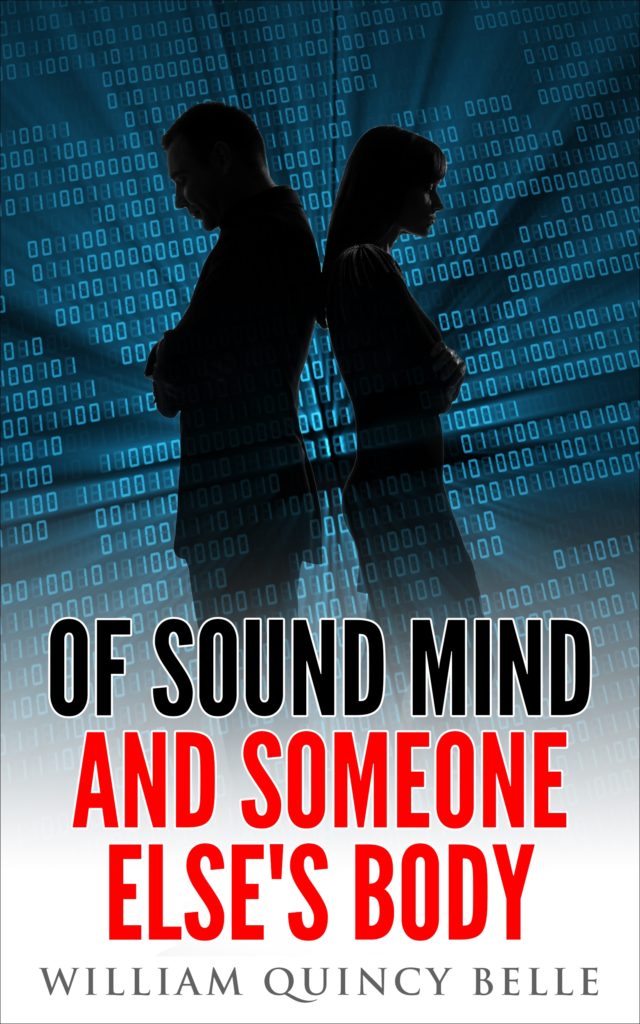
Book Review: Of Sound Mind and Someone Else’s Body

Content note: there are some discussions of nonconsensual sex, transphobia, gender dysphoria, and whorephobia in this post.

Have you ever read the plot summary for a piece of media and immediately thought, “Oh, this is gonna be a shitshow?” That was me when I read the blurb for Of Sound Mind and Someone Else’s Body, by William Quincy Belle.

Picture this: a supernatural body-swap story, à la Freaky Friday or The Hot Chick, with the lead characters being a successful male businessman and a female sex worker.

“This is gonna be transphobic and whorephobic as fuck, right?” I asked a friend when I told them about the plot of the book. They agreed that it would be difficult to navigate the fraught territory this book wanted to tackle without wading into some problematic shit. But nonetheless, I dove in, wanting to see the probable trainwreck for myself.

Of Sound Mind is about Alan Maitland, a nonspecific “businessman” (much like our boy Christian Grey, the exact scope and focus of his work is never quite spelled out), and Hana Toussaint, an escort with ambitions of becoming a sex therapist. The two are strangers at the beginning of the book, but through a neuroscientific mishap explained in somehow simultaneously not enough detail and far more detail than I cared to read, their brains switch bodies one night. Hana’s shrewd, sexy consciousness relocates into Alan’s brawny businessman body, while Alan’s serious, analytical mind flips into Hana’s eye-catching lady-bod. And, as they say, hijinks ensue.

Hilariously – or horribly, depending on what type of person you are – the switch happens while Hana is blowing a client, so Alan finds himself suddenly choking on cock after a lifetime of staunch heterosexuality. I felt conflicted reading this section, because on the one hand, it seemed written for laughs and I got instantly annoyed at Alan’s no-homo bravado in punching the dude in the nads and walking out. But at the same time, gosh, it would sure be traumatic if there was suddenly a dick in your throat when you’d neither consented to that nor ever experienced it before. I couldn’t tell whether I was supposed to laugh at Alan or pity him, which was a frequent feeling for me while reading this book.

Alan and Hana locate each other fairly quickly, figure out what’s happened, and unite in a mission to find the neuroscientist who fucked up and switched their brains. In the process, however, they navigate various challenges, like Hana fielding Alan’s business calls, Alan chatting up Hana’s escorting colleagues, and – all the while – getting used to life in their new, gender-swapped bodies.

I can’t personally speak to what it would feel like to read this book as a trans person. I imagine it wouldn’t feel great. There’s no acknowledgment in the book of transgender identities, which seems a shame, as that would be an interesting take on the somewhat tired body-swap trope.

Some of the gender-based difficulties Hana and Alan encounter seem overblown for comic effect – like Alan struggling to put on a bra, or Hana getting her dick caught in her pants zipper. (She’s a sex worker. There’s no way she doesn’t know her way around a fly.) But though Alan is sometimes incompetent at his coercively-adopted womanhood, overall I get the feeling that he thinks men would make better women than women do, and that women’s “petty” concerns would be easily solved with a small dose of “male” assertiveness. In a couple different scenes, Alan (in Hana’s femme little body) confronts catcallers and subway masturbators, shaming them publicly, and the book seems to suggest that this is the best way to deal with these altercations – completely ignoring the reality that marginalized folks standing up to creeps often results in violence, which is why we don’t do it more often. Duh.

The book is peppered with monologues from Hana about the stigma and oppression faced by women, sex workers, and people who dare to be publicly sexual. While I think these soliloquies are designed to paint Hana as a three-dimensional character, she ultimately comes across as someone who doesn’t so much have a personality as a series of staunch opinions. The effect is Manic Pixie Dream Girl-esque; her narrative function is to open Alan’s eyes and change his life, and she doesn’t seem to have much of an inner emotional life beyond that mission. Further, her impassioned rants are fairly 101-level stuff; anyone who’s familiar with feminism and social justice concepts, even from afar, is likely to read these and go, “Yeah, of course.” I know there are still many people out there who would benefit from basic explanations of gender bias, sex stigma, and whorephobia, but are those people really gonna read this book, let alone learn from it?

The other weird thing about Hana is that she spends almost the entire book flirting with Alan, fawning over him, and trying to fuck him. This is a pretty classic thing for a male author to do: ignite desire in his female protagonist for wish-fulfilment purposes, even if it doesn’t make sense for the characters. We’re shown no reasons why Hana would be attracted to Alan, other than (maybe) the physical attractiveness of his body, which she is in. He doesn’t come across as particularly smart, kind, funny, or interesting – so why does this babely, ambitious, clever woman pursue him relentlessly for the entire book? It doesn’t ring true to me.

The author tries to paint a compassionate picture of sex workers, unpacking some of the stigma they face. But we’re reminded again and again that Hana is educated, volunteers her time for philanthropic causes, and could easily do something else with her life but has chosen sex work. There is nothing wrong with this by itself, but depicting Hana as a “good” sex worker for possessing these qualities feels icky to me. Sex workers are still perfectly legitimate and acceptable even if they don’t have a formal education and/or have chosen sex work for survival reasons.

As a piece of literature, I felt similarly about Of Sound Mind to how I felt about the Fifty Shades books: the writing is okay but the plot is at least fast-paced and interesting enough to keep my attention. It’s often hard to tell characters apart when quotes aren’t attributed because their voices are so similar, and the dialogue is consistently stilted and awkward. (“Man, did I enjoy my orgasm! I love ejaculating,” Hana exclaims after one ostensibly sexy scene. “God, I love a good fuck pounding!”)

I think the premise of this story is fascinating, and could’ve been a good jumping-off point for discussions of gender politics, privilege, and empathy. The author does address this stuff but it’s all fairly surface-level; I would love to read a deeply feminist, nuanced, “woke” take on this story trope. Likewise, I was curious to see how the author would handle sex scenes between two characters inhabiting different bodies than they’re used to – but the writer breezes through the one sex scene in a hurry, without delving at all into what that type of sex would feel like, physically or emotionally. I felt a bit cheated that one of the most interesting questions the book poses was never answered.

If you want something light and silly to read that might prompt some reactionary feminist thoughts, give Of Sound Mind and Someone Else’s Body a try. I didn’t hate it, and it gave me lots to think about – including the question, “Why is this making me roll my eyes so hard?!” There are worse things you could read. Like – by a small but decisive margin – any of the Fifty Shades books.


If you like, you can buy this book on Amazon (in Kindle edition or paperback). Feel free to check out the author’s website if you want to learn more! FYI: This review was sponsored, meaning that I was paid to write an honest (not necessarily positive) review.

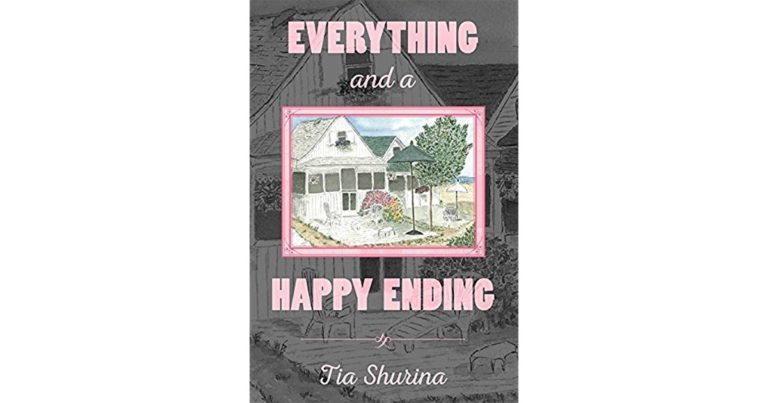
Book Review: Everything and a Happy Ending

Sometimes the point of literature is to give you a glimpse into a world you’ve never known, a life you’ve never led, some feelings you’ve never experienced. But other times, the point of literature is to mirror your feelings back at you, to remind you of what you’ve been through, and to show you that you’re not alone.

I went through that when I read Tia Shurina’s memoir, Everything and a Happy Ending. Though I went into this book knowing essentially nothing about it, I saw myself reflected back to me in its pages. And it felt weirdly affirming to see that the intense unrequited love I’ve experienced over the past couple years is both a common human experience and a valid one.

In her book, Shurina tells the story of her relationships with three men who played key roles in her life: her father, her ex-husband, and (wait for it) actor and comedian Ray Romano. (She refers to him as “Emilio” throughout, a code name, but is open about the fact that Emilio is really Ray.) I was interested in this detail because Romano kinda fucked me up as a kid. On his show Everybody Loves Raymond, a recurring gag shows him trying to initiate sex with his wife, only to be rebuffed with a sardonic “No.” This instilled in my young brain a belief that women are sexual objects to be pursued, not sexual agents capable of desire and initiative. While I don’t necessarily fault Romano for restating an already-rampant cultural trope about sex, I was curious to read about his inner romantic and sexual workings. (Spoiler alert: there’s no sex with Romano described in this book, and what little sex there is is mentioned only obliquely in passing.)

Everything and a Happy Ending chronicles – among other things – Shurina’s reconnection with her dad after a long period of distance, the pain she went through when he died, and her difficult decision to separate from her husband after decades together. It’s a poignant study on how our relationships are all interconnected and feed into each other: when you have a more satisfying connection with a parental figure, for example, it can give you the strength and courage you need to bravely leave a spouse.

But by far, the strangest and most emotional part of Shurina’s story is her romance with Ray Romano. She knew him when she was in college and they worked together at the bank where he also met his eventual wife, Anna. The way Shurina tells it, Romano made a pass at her in the form of a starry-eyed poem he gave her when she quit the bank. Though she didn’t tell him so for many years, his sweet poem boosted her self-confidence at a time when she really needed it. I was reminded of the first boy who ever called me beautiful – a friend of a friend, in an MSN Messenger conversation, when I was about 13 years old – and how much that one small action impacted me for years afterward. It’s funny how our choices can affect other people for far longer than we ourselves even remember them.
Decades after losing touch with Romano, Shurina reconnected with him on a trip to Vegas, by which time he’d risen to fame as a comedian. She describes an intimate, emotional affair they subsequently had via email, sharing their innermost thoughts and feelings on weekly electronic “dates.” Though he eventually cut off contact with her in order to preserve his marriage and remain true to his wife, Shurina fell deeper and deeper in love with him, and came to view this love as a turning point in her life.

I recognized these feelings as I read them. The powerful love for someone who cannot return it in the ways one wishes they could; the aching and hoping for closure that will never come; the irrational and extreme things one does when one is in love. Shurina continued to email Romano and even hand-deliver gifts to his workplace after he ceased contact with her, which frankly is scary and worrisome behavior.

But part of me understood the feelings that might drive that level of obsessiveness, even if I can’t and don’t condone what Shurina did. I remembered the time I bought the same deodorant as a crush because I wanted to be able to smell him whenever I wanted, the time I picked up a receipt a crush had dropped because I wanted a glimpse into the mundanity of his life, the time I kept a dime on my bedroom floor for a year because a crush had left it there and it reminded me of him. Not all the things we do in the name of love are ethical or even forgivable. Sometimes it feels like we can’t help it.

Structurally, Shurina’s book is all over the place: she’s always digressing on mini-monologues about spiritual epiphanies, happenstance meetings, and “winks from the universe.” But it’s charming, in its own way – like listening to your kooky aunt tell you the story of the love of her life. Though sometimes her thoughts felt repetitious or brought out my inner skeptic, I still wanted to keep reading. I wanted to see Shurina get her happy ending.

And happily, she does. As the book comes to a close, its offbeat protagonist has shaken off her toxic marriage, successfully grieved her father’s death, taken at least some steps toward letting go of Romano, and met a man who wants to be with her – in real life, not just in “reel” life. It felt fortuitous for me to read this book at a time when I, too, have just recovered from an unreturned love. It served as a reminder that life can and will go on, and that there are happier adventures awaiting me.


You can buy Everything and a Happy Ending on Amazon! This review was sponsored, and as always, all writing and opinions are my own.

Babes, Bards, and Batterers: 3 Brief Book Recommendations

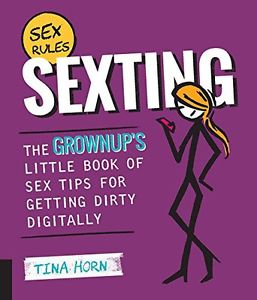
Tina Horn has one of my favorite brains in the world, as I’ve told you before. When I heard she was writing a book about sexting, I texted my best friend a mangled string of all-caps words followed by a glut of exclamation points. I can’t help it: a favorite writer of mine writing about a favorite activity of mine? Sign me up.

Simply called Sexting, the book is as straightforward and to-the-point as its title would indicate. It contains practical advice on all things sexting and sexting-adjacent, from online dating to selfie-taking to vocabulary choice to sextual aftercare.

Tina’s book is written such that a beginner to the world of sexting can pick it up and learn, but you’ll come away with some fresh tips even if you’re a seasoned sexter. I love this book and find myself referring to it time and time again!

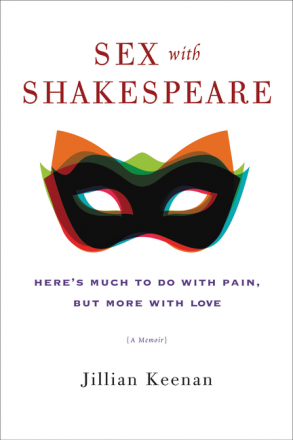
Incidentally, it was on Tina Horn’s podcast that I first heard about this next book, Sex with Shakespeare by Jillian Keenan. Jillian is a lifelong spanking fetishist – in the true sense of the word “fetishist,” i.e. she has never had an orgasm thinking about anything but spanking. This would be interesting grounds for a memoir in and of itself, but Jillian’s also a Shakespeare nerd, so she’s interwoven her personal story with kinky analysis of the Shakespeare plays that helped her process her emotions as she came to terms with her fetish.

Prior to reading this book, I liked spanking and kinda-sorta liked Shakespeare; now that I’ve read it, I like (and understand) both a whole lot more. Jillian’s writing transports you around the world and throughout history, and you learn a whole lot about her kink and any kinks of your own on the way. Now I’m hungry for more memoirs by clever fetishists like Ms. Keenan!

I read Sex with Shakespeare on my Kindle, but there are good reasons to go analog with this tome. When I gifted Georgia a hardcover copy, she proceeded to (consensually) spank me real fuckin’ hard with it while I was bent over the arm of her sofa. Be still, my li’l kinkster heart!

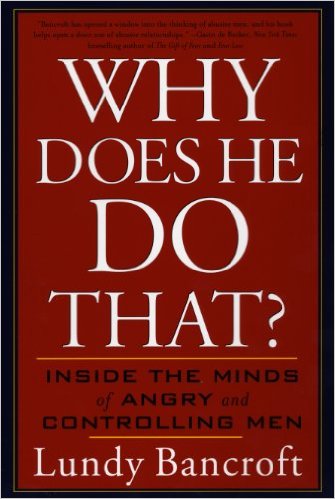
I recently found out a friend of mine is chronically abusive, and cut him out of my life entirely. I’m very lucky to have been spared the majority of his abuse, but nonetheless, it was a difficult experience to process. I kept wondering: what made him do those things? Was he aware of what he did to those women, or was it inadvertent? How could I have been so blind to his tactics? Or, to put it how author and domestic abuse counselor Lundy Bancroft puts it: Why Does He Do That?

I picked up this book as research for a writing project, but it quickly became clear that I needed to read it for personal reasons, too. Learning about the mindset of abusive men helped me understand what I’ve been through, and gave me tools to analyze potential red flags I see in the behaviors of other men as well. This book is written specifically for women currently mired in relationships with abusive men, but you’ll find it interesting and affirming if abusers have ever confused or frightened you in any capacity.


What books have you read and loved recently? Lay ’em on me!

GJ Reads Grey, Chapter 8

Want to go back? Read the previous chapter or the first chapter.

I flipped through the first several pages of this chapter without finding anything worth remarking on. The first chunk of the chapter is mostly email exchanges between Ana and Christian; he’s bought her a new laptop (without asking her first, of course) and keeps checking in to determine whether she’s been doing her assigned research on BDSM.

He ascertains that she’s done her homework, based on the fact that she calls him “Sir” with a capital S. He also calls her a “sassy wench.” How sweet.

Christian’s also exchanging emails with his former domme, Elena. Her email signature tells us that she owns a beauty business called Esclava. As in, the Spanish word for slave. Subtle.

Ana asks Christian what she should Google to begin her BDSM research, and he says, “Always start with Wikipedia.” This seems like risky advice at best. Why not just recommend some specific websites you know are good, Christian? Or buy her some books? You’ve done it before…

After spending some time Googling, Ana sends Christian a curt email that simply says, “Okay, I’ve seen enough. It was nice knowing you.” If this was a book about a dude who respects when women say “no,” this would be the end of the story. She doesn’t want you in her life anymore, so you get out – easy. But this is Christian, so obviously he’s not going to do that.

I sit back in my chair, dumbfounded.
Nice? Nice. NICE.
She thought it was more than nice when her head was thrown back as she came.

Yes, amazingly, orgasms are not actually the same thing as everlasting consent.

Christian drives to Ana’s house to try to change her mind, chardonnay and condoms in tow. Dude, take a hint.

I’m uneasy; it’s reckless and too presumptuous of me to come here. Then again, I’ve already been here twice, though for only a few minutes.

Hey, cool fact: having been to someone’s house doesn’t entitle you to visit it again whenever you want! And likewise, having fucked someone before doesn’t mean you can fuck them forever!

Ana’s roommate Kate lets him into the house, and he sneaks up on Ana where she’s seated at her desk listening to music and looking over his BDSM contract. Does he ever stop watching her without her knowledge?

“Are you biting your lower lip deliberately?” I inquire, my voice sterner than I’d intended.
“I wasn’t aware I was biting my lip,” she whispers, her face pale.

CAN YOU STOP WITH THE LIP THING ALREADY?? I am so sick of hearing about lip-biting. Uuuuughhhh!

“Did you mean [it was nice] knowing me in the biblical sense?”
Her cheeks pink. “I didn’t think you were familiar with the Bible.”
“I went to Sunday school, Anastasia. It taught me a great deal.” Catechism. Guilt. And that God abandoned me long ago.
“I don’t remember reading about nipple clamps in the Bible. Perhaps you were taught from a modern translation,” she goads me, her eyes shining and provocative.
Oh, that smart mouth.

Ostensibly to “remind her how nice it was to know him,” Christian proceeds to have sex with her. It seems, actually, pretty consensual. Ana “launches herself at” him, and a few times he asks her check-in questions like “What do you think of that?” and “Trust me?” before going ahead with various actions. Okay, cool, yes. Why aren’t all the sex scenes like this? (Minus the creepy “sneaking into her apartment without her knowledge” beginning.)

There is one part, however, where he binds her and blindfolds her using a tie and her T-shirt, and then says, “I’m going to get a drink,” and does. Liiiiike… you probably shouldn’t leave someone unattended while they’re in bondage, particularly if they’re new to it.

Outside her room, I leave her door slightly ajar and enter the living room to retrieve the bottle of wine.
Kavanagh looks up from where she’s sitting on the sofa, reading, and her eyebrows rise in surprise. Don’t tell me you’ve never seen a shirtless man, Kavanagh, because I won’t believe you. “Kate, where would I find glasses, ice, and a corkscrew?” I ask, ignoring her scandalized expression.

Poor Kate. She has to put up with a lot of weird shit in this book.

When Kate asks Christian where Ana is, he replies, “She’s a little tied up at the moment,” as if no one in the history of popular culture has ever made this joke and he’s brilliant for inventing it. Excuse me while I roll my eyes forever.

Christian bosses Kate into helping him put ice in the wine glasses and pour the wine. Does he think all women are his submissives?! Kate quite reasonably asks him if he’s going to help her and Ana move into their new apartment, and he reacts like a caricature of a commitmentphobic man:

Fuck off, Kavanagh.
No way am I going to help. Ana and I don’t have that kind of relationship. Besides, I can’t spare the time.

So you have the time to travel back and forth between Portland and Seattle ad nauseum for sex dates but can’t spare a few hours to help Ana pack some boxes. Nice! Good boyfriend award over here. And on that note: he finally returns to Ana’s room, where the poor girl is still tied up and waiting.

I release each of her breasts from her bra so they’re supported by the underwire cups; her breasts are pert and vulnerable, just how I like them.

He takes her to the edge of orgasm five times but doesn’t let her come, and then when he finally fucks her, she apparently comes after the first thrust. Um. I suspect this isn’t exactly realistic. I mean, I know this is a romance novel, but come on.

As she lies flat on the bed, panting, I pull out of her and remove the wretched condom.

Of course Christian has a hate-on for safer sex supplies…

“Please pass me my sweatpants,” she orders, pointing to them.
Wow. Miss Steele can be a bossy little thing.

But… she said please…?!

I start the car and begin the drive back to Portland, analyzing what’s taken place between us.
She e-mailed me. I went to her. We fucked. She threw me out before I was ready to leave.
For the first time – well, maybe not the first time – I feel a little used, for sex.

Christian’s middle name should be Hypocrite. He’s constantly complaining about Ana doing the exact same stuff to him that he does to her. His sense of entitlement is staggering.

This chapter, in summary: a decent sex scene surrounded by terrible writing and problematic relations. That’s a good wrap-up of the entire book, actually…