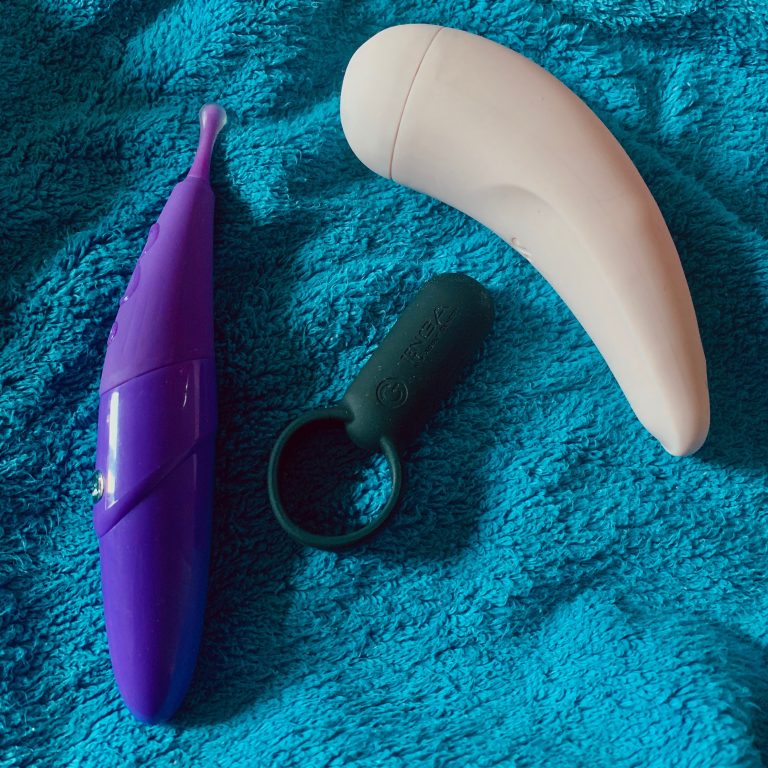
Mini Reviews: Zumio S, Tenga SVR, & Satisfyer Curvy 2+

In January, a business associate flew me to California to attend ANME – the Adult Novelty Manufacturers’ Expo – to do intel for a prospective sex magazine project I had been hired to co-helm. My friend and I were tasked with cruising the aisles of the event, networking with sex toy companies who might be interested in partnering with us in various ways. The project never ended up materializing (thanks, COVID!) but it was a fun experience nonetheless – and I ended up going home with a handful of new sex toys, natch! Here are a few of them…
 

The Zumio S is an update on the classic Zumio clitoral oscillator, the king of intense pinpoint stimulation. The S, as its initial might imply, is specifically designed for people with high levels of sensitivity, like me. The tip has been broadened into a small sphere – as opposed to the narrow alien-antenna shape of the original – so its speedy circular oscillation feels less intense and more diffuse. (Oscillation, incase you need a refresher, is different from vibration in that it tends to feel “deeper” and cause less of the transient numbness vibrators can create. It’s the reason my Eroscillator is still my all-time favorite clit toy, bar none.)

Normally, I would not recommend that any toy designers make a weaker version of their product, since there’s a lot you can do to mitigate a too-strong vibrator (use it indirectly, use it through fabric, use an attachment, etc.) but there’s basically nothing you can do if your vibe is too weak, other than cry and see if the store will accept a return. However, in this case, I think Zumio actually made the right call. As I noted in my review, the original Zumio felt waaaay too strong for me, sometimes even on the lowest setting, and I only ever used the first 3 settings out of 8. The revamped S is much chiller and doesn’t make my clit want to run away. I don’t even need to use it through underwear like I did with the first model.

However, as other reviewers have pointed out, the best way to use the Zumio is to hold it against the outer labia (depending on your body – your mileage may vary). When I do this, the oscillations no longer feel like they’re zapping the tip of my clit with pure, overwhelming sensation, the way the first Zumio sometimes did; instead, they travel through my skin and flesh to stimulate the whole shaft of my clit, creating a more profound type of pleasure and much more reliable and pleasurable orgasms. It’s pretty amazing that this vibe is so strong it can get me off through two layers of labia; usually it’s only powerhouse wand vibrators that can do that.

Reviewers’ opinions are all over the map on this, but my general impression is that the Zumio S would be the best choice for the majority of people. If you really, really like intense and targeted clitoral stimulation, maybe the Zumio X or newly-released Zumio E is more your style – but if you’ve ever felt clitorally overwhelmed by a vibe, odds are good the S would be better suited to you. These toys are on the expensive side – $140 Canadian, less in the States – so if you’re at all uncertain about liking pinpoint stimulation, I’d skip ’em and go with a more universally appreciable choice like the Tango or even a Magic Wand. The Zumio line of toys is best for people who really, really adore intensely targeted clit stim – which isn’t always me, but when that’s what I want, I gotta have a Zumio.
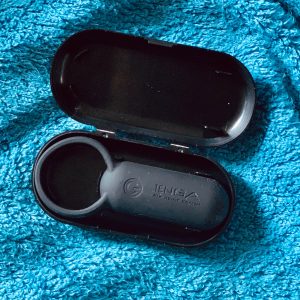
 

I forget whether it was Bex or Kevin Patterson who first turned me on to the Tenga SVR – both of them proselytize this vibe on the regular – but in any case, I’m glad I finally got to try one out. This rechargeable vibrator is technically a cock ring, and sure, you could use it that way… but its shape and motor are such that it also works plenty great on clits. Its best-known “alternate use” is for fingerbanging (ideally fingerbanging other people, though if you’re flexible you could try it on yourself): slip your fingers through the silicone loop and vibrations will transmit through them, even while they’re inside somebody, while the rest of the vibrator can rumble wonderfully against their clit or perineum.

You know how almost every vibrator claims in its marketing copy that it’s powerful, rumbly, quiet, discreet, travel-friendly, and versatile? The Tenga SVR actually is those things. The motor fucking rules: it’s got a great bassy undercurrent of rumbliness that creeps into slightly buzzier territory as you ascend into the heights of its 5 steady speeds, but it’s never the type of annoying, desensitizing buzziness that makes my clit want to cry. The silicone is really soft and sexy to the touch, and easy to clean, especially since the toy is waterproof. This is an easy vibe for me to hold and operate, even when my hands are hurting, because its one button is easy to locate and press, and sliding my fingers through the loop ensures I won’t lose my grip on the toy. Most thoughtfully, the SVR comes with a small, plain plastic storage case that protects it from lint and dust when you toss it in your bag – and it is definitely the type of vibrator I like to toss in my bag, whether for a quick booty-call across the city or an international flight.

In the world of vibrators, the SVR often gets overshadowed by Tenga’s other offerings, many of which look like characters from My Neighbor Totoro. But the SVR is no less good for being so comparatively understated. Rather than blow their design budget on bells and whistles, with this toy Tenga opted to focus on what actually matters in a vibrator (in my view, anyway): power, ergonomics, and versatility. Kudos!
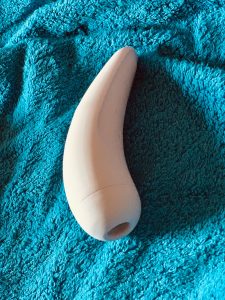
 

Finally, let’s talk about the Satisfyer Curvy 2+… I received this as-yet-unreleased toy in a swag bag at ANME and it seems it still hasn’t been released in North America yet, over 6 months later. It is, however, available from some international shops, so maybe it’ll make its way over here eventually.

Like all the toys Satisfyer is best known for, the Curvy 2+ uses “Air Pulse technology” to create a clitoral sensation that feels like the exact middle point between receiving cunnilingus from a robot and rhythmically pumping the world’s weakest clit pump. However, this one’s a bit different, for two main reasons: Firstly, it can be controlled via Satisfyer’s smartphone app (which I didn’t test, because I’m sick to death of vibrator apps, but I know some folks love ’em), and secondly, if you flip the toy around, you can use the “handle” as a vibrator. It’s designed for G-spot stimulation, but honestly, with the toy being as short and stout as it is, it’s hard for me to get enough leverage for the type of thrusting my G-spot tends to crave. I do like the curve, though, and sometimes after a clitoral-only masturbation session the likes of which I’ll often have with a Satisfyer, it’s nice to have the option of some penetration to round out the sesh, without needing to break out an additional toy if I don’t feel like it.

The controls of this vibe are somewhat confusing, and even after using it multiple times, I still sometimes can’t figure out how to get it to do what I want. It makes me miss the days when controlling Satisfyer toys was as simple as pressing one button. But if you could master the controls (which probably entails not throwing away the instructions like I did when I assumed the toy would soon be released and would have its manual posted online in PDF form), it would improve your experience a lot, as they allow you to independently control the toy’s vibrations and air pulses.

As you may know, I’m not a fan of sex toy companies stealing other sex toy companies’ designs, and Satisfyer has been particularly egregious on this front. Their “Air Pulse” toys borrow technological innovations that were (as far as I’m aware) developed by Womanizer, but usually they at least put their own design flair on ’em – I still think the Satisfyer Penguin is one of the cutest and best-designed toys in this category. Even less acceptably, though, Satisfyer has also blatantly ripped off vibrator designs from Fun Factory. They don’t seem like a terribly scrupulous company.

I’m (reluctantly) recommending the Curvy 2+ mainly because it’s one of the less expensive actually-decent-quality options available (about $50 USD or $60 CAD – I don’t have exact numbers) in this category of toys, and financial accessibility is important. But do keep in mind that one of the reasons Satisfyer’s able to keep their prices down so low is, I would imagine, the lack of need to spend money on research and development, since they’re so routinely yoinking designs and technology from other companies. But if you deeply desire a pressure-wave toy, need it to be affordable, and live in an area where this one is available, you could do a whole lot worse… in every way except for ethics, that is.


Thanks so much to the folks at Zumio, Tenga, and Satisfyer for providing these products for me to review!


Review: Spartacus Blown Large Realistic Glass Dildo

You might think being a sex toy reviewer for nearly a decade would’ve expanded my sexual horizons – and in many ways, it has. But in other ways, it’s just allowed me to hone in on which types of toys I really, really like, and skew my collection more and more in the direction of things I specifically adore.

On that note, I will confess to you that there are basically only 2 categories of insertable toys I unreservedly love: glass dildos, and realistic silicone dildos. Sure, there are outliers – chief among them, the stainless steel Njoy Eleven and the lacquered wood NobEssence Seduction – but for the most part, I know what I like and I stick to that.

That’s why it’s such a surprise that it’s taken me this long to acquire and try the Spartacus Blown Large Realistic Glass Dildo (phew, what a mouthful… and a vag-ful). As far as I’m concerned, it’s the best of both worlds: a realistic cock, made of glass. The good folks at Mindful were generous enough to send me one from their extensive smorgasbord of dildos.

Let me say this right upfront: you will not enjoy this dildo if you like internal stimulation that is all soft strokes and satisfying squish. If that’s your deal, but you want something of comparable dimensions, get a VixSkin Bandit instead. This glass dildo is for people who like to get fucked hard, with large, unforgiving objects. People, in other words, like me!

See, the thing is, I love realistic dildos because I love flesh-and-blood cocks. I eroticize the shape of them, the idea, and – sure – the actual physical sensations of them. I know dicks aren’t everyone’s jam, so I won’t try to argue that something about the shape of the coronal ridge and veined shaft of a cock is “designed” to “naturally” pleasure the inside of a vagina. But for me, that feels true. The right dick – paired with lube, a good vibrator, and a partner with decent stamina, patience, and aim – can get me off easily and excellently. This is why I gravitate toward dildos that look like this much-revered human appendage.

But on the other end of the spectrum are glass dildos. Obviously, there are some things dildos can do that flesh dicks simply cannot (and vice versa), and those differences are particularly apparent in toys made of glass. My most sensitive internal spots – the G-spot and the A-spot – tend to like firm pressure once they’re turned on, and sometimes even the hardest of erections just isn’t as hard as I would prefer. It’s not through any failing of these cocks’ owners; it’s just a fact of human biology.

This toy, by contrast, is if like you were hooking up with someone who had one of the biggest* and most pleasurable cocks you’d ever experienced, and suddenly a witch cast a spell on them and turned them to stone (or, in this case, glass). Yeah, that would be horrifying. But also… for me at least, their dick would suddenly start feeling at least 20% better. (Now that I think about it, this sounds like a fantasy that my death-fetishist friend Dick Wound might be into…)

*Important note for those of you who might be worried: bigger does not always equal better. Big dicks are just one item on the menu at the sex buffet. For some people, it’s their favorite item and all they ever prefer. Some people will always like smaller penetration, or none at all. As for me, I’m sometimes a size queen and sometimes I want something smaller, gentler, and/or more targeted. Don’t @ me about this. Your dick is great no matter what size it is, I promise. I just… don’t need to hear details about it in the comments section, okay? 😘

Love a realistic frenulum and coronal ridge.

This Spartacus glass dildo boasts 8 inches of insertable length and a diameter of 1.75 inches at its widest point. That’s pretty hefty, especially if you keep in mind that glass toys tend to feel bigger than silicone toys of the same dimensions because they have no give. I have to be pretty warmed up to take this one, but once I am, it’s incredibly satisfying: the tight fit enables me to feel all the subtle-yet-important veins running along the toy, and there’s more than enough length to reach my A-spot with the tip while the shaft strokes against my G-spot. I find that orgasms, especially, are enhanced by the hugeness and hardness of this toy: my vag clenches around it, pushing it yet more firmly against my erogenous zones in a rhythmic manner while I come. It reminds me of some qualities I love about the Double Trouble, only without the spot-targeting curves.

Yes, this Spartacus dildo is straight as fuck. (I am not commenting on its sexual orientation, which I don’t know. I mean its shape.) Normally I think it’s a bad idea for a toy to be this firm and this curveless; toys along these lines have caused me great pain and discomfort before. Indeed, I do have to be rrrreally turned on and rrrreally lubed up before this toy will start to feel good. But once it’s comfortably inserted, I can use the balls at the base to easily angle the tip upward, into my A-spot, so it bypasses my cervix and rams into only the area that likes to be rammed. However, obviously your mileage may vary – I would be wary of this one if you’ve had a lot of trouble with cervix-bashing toys before and haven’t found angling to be helpful in that regard.

Let’s talk about those balls, though… Balls on realistic dildos are highly controversial among sex toy nerds. Some people hate ’em, some love ’em, some don’t pay the slightest attention to ’em. I’m mostly in that latter category, but I do think that in this case they were a wise choice. As someone whose chronic illness sometimes manifests as pain and weakness in my hands and arms, it’s really important to me that dildos be easy to thrust and manipulate. The base of this dildo – which is wider than normal bases, due to the inclusion of balls – makes it possible for me to angle the toy as needed and thrust it just by rhythmically bumping the heel of my hand against the bottom, even on bad pain days. With the addition of the toy’s prominent veins, this can create a lot of sensation with minimal effort – score. If you want a similar toy without balls, Spartacus makes a ball-less one that’s just a little bit smaller (7″ by 1.5″).

The flared base of this toy makes it anal-safe – and also, fascinatingly, makes it harness-compatible. It’s really hot to think about getting fucked by someone who has a glass cock strapped on – although, if you try this, please be careful; it would be all too easy to painfully ram someone with this toy if you couldn’t feel what you were doing.

My partner has fucked me with this toy by hand and they noted that it’s easy to thrust (thanks again, balls!) and very pretty to look at. The veins make it a bit of a nightmare to clean, but if you scrub it with a washcloth or scrub brush while you’re soaping it up, you should be alright.

Overall I’m quite enamored with this Spartacus glass dildo. I hope we start to see more toys crop up in the “realistic glass” category. Dicks are lovely; glass is lovely; the combination of the two is a joy.


Thanks so much to Mindful for sending me this dildo to review! They have a fantastic selection of dildos in countless different shapes, sizes, and materials for you to peruse. Did you know that they rebranded recently? They used to be called My First Blush; I gotta say I like the name Mindful better! Their mission is all about providing high-quality products and exceptional customer service. Sounds good to me!

This post was sponsored, which means I was paid to write a fair and honest review. As always, all writing and opinions are my own.

Book Review: Brothel’s Kitchen

Sex work is such a normalized field in my sex-positive, feminist communities that sometimes I sort of forget just how stigmatized it is in the world at large – even among people who claim to be “liberal” and “progressive.”

Narratives persist about how all sex work is nonconsensual and exploitative, despite sex workers screaming on social media for years that they’ve chosen their career path and don’t want or need to be “rescued.” Many people still use phrases like “selling your body” to talk about what is actually just the sale of your time and your body-based services, just like what happens in many other fields like massage, modeling, and professional sports. Far too many well-intentioned people try to argue that sex work is bad because it’s “disempowering,” as if the slog of earning a living is held to the same standard of “empowerment” in any other field. It’s perplexing and enraging – especially since so many of these folks think they’re being helpful by parroting their bullshit opinions that are (you guessed it) actively disempowering to sex workers.

I think a lot of this misinformation has to do with sex work’s representation (or lack thereof) in mainstream media, from the evening news to procedural dramas to blockbuster movies. For decades, if not longer, it’s been framed over and over as something one would only do under the direst of financial circumstances, or to get access to drugs, or to quench a psychological craving based in “daddy issues” or other trauma. While obviously there is poverty, addiction, and trauma in the sex work community (just as those things exist in pretty much every other community too), these narratives usually leave out the ways in which sex work can be incredibly positive and enriching for workers and their clients. And hey, newsflash: a job doesn’t have to be 100% peachy all the time to be a valid job worthy of respect and protections. We live under capitalism! Work sucks! Let people choose work that they like to do and feel able to do, since we all have to work anyway!

All this to say, I think positive portrayals of sex work are invaluable in shifting public perception of this misunderstood field. So I was pleased to be asked to review Phillipa Zosime’s new memoir, Brothel’s Kitchen: Flavours of Women.

The book follows Phillipa’s induction into the sex work industry in Austria. It opens with a series of scenes set at a massive orgy held by one of the brothels she works for, at which she’s expected to fuck and fellate clients for 7 hours (with breaks to shower, hydrate, eat, and rest). After she enjoys herself and gets paid, there’s a classic “You’re probably wondering how I ended up in this situation…” flashback and we turn back time to when she first entered the sex work world. Once an archaeology student and political intern, she decided instead to follow her fascination with sex and start having it professionally.

One very interesting aspect of this book to me is the details about Austria’s legal and regulated sex work industry. Regular STI tests are required, workers are considered self-employed contractors for the brothels they frequent, and meticulous paperwork is kept to make sure everything is legit. Many sex workers I know in Canada and the U.S. advocate for decriminalization rather than legalization/regulation, since (among other reasons) legislative bodies don’t tend to know very much about what sex workers and their clients actually need and want – but nonetheless, it was intriguing to hear about how brothels are apparently run over in Austria. The book goes into detail about how profits are split up between workers, madams, and house owners, as well as how much they pay in taxes and what kind of legal due diligence they’re expected to keep up with on a regular basis. These procedural minutiae ought to captivate anyone who’s curious about sex work law around the world.

Another fascinating detail from Philippa’s story is that she had only had one sexual partner before becoming a sex worker. It hadn’t been the most satisfying relationship, and she ended up having her first-ever orgasm with a client at the brothel (which became a point of pride for him and a running joke between them!). This was the point in the book when I started to get excited: it’s a really uncommonly positive depiction of what a career in sex work can be like. If there were more stories like this out there – stories that showcase the good, the bad, the ugly and the beautiful parts of sex work – I think far fewer people would hold shitty misconceptions about the industry.

Yes, there are scary and sad parts of Phillipa’s story. Her friend dies; clients blow up in anger on occasion; women get into snippy arguments; someone’s money gets stolen from her safety deposit box at the brothel. But all of these details just felt really real to me. Writing a fully rosy sex work memoir would, I imagine, be just as absurd as making any other career sound 100% fun 100% of the time. Life has its ups and downs, and so do our jobs, no matter what field we work in.

In addition to heartwarming sex-work friendships and heart-pounding sex-work problems, this book also contains quite a few funny stories that had me literally LOLing. There’s one in particular about one girl accidentally spitting cum onto another girl’s face that I don’t think I will ever be able to forget…

I gotta say, I liked Brothel’s Kitchen even more than I was expecting to. It’s charming, and cute, and fast-paced, and full of strange and illuminating details. There’s a disclaimer at the beginning that explains that “the events and conversations in this book have been set down to the best of the author’s ability,” and that “the author’s recollection of the past occurrences may deviate from those of others,” but there are so many parts of this book that seem like you couldn’t possibly have made them up. That realness is the heart and soul of Phillipa’s writing, and it makes this one hell of a page-turner.


Thanks so much to Phillipa Zosime for providing this book for me to review! This post was sponsored, which means that I was paid to write a fair and honest review of the book I was provided with. As always, all writing and opinions are my own.

Review: Hot Octopuss Amo

I always find it amusing when a sex toy company makes both a product I hate and a product I love. Why does the Dame Kip satisfy my clit while the Dame Eva buzzily tumbles from my labia in laughably short order? Why does the We-Vibe Tango make me swoon while the We-Vibe Wish distracts me to the point of rage? Why does the Fun Factory Stronic Eins give me deep, throbbing orgasms while the Fun Factory LayaSpot just makes me sigh and give up?

Well, the answer is that not every sex toy works well for every body – and that’s a good thing. It means there’s enough variety within the sex toy industry to accommodate almost anyone, at least pleasure-wise.

I bring this up because today’s blog post is about a Hot Octopuss toy. Hot Octopuss previously made the Queen Bee, a vibrator that ticks several of my “I hate this” boxes: it creates far too much noise and far too little sensation, and it has a frustratingly and unnecessarily cissexist name. But Hot Octopuss shouldn’t be written off entirely, because they’ve also made several top-notch toys, like my partner’s beloved penis vibe, the Pulse, and the toy I’m reviewing today, the Amo.

The Amo is a really fucking good vibrator. Hot Octopuss is known primarily for the rumbly motors in their penile toys, and they seem to have brought that technology into the clitoral sphere. The Amo visibly and tangibly rumbles from the moment you turn it on. This is not at all a wimpy vibrator like so many on the market.

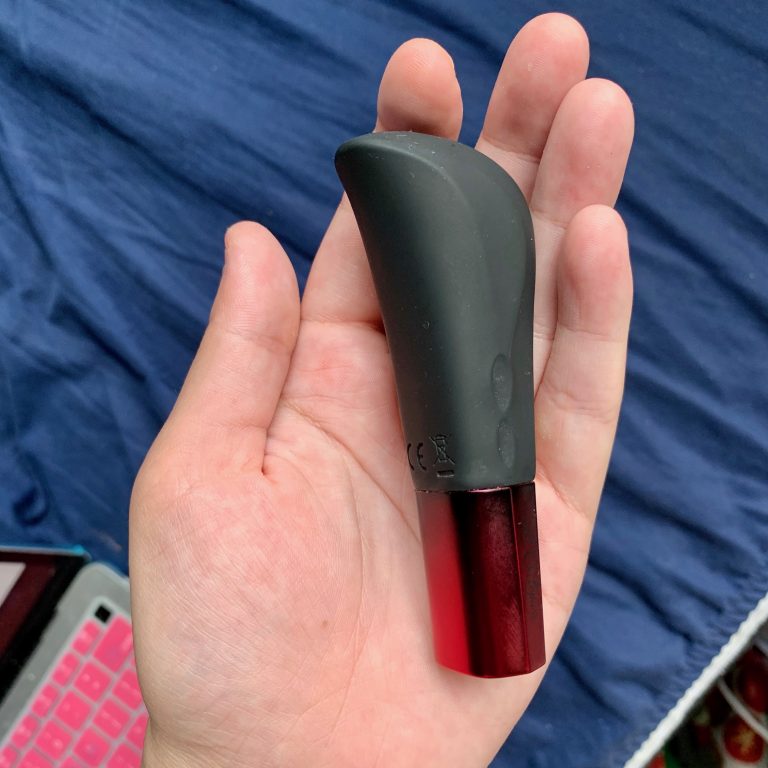
It’s also a really pretty toy. I like the black-with-red-ombré aesthetic, and the top-heavy shape sets this vibe apart from standard bullets, albeit while preventing it from being useable in, say, the bullet-vibe hole at the base of some dildos. The shape allows for a lot of different types of sensation: you can position the squishy, pointed tip on your clit if you like focused stimulation, or use various other spots on the toy’s shaft for broader and/or firmer touch.

The aforementioned squishiness is worth keeping in mind if you’re used to using hard plastic bullet vibes like the We-Vibe Tango or ScreamingO Charged Vooom. Silicone – the material that the main body of the Amo is made of – has more give to it than plastic, and also muffles vibrations slightly. The Amo’s motor is strong enough to make up for it, but if you like full-strength, focused vibrations that are almost sharp in quality, hard plastic will still probably be your best bet.

The Amo has 5 steady speeds and 5 patterns. This should be plenty for most users, although I have found myself wishing on a couple of occasions that there was just one or two extra speeds on the top end.

For me, the controls of this toy are a little awkward. One small button on one side of the shaft turns the vibe on and off, while two equally small buttons on the other side control the vibration intensity. None of the buttons are placed where my fingers naturally want to rest while holding this toy, so there’s always a bit of reaching and readjusting involved. However, if you’re someone who tends to accidentally bump buttons while using a vibe, disrupting your own pleasure, you might find this layout functions better for you.

I wish the USB-rechargeable Amo’s battery life was better – you get up to 40 minutes of use for every charge, and charging takes 2-3 hours. However, given that its best-known competitor, the Tango, has a notoriously shitty battery that has necessitated me replacing mine once every couple of years, I don’t mind needing to charge a toy more often in the short-term if it will last me longer in the long-term. (This, however, remains to be seen, as I’ve only owned my Amo for a couple of months.)

Overall, the Hot Octopuss Amo is what all too many clitoral vibrators wish they were. It’s strong, rumbly, quiet, elegant, portable, waterproof, and relatively inexpensive – just $49, versus $79–99 for toys of similar type and quality. I’m still married to my bedside bestie the Eroscillator, but the Amo has definitely entered my rotation of favored small vibes for travel and overnights. Congrats to Hot Octopuss for making something that’s not only better than their abysmal Queen Bee, but actually genuinely excellent.


Thanks to Hot Octopuss for sending me this toy to review!

Book Review: The End of Policing

Here’s one of the whitest things I could possibly say: I’ve never had a memorable encounter with a police officer.

Unlike countless people of color and especially Black folks, I have never been harassed, victimized, pursued, or discriminated against by a cop. My opinion on the police for most of my life has been neutral-to-positive, a fact that makes painfully clear the effectiveness of “copaganda”: media created to sugarcoat and valorize the role of police in our society. From SVU to Brooklyn Nine-Nine to The Silence of the Lambs, much of our media serves to numb white people’s understanding of the havoc cops wreak on Black folks’ lives every day, and have since the birth of their institution.

It was for this reason that I felt compelled to read The End of Policing. Friends of mine more entrenched in the social justice movement than I am have been shouting (and tweeting) anti-cop slogans for years now, and – seeing the violence regularly inflicted on marginalized people by police officers – I agreed with them that something needed to change. But I didn’t know much about the nuts and bolts of the issue: law enforcement’s rampant history of racist profiling and unwarranted violence, and the alternatives being proposed to replace this frustratingly venerated institution. My privilege had enabled me to go a long time without investigating this issue beyond a few cursory Google searches and news articles, but I wanted to fix that, because information is power and can effect change. So when I saw that Verso Books was offering a free ebook of The End of Policing for a while, as per the author’s wishes to get this information out there, I snapped it up and started reading.

It’s worth noting that the author, a sociology professor named Alex S. Vitale, is (so far as I can tell) white. Some books written by authors of color on similar issues include How to Abolish Prisons by Rachel Herzing and Justin Piché and Are Prisons Obsolete? by Angela Davis, both of which I’d like to explore next because they focus more on the imprisonment part of the unjust law enforcement system, while the book I’m reviewing today is all about cops: what they do, where they go, how they operate, and why they’re ill-suited for the roles we’ve slotted them into.

Vitale’s central argument is that the entire way our culture understands crime, and its causes, is wrong. There’s a hugely prevalent “bootstraps” theory of crime that paints it as the behavior of the depraved and morally flawed. Why would someone steal a loaf of bread, this theory goes, unless they were an ethical degenerate? What is there to do for them but throw them in the slammer, give them a shot at self-rehabilitation, and then toss them back out onto the streets when their sentence is done?

This perspective completely ignores the existence of structural inequality – which, newsflash, is a pretty big component of any capitalist society. When you make a law that says “stealing is wrong” (for example) but you put one group of people in a situation where they regularly have to choose between stealing and dying, while another group of people rarely or never even gets close to the maw of that terrifying decision, of course the first group is going to get in legal trouble constantly. And because our culture works how it does, that group – poor folks, and especially poor Black and Brown folks – will be treated as if their thievery was an independent decision based on a moral failing, rather than something they were pigeonholed into doing by the way the world treats them.

I’d heard it said many times in social justice circles that the police’s purpose and function is essentially to keep Black people down, and I always thought that was a claim about the police’s current atrocities rather than an indictment of the institution’s entire foundation and original purpose. But Vitale’s book set me straight on this issue. Police – which haven’t existed in their current form for as long as you might think – were always assembled and deployed with the mission of protecting people who had money, power, and privilege. They would chase down slaves who escaped, for example, and squash workers’ rights movements on behalf of the upper-class whites who didn’t want to have to give their poor employees better working conditions or higher pay. Police, both historically and presently, put a higher premium on protecting white people’s “property” and “wealth” (which, let’s not forget, was stolen from Indigenous folks and built by BIPOC’s slave labor) than on protecting Black people’s lives.

Seeing as their entire institution was literally created for this purpose, it’s no surprise at all that they continue to be one of the most racist forces in a world some people still misguidedly insist is “post-racial.” This is especially true since, as Vitale explains, police are trained (whether explicitly or implicitly) to view perpetrators of crime as their enemy in a war of sorts, so they come to view themselves as heroes when in fact they are usually targeting society’s most vulnerable at the behest of society’s most powerful.

This main idea – that the solution to crime isn’t stricter law enforcement, but instead, the end of structural inequality – echoes through every chapter of Vitale’s book. He looks at topics like sex work, border violations, homelessness, drug use, and street gangs, and systematically explains why police are not a good or even passable solution to most problems. Structural inequality, the likes of which we see between white folks and people of color in North America and elsewhere, leads to economic precarity and, in many cases, mental illness and addiction issues for those who get the short end of the stick. These factors are the roots of almost all the crime police crack down on, and yet the crimes themselves are treated as isolated incidents, related to nothing structural except the supposed moral decrepitude of the “criminal” class. Why are we surprised that we built a dam and now the water is overflowing?

Each chapter of Vitale’s book gives an overview of the area of policing it covers, including numerous horrifying statistics and stories, and then offers some alternatives to the police-based status quo. You’ve probably seen people talking about some of these alternatives on social media a lot lately. Because the law enforcement institution is deeply discriminatory and was built to be that way, reforms aimed at getting the police to behave better will never work. It’s like training a bloodthirsty animal not to eat meat: the best you can hope for is that they’ll successfully suppress their natural desires for a while, not that those desires will actually change. For this reason, police abolitionists – a group that, wonderfully, seems to be growing by the day now – want, instead, for the police to be defunded and for those funds to be reallocated to services and causes that will actually reduce crime, like affordable housing, mental health counselling, addiction treatment, employment programs, social work, and sex work decriminalization. The law enforcement system thinks the best way to reduce crime is to make life harder for those in vulnerable populations; Vitale’s perspective, and that of other police abolitionists, is that making life a great deal easier for those people is the true ticket to crime reduction and a more harmonious society.

One thing that astonished me to learn from this book is that these alternatives are usually much cheaper to run than the current law enforcement system. Vitale produces stats that back this up for a staggering number of issues. It turns out, for example, that it costs the state dramatically less to just give a homeless person a safe and stable place to live for free than it would to continually cycle them through jails and courts for the “crime” of sleeping in a park or urinating on the street. (Where else are they supposed to sleep and pee, when you’ve banned them from so many safer locations?) It would also reportedly be cheaper to supply addicts with treatment and harm-reduction services than it is to send them to drug courts or prison. The tired Republican argument of “Where will the money come from?!?” seems pretty weak when you realize that police budgets are often the highest line item in any city budget and can be billions per year. Do you actually care about “the taxpayers,” or do you just hate the marginalized people you see as intractable criminals?

While this post is ostensibly a review of The End of Policing – which I loved, and would heartily recommend – mostly I wanted to use my platform here to tell you what you can do if you believe enough is enough and the police should be defunded. You can call or write to your local political leaders to demand they take action on this issue. You can donate to, and signal-boost the work of, abolitionist activists and organizations like Critical Resistance. You can loudly question the dogmatic beliefs of your police-abiding friends and family, perhaps backed up by stats and facts you read in this book. You can educate yourself more and more on this issue until you flush the harmful “copaganda” out of your psychological system. I’ve been doing all of these things after a lifetime of relative ignorance on this issue, and I invite you to join me – because contrary to popular belief, if we truly want a safer world, we need to get rid of cops and replace them with actual solutions to the problems we face.