5 Ways to Make Video Sex Less Nervewracking!

For the nervous among us, video sex (…or whatever we’re calling it these days) can be a bone(r)-chilling proposition – not because we don’t want to have it, necessarily, but because of all the anxieties it raises:

Will my body look appealing enough to my partner, through the lens of my low-def (or, worse, high-def) webcam? Will the glow of my laptop screen create flattering light in a dark room, or will it just make me look like a scene from The Blair Witch Project? Will my internet die at an inopportune moment, leaving a harrowing freeze-frame of me on my paramour’s screen? Will I squirt all over my very expensive computer and incur the wrath of the nerds at the Genius Bar?! (Uhh, that last one has never actually happened to me… yet…)

I’ve been in a long-distance relationship for seven years, and although phone sex is our go-to, we do occasionally have sex via video call – and, while it initially made me shake with anxiety, I’ve used the following tips to get much more comfortable with it…


Tip #1: You don’t have to do video the whole time (or at all!)

Obligatory note on consent: If you don’t want to have video sex, you don’t have to. Period. There are other ways to connect sexually in long-distance relationships, and if video doesn’t turn your crank, I’d encourage you to communicate that to your partner and discuss other options. (This might be a dealbreaker for them if they’re a very visually-oriented person… or it might not, because photos exist. Who knows.)

That being said, it’s possible to freely consent to video sex even if you’re not that excited about it. Maybe there are things about it that turn you on, like being able to see/hear your partner’s reactions to your body, but your anxieties get in the way eventually. This has often been the case for me, so I very much appreciate that my partner and I will sometimes switch to an audio call after a while. The visuals are like an appetizer, or an aperitif, whereas the phone call is the main dish. Going audio-only helps me relax more, so I can enjoy myself more – and maybe it would help you in the same way.


Tip #2: Seek salacious inspiration

Whenever I feel unsexy in a particular sexual situation, I’ll look up videos of porn performers in that same situation, and see how they do it. Now, granted, this isn’t always the best approach – (most) porn is meant as entertainment, not education, and you may want to skip this one if you know that porn triggers your insecurities – but it’s an interesting starting point, at the very least.

Pay attention to stuff like: What poses/positions/angles do they use? Which toys seem to both feel awesome and look awesome on camera? How much time are they spending flirting with the viewer versus focusing on their own pleasure? What aspects of their style/approach, if any, appeal to you or would feel fun for you to try out? If it’s within your relationship boundaries, you could even hop onto a website featuring cam performers, BDSM cams, etc. and watch a live show for inspiration (don’t forget to tip!).


Tip #3: Wear something you feel cute in (and leave it on, if you want to!)

While sex is commonly depicted as a naked activity, it doesn’t have to be! I often feel more confident when I’m sporting a little outfit of some kind, even if said “outfit” is just a slip dress and some thigh-high socks. Sometimes I’ll strip it all off before the night is over, but other times I’ll just pull clothing aside to access relevant body parts as needed.

If the idea of being fully naked in front of a webcam freaks you out, why not ask your partner what clothing or accessories they’d find you hottest in? You don’t have to fulfill their wishes, of course – there are very few people for whom I would willingly subject myself to an underwire at this point, for instance! – but it could help you feel a whole lot foxier without even having to take your clothes off.


Tip #4: Try a medium-appropriate roleplay

It can sometimes feel awkward to try to replicate analog sex in a digital medium, so to speak… which is why it might help to do a roleplay that makes sense as a video call.

For example, you could roleplay a telehealth appointment gone awry when the doctor gets the hots for their patient… or an online job interview that yields chemistry more personal than professional… or a tech-support call with a shy-but-corruptible computer nerd. The possibilities are effectively endless! (And once again – if you need inspo, roleplaying live cams sites are a good place to start.)


Tip #5: Wear a blindfold

It may seem counterintuitive to wear a blindfold while engaging in such a visual form of sex… and indeed, if visuals are your primary turn-on, you might wanna skip this one. But I wanted to mention it, because wearing a blindfold reduces my sexual anxiety massively. It means that I don’t have to see myself on the screen (something that can also be fixed via settings in some apps, or by sticking a Post-It note over your own face on the screen – hey, whatever w0rks!), and it also just allows me to focus more closely on things that turn me on more than visuals do, like sounds, words, and sensations.


What has helped you most in combating video-sex anxieties?


This post contains sponsored links. As always, all writing and opinions are my own.

4 Things to Consider When Choosing a Sex Therapist on lifesexplicit

I don’t have a suitable photo to go with this post, so let’s just pretend this is me in my therapist’s waiting room…

Sex therapists are so fucking cool. I would say that they’re “doing the lord’s work,” if I were religiously inclined; instead, I’ll just say that they save lives – because I truly believe that they do.

Sexual shame and sexual trauma are so insidiously evil that they can go unexamined for years, even decades – festering inside, often ruining relationships along the way. Sex therapists help their clients exhume and examine these forces, and hopefully heal from them.

As I’ve told you before, finding the right therapist can be really tricky, especially when you’re queer, trans, kinky, and/or non-monogamous. That’s why I’m so thrilled that there are searchable databases of sex-positive practitioners online now – such as the sponsor of today’s post, lifesexplicit, a hub for sexuality and relationships experts, including coaches, therapists, and educators. Yay!

If you’ve been thinking about hiring a sex therapist, sex coach, or similar, there are a few questions you might want to ask yourself before you start your search, to help clarify what you’re looking for…


What do you need help with?

Seems obvious, perhaps – but sometimes our issues can feel so overwhelming that we may not actually have a clear sense of what those issues are. Maybe spend some time journaling, or talking with a friend or partner, about the experiences/thoughts/feelings that have led you to consider sex therapy. Having clear language for your current struggles will be super helpful when you reach out to practitioners.

It’s okay if the scope and focus of your therapy end up changing, down the road. For instance, when I started working with a new therapist in 2020, I thought it was mainly to address issues around polyamory, but the deeper we went, the more it became clear that the roots of my struggles were childhood trauma, codependency, and people-pleasing – so that’s what we ended up working on most. Try just crafting a sentence or two about what you think your issue is, at the moment, to give potential therapists an idea of what sort of help you’re looking for.

(If you’re looking for a fun way to clarify what you struggle with, lifesexplicit has a bunch of quizzes about sexuality on their website that might get your neurons firing. For instance, their “Do I Have a Healthy Attitude Toward Sex & Intimacy?” quiz told me that I probably have issues with sexual insecurity and shame, which is… sadly accurate!)


What modalities are you interested in?

You might not know the answer to this, and it’s fine if you don’t – but it could help you narrow down the available options to decide on what type of therapy you’re seeking. You might know, for instance, that cognitive-behavioral therapy has not worked well for you in the past, so maybe you want to explore a more offbeat modality.

Worth noting here: While professionally accredited, board-certified therapists can be great, they are not the only ones who know useful things that can improve your sex life. Some of my most important lessons have been taught to me by relationship coaches, sexological bodyworkers, sex workers, and even tarot readers. I love that lifesexplicit includes conventional psychotherapists as well as polyamory coaches, Tantra teachers, sex educators, breathwork facilitators, and more.


What’s a dealbreaker for you?

Choosing a therapist or coach is a deeply personal process, and it’s perfectly okay to have high standards (as long as they aren’t limiting you so much that you’re unable to access care you urgently need!). Spend some time thinking about your must-haves and your dealbreakers, so that you can convey that information (if needed) when communicating with a practitioner you’re considering hiring.

For instance, some people might prefer to work with a therapist who has lived experience in queerness, transness, kink, polyamory, etc., while for others, the practitioner’s firsthand experience may not be as important as the types of clients they have worked with and the knowledge they’ve accrued. Some therapists list this type of information on their profile on sites like lifesexplicit, but if they don’t, you can usually ask them about it in an initial consult call.


What would “healing” ideally look like for you, and why do you want to heal?

Before I started trauma therapy, I thought a lot about the symptoms I was experiencing – dissociation, conflict avoidance, intermittent panic, etc. – but hardly gave any thought to what the opposite of those symptoms would be: peace, calm, strength, self-sufficiency.

I’m no therapist (not yet, anyway…), but I imagine it’s helpful for them if you can specify your desired outcome – whether that’s something tangible, like preventing a looming divorce, or something more abstract, like feeling confident. It’s always easier to work toward goals when you know what those goals are, and that’s doubly true when another person is helping you achieve those goals.

But consider, too, why you want to heal. There were times, early in my therapy process, when I felt like I was being dragged kicking and screaming to every session (metaphorically), and like I was only working on my issues because it would make me more palatable to the people in my life. This isn’t a useful attitude to take, though, and it’s certainly not an attitude that encourages growth and healing. I needed to figure out the reasons why wanted to get better, for me. Other people might enjoy the effects of my healing secondhand, but first and foremost, my healing needed to be something I was doing for myself – and once I figured that out, I could reassure myself whenever it got hard, reminding myself of what, exactly, I was fighting for.


This post was sponsored by the lovely folks at lifesexplicit! Check out their quizzes, books, resources, and their database of sex-positive providers if you’re looking for a great sex therapist or other sexual health practitioner to speak to/work with. As always, all writing and opinions in this post are my own.

5 Ways To Tap Into Your Dom Energy

Being sexually dominant was an acquired taste for me, like coffee or scotch: it took some time for me to understand what was so delicious about it.

While I’m certainly no expert, I’ve experimented with various forms of dominance over the past several years, from verbal humiliation to financial domination, and I’ve gained a lot of confidence since I started. I can’t always conjure up a confident, dominant mood from thin air, especially when I’m stressed out or having a chronic illness flare-up, but I have learned a few tricks that make it easier for me to get into that dommy mindset. Here are some of them…


1. Unpack your people-pleaser tendencies

Not everyone struggles with this, but for some of us, it’s all too easy to get stuck in old people-pleasing patterns. While it’s possible to dominate someone based entirely on what they want, ultimately it’ll likely be a more satisfying scene for both of you if you’re able to tune into what you want, too.

Therapy was the most helpful thing for me in this regard; it taught me about the origins of my people-pleasing tendencies, and gave me tools for working through the guilt and shame I sometimes feel when prioritizing my own desires/pleasure, so that I can be a better and more assertive dominant.


2. Pick a role model

Sometimes it’s easier to be a dom if you imagine you’re someone else, at least at first. How would Shane from The L Word boss someone around in bed? What about Captain America? Dana Scully? Dolly Parton?

When you haven’t yet discovered (or created) your own “dom persona,” the one that feels most authentic to you, it can be helpful to “try on” other people’s personas and see how they feel. It’s a way of training your body and mind to feel comfortable in that dominant mode. If you’re not sure who to embody, dominatrix websites and kinky porn are great places to look for inspiration.


3. Explore in fantasy

Sexual fantasy is the best low-stakes way to experiment with things you’re curious about sexually. You don’t have to prepare anything or tell anybody – you just have to get yourself turned on and then let your mind wander where it will.

When gearing up to be dominant, pay special attention in your fantasies to what makes you feel powerful – which sex acts, positions, names, clothes, roleplay dynamics, etc. help you access a feeling of power? Sleuth out the parts of dominance that turn you on, and keep notes on these, so you can refer to them when discussing your desires with a partner.


4. Clothing & makeup & shoes, oh my!

They say that “clothes make the man”… I’d say, instead, that “clothes make the dom”! Or they can, anyway. Your choice of outfit, footwear, makeup, and even fragrance can have a big effect on how you feel in your body, and how you come across to others.

When I’m struggling to get into a dominant headspace, I’ll often slip into some ultra-high heels, or put on some fancy jewelry, or spritz myself with a formidable perfume. Even just a swipe of red lipstick can radically change how I feel about myself and how I carry myself. Aesthetic trappings may seem surface-level, but they can create change on a much deeper level, including in how dominant you feel.


5. Power poses

Move your body into a dominant-seeming position, and you’ll tend to feel more dominant. Science has established that certain “power poses,” like standing with your legs apart and your hands on your hips, actually tangibly affect your self-confidence.

Sometimes I’ll combine a power pose with a visualization when I’m trying to get into a dommy mood – like I’ll imagine I’m a queen looking out at a sea of her subjects, or a CEO addressing a boardroom full of subordinates. You can do this as a warm-up for a scene, or you can even incorporate power poses into a scene. Playing make-believe as an adult is underrated, if you ask me!


What are your favorite ways to tap into your dominant energy?


This post contains sponsored links. As always, all writing and opinions are my own.

How to Connect with Other Kinksters on Dating Apps

One of the hardest things about being kinky (IMO) is meeting people you’re compatible with. Kinky interests tend to narrow your dating pool, especially kinks that are unusual or highly specific. It’s already hard enough to meet someone you get along with on a personality level – factor in the added complexity of sex and kink, and dating can be an intimidating task.

But there is hope! You can infuse a bit o’ kink into your early interactions with dating app matches, to get a sense of whether you’ll be a good fit. Here are some tips on how to do just that…


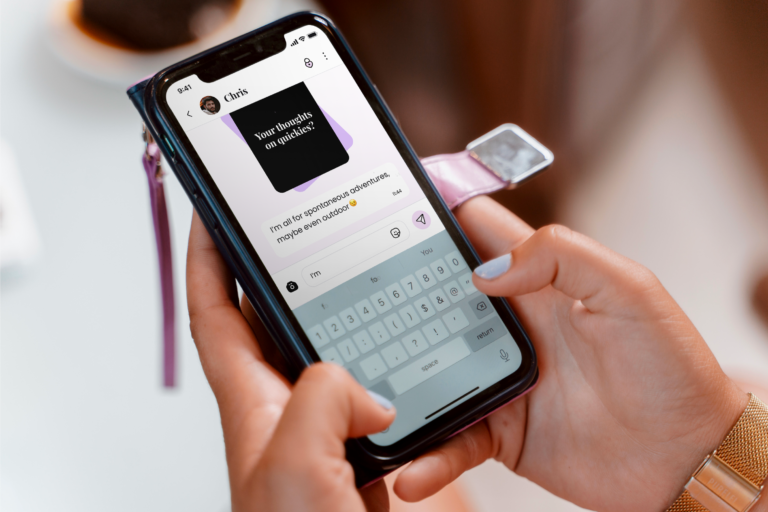
Image via Flure

Pick the right app

Certain dating apps attract kinkier demographics than others – which can, of course, affect how many cute perverts you’re able to connect with. You could try asking your local kinky friends what they’ve used, or you could check out an app that specifically aims to be sex-positive and kink-friendly, like Flure. Other kinksters are out there, hoping to find people like you – you just have to know where to look for them!


Put it in your bio

Okay, admittedly, not everyone reads bios. (This is one of my top complaints about dating apps, honestly!) But for those who do, you can leave a cute little clue about your kinks in there – or just straight-up say what you’re into, if that’s more your style.

I’ve gone back and forth over the years about how much detail to include. At times, I’ve simply described myself as kinky, or even just included a kink-adjacent photo amongst my other pictures – like me in a leather chest harness, or me wearing a 101 Kinky Things snapback hat.

At other times, though, I’ve mentioned specific kinks, e.g. that I’m submissive or that I’m into being spanked. Being explicit about sexual desires can lead people to assume you’re DTF right out of the gate, though – and I’m not, due to being demisexual – which is why I often end up deleting these kink disclosures not long after adding them in…

Image via Flure

Play a game

I used to like to play questions-based games with matches on apps sometimes, like “Let’s alternate asking each other questions about our lives,” or “What are your top 3 favorite ____ and why?” These conversations can be illuminating and fun, and also give you an opportunity to ask about the things you’re really curious about, like kink. Of course, you should ideally ease into this kind of thing; many people are put off by someone suddenly taking the conversation in a more sexual direction without building enough rapport first.

The Flure app has a built-in game called Sparks; it’s a chat-based icebreaker game that helps you and your matches get to know each other better. I love to see dating apps incorporating features that make dating more fun; it doesn’t have to be a slog! It can feel like play, and I think the best connections arise from that headspace anyway.


Test the waters with sexts

Okay, I’m not an expert on this one, because I don’t really like sexting with people I haven’t already established in-person chemistry with. (There’s that pesky demisexuality again!) It can make me feel uncomfortable, objectified, and pressured – which, by the way, is why I think it’s awesome that the Flure app has a “Safe Mode” where you’re prevented from seeing any explicit messages/photos someone else might send.

That being said – I know a lot of people do like to sext with strangers, or may at least want to exchange a few dirty texts prior to meeting, to feel out the vibe. If the rapport is there and things head in that direction, it could be the perfect moment to float your kink(s). “You’ve got a great ass – do you like having it spanked?” “Can’t stop thinking about you being on top of me, holding me down so I can’t move.” “Can I massage your feet before I go down on you?”

If the other person is amenable, fantastic! If not, well, at least you know now, and not three dates in.


Take good care of yourself if things go south

Dating and hooking up are always risky and vulnerable to some degree, but they can be especially so for people whose sexuality veers from the beaten path. When you tell someone you’re kinky – or even just hint at it – you are risking getting rejected, mocked, or flat-out ghosted. It’s just a fact of life, unfortunately.

But the good news is that dating apps make it easier to screen out the people who would do these things before you actually meet in-person, which can help keep you safer (physically and emotionally) when you make these kinds of disclosures. Dating is a numbers game, and the more people you filter out of your dating pool due to incompatibility, the closer you’ll get to finding the person/people you are compatible with.

That being said, it is totally okay to feel bummed out when someone reacts poorly to you sharing such an intimate part of yourself with them. Let yourself feel those feelings, and take care of yourself throughout that process as best you can – whether that means ordering delivery from your favorite restaurant, watching five episodes in a row of your favorite comfort sitcom, or complaining to your friend over the phone about how much kink-shamers suck. It’ll be okay. Eventually, this too shall pass, and you’ll be ready to get back on that horse – or back on that St. Andrew’s cross, as the case may be.


What tips have you found most helpful in connecting with other kinksters on dating apps?


This post was sponsored by the lovely folks at the Flure dating app! They’re all about prioritizing your comfort, safety, and freedom to explore your sexuality – check ’em out! As always, all writing and opinions are my own.
What Does It Really Mean to Be “Good in Bed”?

Sexual self-doubt is an epidemic. As if we haven’t already had sex-related shame heaped onto us since birth, a lot of sexual discourse online lumps people into a binary of “good at sex” versus “bad at sex.” Many of us are not given clear benchmarks of what these terms even mean, which makes it even more difficult to put the worry out of one’s mind: Am I a terrible lay?


Technique vs. approach

If worries about being bad in bed weren’t so prevalent, my industry – sex writing – would not exist as we know it. Articles abound, online and in print, that claim they’ll teach you “techniques” that will make you into some kind of sex god. Stroke the clit in a circular motion, tap the frenulum to a steady rhythm, finger-blast the G-spot hard, press a vibrator into the perineum. This type of advice is largely well-intentioned, but I think it misses the point: Being good in bed is more about your approach than your technique.

There are exceptions, of course. Sex professionals, for instance, tend to have better technique than many laypeople (pun not intended) – so I’d expect that the beauties at the Discreet Elite VIP escort agency have better blowjob skills than your average cocksucker, and pro dom(me)s are more skilled at flogging than your average kinkster. Often these people are being sought out for their skills specifically (among other things), so it makes sense that they’d have to hone their technique.

But I think, for the average person, it’s better to have a good approach to sex (which, naturally, a lot of sex professionals also have!). By that I mean: Do you pay attention to partners’ verbal and non-verbal cues in figuring out what’s working or not working during sex? Do you ask questions or invite feedback as needed, if you’re having trouble making someone feel good? Do you co-create an environment where you both(/all) feel safe to communicate openly and honestly? Do you have good psychological tools for handling difficult feelings that may come up when someone gives you constructive sexual feedback, and can you implement those tools when you need to?

I think these things matter much more than physical technique, especially since everyone likes different things in bed. Why try to navigate new territory with an old map? I think it makes more sense to learn the skills that will enable you to create new “maps” on the fly when you need to.


A or B?

Okay, if there’s one sexual skill you really need (aside from ascertaining consent, duh), I think this is it. Some sex educators call it the “optometrist” approach, because – like an optometrist during an eye exam – you’re going to ask your partner, “Does this work better for you, or this?”

Try it with anything; just remember to phrase it as an “either/or” question, because those are often easiest for people to answer in the heat of the moment. “Do you want it harder or softer?” “Faster or slower?” “Deeper or shallower?”

While actual verbal feedback can be super helpful, especially with a newer partner, you can also use this technique silently in your own mind to try stuff out and discover what works best. Try licking softer, and then harder, and see which gets a bigger reaction. Thrust a little deeper, then a little shallower, and stick with whichever one seems most appreciated. This might sound simple and self-explanatory, but it’s amazing how many people get so wrapped up in their own nervousness (or pleasure) during sex that they forget to pay full attention to their partner, thereby missing crucial cues that could help them get better at fucking that particular person.


Compassion is king

Sex is a very, very personal thing for many of us. One’s sexuality can feel core to one’s identity – so judgments on one’s sexuality can feel like judgments on one’s very existence. Those judgments, and the feelings of shame they provoke, can stay with you for months. For years. For a lifetime, in some cases.

With that in mind, I think it’s really important to foreground compassion in all of the sex we have. That doesn’t mean you have to let people steamroll your boundaries, but it does mean you should tread carefully so as not to step on any emotional landmines. Never make critical comments about someone’s body during sex, unless they’ve explicitly asked you to do so. Never laugh maliciously at a partner during sex; strive to only laugh with them, about things you both find funny or silly. If you have to criticize someone’s technique, focus moreso on “Here’s what I prefer” than on “You’re doing it wrong,” because – as ever – they’re not actually doing it wrong, they’re just not doing it the way you like it (yet).

I strongly believe that part of being good in bed is knowing how to create a safe environment for pleasure. No one can fully lean into their pleasure in your presence if they feel it’s unsafe to do so. One way to establish that safety, and to build that trust over time, is to make compassion the baseline ethic with which you approach sex. And I don’t just mean for romantic partners, either – even casual or short-lived hookups deserve the dignity of your respect and compassion. And I’d hope it would go without saying, but incase it doesn’t: You deserve partners who treat you that way too, and it’s completely fine to keep looking until you find one.


I’ve only been sexually active for 16 years or so; I’m sure my views on this will change even more as I grow older, and they’ve already undergone many transformations. But at this moment in time, these are the main things that I think make someone “good in bed.” Approach is everything, in my view, because a good approach helps you find the right technique(s) for the person you’re sleeping with, and helps you make them comfortable enough that they can enjoy your technique(s). How does that old saying go? “Give a man a fuck, and you satisfy him for a day. Teach a man to fuck, and he’ll satisfy his partners for a lifetime.” Something like that.

What do you think makes someone good in bed? Sound off in the comments; I wanna know!


This post contains a sponsored link. As always, all writing and opinions are my own.