
How the Vacation Mindset Can Make You a Better Flirt

When you’re stuck at home, like so many of us are right now, it’s hard not to start planning what you’d like to do when you’re allowed to go out again. Or, more accurately, when you’re allowed to go back out into a world that has regained some modicum of normalcy.

Along these lines, I’ve been thinking a lot lately about a book I read and reviewed a while ago, The Offline Dating Method by Camille Virginia. The book presents tips and techniques for striking up a conversation with a hot stranger in public, and then parlaying that conversation into a date or even a relationship. While the book seemed fun and frivolous (in a good way) to me when I read it, it seems even moreso now, when an in-person meet-cute seems as remote and perilous a possibility as a hookup on a mountaintop. But it’s a nice notion to ponder, when daydreaming optimistically about what will happen when public life reopens for business.

One of the many concepts I’ve retained from Camille’s book is her idea of the “vacation mindset” – the state of mind you get into when you’re visiting an unfamiliar place. Camille argues that being a fish out of water can help you shake off your stale old self-image and slip into something a little sexier, flirtier, flashier. It’s the reason I’ll often chat up bartenders in cities I’m unlikely to visit again, despite almost never doing that at home; it’s the reason I’ll smile at strangers on the street in Portland or Montreal but rarely Toronto; it’s even the reason I looked into Los Angeles escorts when I visited Burbank earlier this year. (Unfortunately, constraints on time and money ruled out that last one!) Being in a new place makes it easy to imagine being a new person – and even to move toward becoming that person.

See, if you feel trapped in an identity that is shy, reserved, and afraid, it’s easier to move away from those traits when no one around you actually knows what kind of person you are in your “regular life.” This was an exciting notion to me when I entered high school, for example, because I fully intended to cast off my long-outgrown plainness and step into a more fulfilling self-image – and I did! But the thing is, you don’t actually have to enter a new context in order to access this effect. You can trick yourself into embodying the vacation mindset without ever leaving your city.

I find this easiest to do in neighborhoods I don’t often visit, because – like when I’m on vacation – I have the sense that I’m unlikely to see the people around me very often, or ever again, in the future. You could strike up a convo with a barista at a café across town from you, for instance, or get to know the person sitting next to you at a comedy club you’ve never been to before. This helps create a sense of “having nothing to lose” which I find very freeing in social interactions. You can still fuck up this type of encounter, obviously, but if you do, you can just apologize and then disappear forever from the life of the person you’ve weirded out, like a socially awkward Macavity.

These types of seemingly low-stakes interactions can be good practice for higher-stakes ones. You’re building up your confidence, sure, but you’re also building up your mental picture of the type of person you want to become. Even if you feel like a nebbish nobody for most of the week, feeling like a fabulous flirt for even one night can give you a foothold into that mindset – and maybe one day you’ll be that charismatic charmer all the time!


This post was sponsored. As always, all writing and opinions are my own.
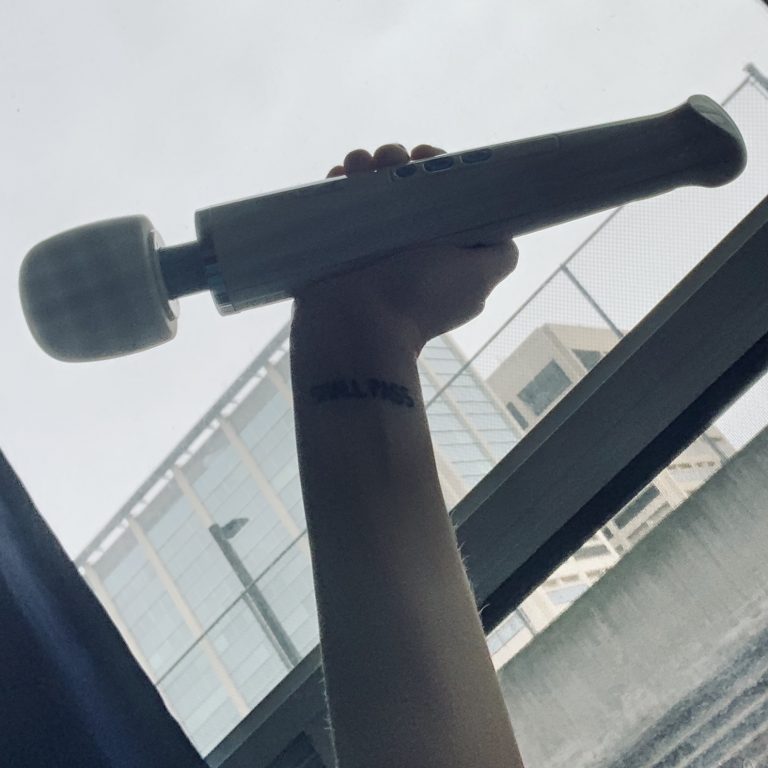
They Can’t Take That (Wand Vibrator) Away From Me

I’m having a minor mental breakdown because the Scrabble app is being discontinued.

I know that doesn’t sound like it’s going to be relevant to sex toys and the other topics covered on this here blog, but bear with me for a moment. The Scrabble app – totally classic, with no bells or whistles, just that well-worn Hasbro aesthetic and those well-understood rules – has been my constant companion in my battle against anxiety and depression for several years. It’s one tool in my wide-ranging toolbelt of coping mechanisms, but it is a significant one. When I start to hyperventilate on the subway, or am en route to a party I’m nervous about, or am crying so hard I can’t get out of bed, I can always whip out my phone and play a few games of Scrabble against a skilled robot. The familiarity of the game, and my skill at it, calm me down in minutes.

When EA recently announced that they’re phasing out the classic Scrabble app in favor of the new (and way, way worse) Scrabble Go, and that users of the original app will be unable to keep using it past June, I honestly felt like a piece of the cliff I was standing on had suddenly crumbled and fallen away. Maybe it’s the fact that this announcement coincided with global panic about a pandemic as well as a continuing political shitshow, but it really felt like something had been taken away from me that I needed in order to function. Something I thought I could trust, and that I thought would always be there somehow, in fact will be gone in not too long.

That brings me to the Magic Wand. The Japanese corporation originally responsible for making and selling this legendary vibrator, Hitachi, almost pulled the plug on the product (so to speak) in the mid-2010s when – according to various sources – the conservative company got cold feet about the sexualization of their product. Marketed as a muscle massager, the Magic Wand had nonetheless picked up steam as a sex aid in North American masturbation workshops and porn flicks (though it is also available in the UK and elsewhere) and Hitachi wasn’t cool with that. American sex toy distributor Vibratex swept in and saved the day by taking over branding and distribution of the product so Hitachi could save face – but in the interim, Magic Wand fans were terrified. Theories abounded about the toy’s potential fate. Wands started popping up for hundreds of dollars on eBay and the like. The situation looked dire, until Vibratex started cranking out wands again (including the Magic Wand Rechargeable, a brilliantly-conceived update on the original) and harmony was restored to the universe.

I was reminded of this story when I heard the news about the Scrabble app, because there is something uniquely terrifying about finding out that what you once considered a constant comfort actually is not. This is true whether the thing that has crumbled is big – like your relationship, your family, or, say, the entire world order as you know it – or small, like an app or a vibrator. We place our trust in these things; they hold our emotional safety precariously in their hands. So it’s immensely destabilizing when one of them just winks out of existence.

The world may be incredibly fucked up right now, but I still have my Magic Wand, and it feels like a security blanket. Even when I’m scared of what’s to come, I can still have orgasms. Even if I have to self-quarantine, I can still have orgasms. Even if I get sick, I can still have orgasms (assuming I can muster the energy to administer them). Lots of people are turning to lots of familiar comforts in times like these – beloved shows on Netflix, dog-eared and much-read books, Skype calls with loved ones – and I’m glad that the Magic Wand is one of mine… especially now that my long-cherished Scrabble app is being ripped from my hands. (Okay, I might be being a tad melodramatic. Just a tad.)


If you want to know more about wand vibrators available worldwide, check out this review of the Hitachi Magic Wand alternative in Australia. This post was sponsored. As always, all writing and opinions are my own.
Can Camming Be Sex?

Here’s a story I’m embarrassed to share. (Gosh, that should just be the tagline of this blog, shouldn’t it?)

My first serious relationship was a monogamous one, but I still thought it would be fine to show off my naked body online. Of course, it crossed my mind that my boyfriend might have an issue with it, but the odds seemed too low to bring it up. (I know. I know. Don’t worry, I’ve learned better communication skills since then!)

So I would post nudes on illicit subreddits, and tease Twitter with my cleavage, and even do occasional cam shows – getting naked, jerking off with toys, the whole shebang. (I know. I KNOW.)

Of course, when my boyfriend found out about this, he was upset. We talked about it, and I stopped. Part of our initial disagreement on this matter came from differing definitions of relationship boundaries, which we should’ve talked about earlier – I believed my body was mine to show off as I pleased, short of actually having any kind of sex with other people. But the other basis for our disagreement was that exact definition of sex. I had, by that point, broadened my view of sex to include things like fingering, handjobs, and oral sex, but it had never really occurred to me to consider cam shows a type of sex. They were a sexual interaction, sure, and they could be sex work in some transactional contexts, but I didn’t think of them as the type of sex one would have to reserve only for one’s partner in a monogamous relationship.

Fast-forward the better part of a decade, and now I’m in a long-distance relationship. By necessity, I’ve come to view the various types of digitally-enabled long-distance sexual communication I engage in – sexting, phone sex, and yes, cam shows – as valid forms of sex. After all, they make up the bulk of my sex life at this point, and are every bit as arousing, exciting, intimate, and connective as the in-person sex I have with my partner. It would be selling both of us short to insist that these things are not sex.

Nothing sexual is ever quite that simple, though. I can’t say I always felt like I was “having sex” when I performed online for paying customers, trying to tune out their watchful eyes as I fucked myself with a dildo – but was I having sex? Do both people have to have their webcams turned on for it to “count” as sex? Is a sex cam show (as in, a show where two or more people are fucking on camera) different from a masturbation cam show, in that the viewer is more of a viewer than a direct participant? As we’ve seen countless times before, technology solves many sexual problems, but raises a slew of new sexual questions at the same time.

Bummer alert: I’m thinking about these types of questions a lot more now that we’re in the midst of the COVID-19 outbreak. A BuzzFeed article reports some people are sexting with their Tinder matches in lieu of meeting them at bustling bars and the like. The virus may abound in public places, but you’re more-or-less safe behind the screen of your phone, tucked securely away in your apartment. Around the time of the AIDS crisis, the concept of “safer sex” spread to the masses, but just last year I saw a Reddit post from an “incel” claiming that sex with a condom on doesn’t “count” as real sex. Digital forms of sex, too, are simultaneously decried as a poor substitute for “the real thing” and lauded as a safer alternative to physical closeness. Whether the “protection” you’re using is a condom or a smartphone, I don’t think the sex you’re having is any less real than unprotected and traditional types.

I think ultimately we are free to define sex in different ways; we don’t all have to agree on one definition, and we couldn’t even if we tried. I look forward to a future where our definition of sex gets broader and broader, so it can include more people, more safely.


Heads up: this post was sponsored. As always, all writing and opinions are my own.
The Sometimes-Blurry Line Between Content Creators and Fans

“Dating a porn star isn’t all roses / She leaves you home on a Saturday night / You can go crazy from thoughts and supposes / And lose the thin thread between what’s wrong and right” -The Weepies, Dating a Porn Star

It seems like every creator of sexual content has a slightly different stance on dating and fucking their fans. I’ve known sex workers and porn stars who found the very idea laughable – but I’ve also known strippers and escorts who got into some of their most loving and healthy relationships with people who were originally their customers.
As for me, the last 3 people I’ve dated (including my current partner) started as “fans” of mine, although to varying degrees. They all followed me on Twitter, had listened to several episodes of my podcast, and had checked out my blog. But I suppose what they all had in common was that as soon as they met me, they seemed to start viewing me as a person, rather than just a Sexy Lady On The Internet. There was a knowledge imbalance between us – they knew way more about me than I knew about them, at first – but it didn’t exactly feel like a power imbalance, because they didn’t put me on some weird pedestal like an object to be worshipped or ogled.

I hesitate to tell stories like this in public, because I worry it might further the notion that dating a porn star you’ve jerked off to, or a dominatrix you’ve done a few sessions with, is a feasible thing to hope for. The thing is, it might be, but the type of person who would seize on this possibility is often the exact kind of person sex workers don’t want to date: boundary-crossing, pedestalizing, fervent fans who mistake skilfully-established rapport for an actual connection. Sex workers – myself included, when I dabble in paid cam shows or dirty chat – often spend tons of time fending off entitled weirdos who don’t think the services we provide are worth paying for, but want them nonetheless. I’m conscious of perpetuating a Pretty Woman-esque myth that might drive even more of these creeps to push service providers’ boundaries and pay them not enough, or nothing at all, for the privilege.

But all of that said, sometimes it seems like dating fans (who later become, of course, more than just fans) is my best recourse, in a world as sex-negative as this one. Bros on Tinder sometimes balk at what I do, either because they’re intimidated by my level of sexual experience and the public nature of my sex life, or because they think sluts are gross… in which case, begone from my life, boys! Those who already follow me on Twitter, etc., on the other hand, already know “my deal” – so we’ve got a good starting point for the classic “Can I write about the sex we just had?” convo that inevitably occurs early in the dating process for me, and I can more-or-less trust they don’t think I’m a disgusting monster for having sucked a few dicks in my time. It’s starting at square three instead of square one – small, maybe, but not nothing. I only want to date people who can support me fully, including in the work I do.

Sometimes this type of relationship goes sour when it turns out that your former-fan-now-partner actually doesn’t support your choice of career. Maybe they think it’s fine for them to communicate with porn creators all they like, but get jealous and possessive when you… continue the work you were doing for years before you met them. Maybe they expect you to give up stripping, escorting, or camming in order to be with them – as though money is just going to materialize from somewhere else because they became threatened by other fans trying to pursue you just like they did. This is always a concern when beginning a courtship with a fan, and I’ve seen it happen many times. While it’s true that healthy relationships often involve compromise and the reshuffling of life priorities, you don’t have to put up with anyone asking you to change your entire career path to spare their feelings. If the main benefit of dating a fan is that they know “your deal” already, it’s odd that those very same people will sometimes turn on a dime and ask you to disavow the entire “deal” that made you capture their attention in the first place.

Like I said, there are no hard and fast rules about how (or whether) this type of relationship can or should work. You can’t know whether a content creator is open to a romantic relationship sans financial compensation unless you ask them. But just asking them isn’t enough – you first have to prove you’re a respectful, interesting person, capable of viewing the object of your affections as more than just an object. That may not even be enough to get them on board with the idea, and that’s absolutely fine – respecting their boundaries is crucial. But I would be remiss to say you should never approach a sexual media-maker with romantic intentions – because some of my most epic love stories have begun when a fan of mine decided they might like to be more than that, and I decided I might like to let them.


This post was sponsored by SWAG, the biggest adult dating and video site in Asia. As always, all writing and opinions are my own.

Let’s Normalize Lube in Sexual Media!

It comes out of nowhere. I’m never expecting it. Why would I?

A reference to lube? In a mainstream piece of media? Really? Are you sure?

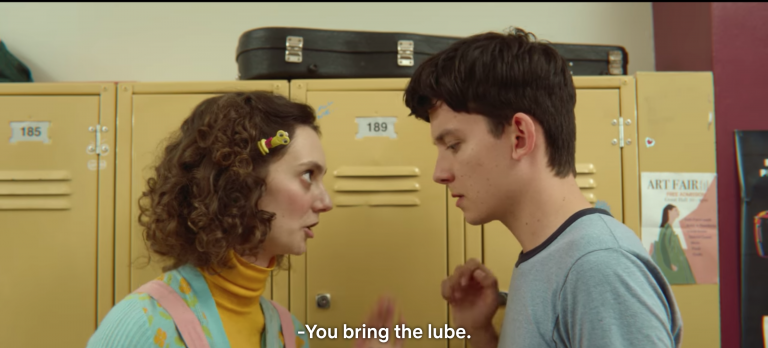
This time, it’s the character Lily on my favorite show of the moment, Netflix’s Sex Education. “I’ll bring the condoms,” she says, while negotiating an upcoming sex-date. “You bring the lube.”

There are a lot of parts of the queer, kinky, asexual-spectrum experience that are not represented accurately, or at all, in media depictions – so I’m not exactly surprised when on-screen sex has little in common with my real-life encounters. But lube seems like such an amazingly basic thing to leave out of fictional sex altogether. It would be like if an entire cinematic universe flat-out refused to acknowledge condoms exist (which, I suppose I should note, the mainstream porn “cinematic universe” often seems to do). It is not only inaccurate to many people’s experience of sex, but also irresponsible – because anyone learning about sex should simultaneously learn about lube.

It should show up in so many movies, books, shows, podcasts, and magazines we’ve consumed by the time we become sexually active that we add it to our carts when we drop by the drugstore to pick up condoms – a no-brainer. Its usage should be one of the standard pieces of advice we give to every teenager in sex ed classes and “the talk.” Doctors should bring it up alongside birth control when counseling soon-to-be-no-longer-virgins.

I argue this, in part, because I myself didn’t discover the wonders of lube until I was about 19. Sure, I’d read about it in the occasional erotica story or informative article, and had heard folks discussing it on the Sex is Fun podcast, but somehow I assumed that someone like me didn’t need to worry about it. I got plenty wet enough on my own, thank you very much.

But then I started reading sex blogs, and I noticed the fervor with which some of my favorite bloggers used lube every single time they masturbated or had sex. I bought a bottle of my own (water-based, IMO the best kind for beginners because of its versatility) and started using it religiously. And it, indeed, changed my life.

With the addition of a good lubricant, bad sex got better, and good sex became amazing. Masturbation was easier, and I did it more often because I no longer had to wait for my body to get all the way turned on before sliding a dildo inside me. It even worked well for external stimulation – I experimented with using it on my clit, labia, and nipples, and found it was far preferable to my previous “lube” of choice, spit. The clouds parted and angels sang upon my genitals.

This has been an overall theme in my process of learning about sex: even though (as a budding sex nerd) I always knew way more about this stuff than my peers did while I was growing up, it’s often been the simplest lessons that took me the longest to learn, and that I had to push myself the hardest to absorb. I was hesitant, for example, to touch my own clit during intercourse even though I knew it would feel good, I was initially scared to give handjobs or blowjobs because I worried being bad at them was a breakup-worthy offence, and somehow I didn’t realize just how much a good lube could improve my sex life until I tried one. Oh well – better late than never.

One of my big takeaways from this experience is that, as I said, we need to incorporate lube into more sex ed curricula and media. It would make people who don’t self-lubricate “enough” feel less broken, and people who have sex involving non-self-lubricating holes (including many queer and trans people) safer and more comfortable. It would go beyond the dry (no pun intended), safety-focused information so often given to teens and would teach them about pleasure – because as far as I’m concerned, additional pleasure is the main benefit of using lube. Maybe that’s why it’s so rarely talked about in comparison to condoms and birth control.

Kudos to Sex Education, not only for mentioning lube several times (including in a memorable scene where our sex-genius heroine Jean advises a young gay boy that water-based lube is the best choice for anal sex), but for mentioning it in the context of pleasure. Sex advice shouldn’t make sex seem scary or intimidating – and I really feel that spreading the good word about lube can go a long way toward diminishing sexual shame and raising the overall global quotient of sexual pleasure.


Thanks so much to the lovely folks at Promescent for sponsoring this post! They have a new collection of lubricants out, including a water-based one, a silicone-based one, an organic aloe-based one, and a peppermint-infused arousal gel.