Announcing… My Book Deal!!!

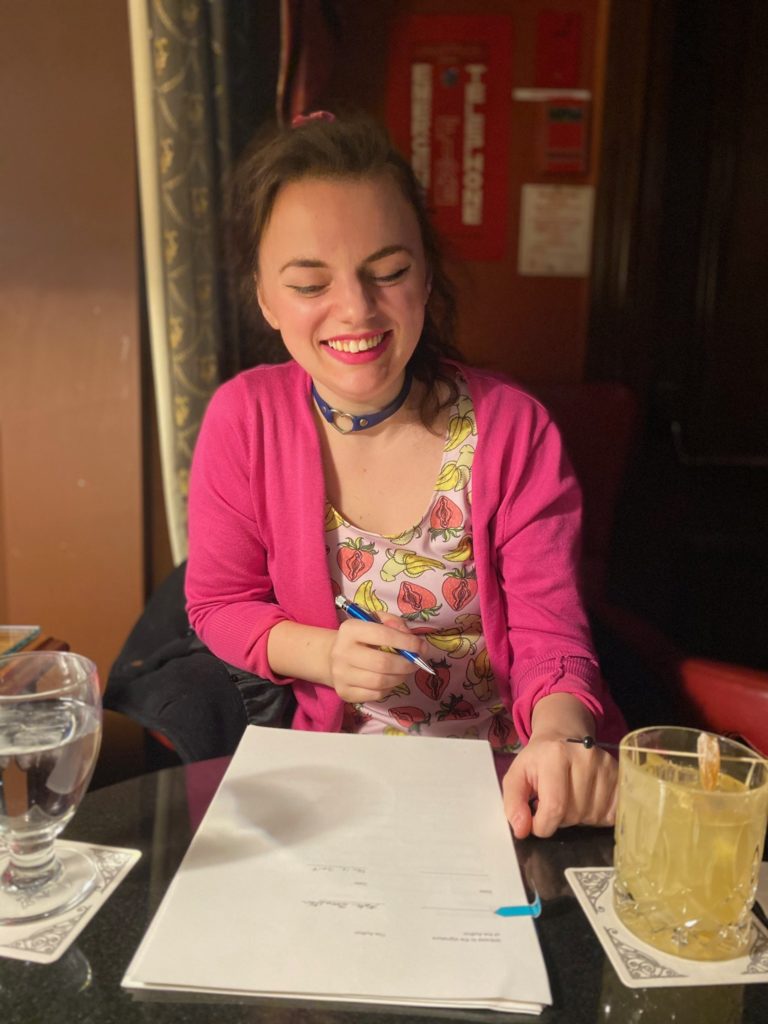
Signing my book contract at the Library Bar. Photo by my sweetheart mb.

Yes, friends, I have good news: after many months of preparation and negotiation, I have signed a book deal with Laurence King Publishing! One of my long-time dreams as a writer is finally going to come true. Here’s a brief FAQ:

Q. What’s the book called?

A. The working title at the moment is 101 Kinky Things Even You Can Do.

Q. What’s it about?

A. It’s an accessible, consent-focused, safety-forward introduction to kink and BDSM for vanilla people and/or beginners. It covers 101 different kinky activities, from aftercare to wrestling. Each chapter explains the kink in question, theorizes about why people find it hot, and offers concrete suggestions for incorporating it into your sex life, both solo and partnered.

Q. When will it be out?

A. March 2021, so I’m told! Yes, that is a long time from now. Wow. I will have lots more details for you (where to get it, etc.) as the launch date approaches.

Q. How much of it have you written?

A. Currently a little over half. It’s due in January, so I’m making good time!

Q. How did you get the book deal?

A. Read on, my friend – here’s that timeline of events!


December 4th, 2015: I go to a local sex shop to interview one of the owners for a story I’m writing about the sex toy industry. At the end of our exhaustive, hour-long interview, he says, “I think this topic could be a book, and I think you’re the person to write it.” My face immediately morphs into the human embodiment of the thinking emoji 🤔 as I say out loud, “Hmmmm!” I take the streetcar home thinking about whether I’ll ever write a book, whether I even want to, and what it would be about.

February 7th, 2018: I get a PR email from an editor promoting a sex-related book she worked on. Her email signature says she’s also a literary agent. I take a chance and mention casually that I’ve wanted to write a sex book for a while. She replies, “If you ever do write that book, please feel free to reach out to me about it, as I definitely am seeking clients in the sex and sexuality realm.”

March 28th of this year: I get an email through my contact form from a commissioning editor for Laurence King, a publishing house in London, England. “I’ve been thinking we should consider a fresh approach to sex in book form and I wondered if you would be interested in talking about it,” she writes. “Please contact me if that sounds interesting.” I stare at my inbox in awed disbelief.

April 2nd: I “hop on a call” with the editor to toss around some potential book ideas. The two pitches I’ve prepared for her, it turns out, are more conceptual, cerebral, and wordy than is really appropriate – Laurence King publishes beautifully-designed books, often on art or photography or design, loaded with illustrations and diagrams, not usually densely-packed paragraphs of storytelling. So I think on my feet, and pitch this: “101 Unusual Kinks & Fetishes.” I explain that I’ve always been fascinated by the most eccentric sexual interests, from balloon fetishism to sneezing fetishism to knife play, and that I’d love to highlight those for a curious audience. The editor gets audibly excited about this idea and asks me to put together a proposal.

April 7th: I send over my proposal, including sample sections on topics like collars, hypnosis, and masochism.

April 18th: My editor gets back to me and says that after discussing my proposal with her team, she now thinks there would be more of a market for a book on kinks anyone might reasonably get involved in, rather than being focused on hyper-specific fetish subcultures. The working title “101 Kinky Things Even You Can Do” is suggested.

May 4th: After multiple thoughtful and helpful conversations with kink-savvy friends, I submit a reworked version of my proposal, this time including only kinks that the average vanilla-identifying beginner might be curious about actually trying in their own sex life.

May 24th: My editor emails to say that she just pitched my book at an “Ideas Meeting,” and while she was nervous about how people would react to the topic, “it was a resounding success.” She tells me she needs some time to calculate the costs of the book and such, before the company can make me an offer.

June 1st: I email that literary agent from long ago to tell her about my current book situation and to ask if she’ll represent me.

June 7th: The agent calls me and we chat about what agents actually do and how she and her agency can support me through this process.

July 12th: My editor tells me that she recently overheard someone at the company saying the funniest sentence ever devised (according to me, anyway), “Kink is the new houseplant.” This doesn’t make sense unless you know that Laurence King had a very successful book about houseplants. 🤷🏻‍♀️

July 22nd: I sign my agency agreement with the Carol Mann Agency. I officially have an agent, yay!

August 13th: I receive my official offer from Laurence King – a proposed advance and royalty rates, the size of the book and quantity of first print, the word count and deadline. I forward it to my agent and we put together lists of follow-up questions and points to negotiate.

October 17th: Amidst weeks upon weeks of back-and-forth negotiations between my agent and publisher, I’m getting increasingly anxious – I haven’t started writing yet, thinking I can’t or shouldn’t until the contract is signed, but my deadline isn’t budging nonetheless. My agent writes to me, “There’s no reason you can’t start working now. We are nearly there, so if you have the bandwidth, you don’t have to wait until the ink is dry to commence!” I open Scrivener, set up my word count goals and due date, and start. It’s nervewracking but so so good.

November 16th: At long last after months of negotiations, I sign the final contract, over good cocktails and oysters at the Library Bar. We toast to my book and the hard work that got me here.

November 27th: My agent gives me the go-ahead to announce the book, and I publish this blog post!


On a personal note, I want to say thank you to each and every one of my readers. Y’all are the reason I got noticed by a publisher and an agent to begin with, and you’ve also given me the space and feedback that has enabled me to develop my writing voice and niche(s) over the ~7.5 years I’ve been writing this blog. Your encouragement has kept me going at tough times, and I think about you every time I write anything. I really look forward to hearing what you think of the book when it comes out!
Remotely Helpful, Part 3: Buddies & Boundaries

I’m back with more tips for working from home! These final 3 are crucial (but, frankly, all of them have been)…

#7: Find ways to combat loneliness.

Working from home is lonely as hell sometimes! Mostly I am okay with this, since I am super introverted and work best with minimal distractions (I still have nightmarish flashbacks to the office I once worked in that was filled with women in their early twenties constantly arguing about sex and dating). However, sometimes all that solitude is bad for morale! This is typically when I head out to a café (as discussed in my last post), text a friend for a mid-day chat, or schedule a co-working date with a pal if possible.

The most common way I deal with loneliness on the job, though, is social media. Twitter, Slack, Facebook, Instagram, Reddit: these services are often decried by productivity nerds for sucking up precious time and energy throughout the day, but used judiciously, I think they can be a godsend for lonesome freelancers. Where else could I gather on-the-fly opinions from my readers on stuff I’m working on, advice from fellow writers on methods and word choice, and terrible puns from sex-blogger pals across the globe?!

#8: Protect your time fiercely.

In my experience, if someone knows you work from home/are a freelancer, they’ll often assume that means you can do whatever you want whenever you want, deadlines be damned. I don’t know why they think this. It is annoying as fuck. Like, yes, I could step away from my computer for 2 hours on a Thursday afternoon to go see a movie with my mom or go shopping with a friend, and I appreciate offers to do so, but I don’t appreciate when those offers turn into pressure! This is even more aggravating when friends or family members see that you’re working but behave as though you’re playing a computer game or something – like they can interrupt you and distract you willy-nilly, because what you’re doing couldn’t possibly be real work, right?!

Now that I’ve gotten that rant off my chest… Being able to protect your time is really important as a freelancer. When a friend would ask me to hang out or do something for them, I used to say, “Sure, I’m free all day!” because that was technically true – my entire day was theoretically flexible and each item on my schedule was moveable. But nowadays, I’m more comfortable saying, “I’m free between [this time] and [that time],” or “I actually can’t, I have a deadline coming up, but maybe next week?” I’ve also gotten better at saying to people when they’ve interrupted me – in the politest way I can – “I have to get back to work now,” which elicits a surprised expression more often than you might expect. (Do these people… not know freelancing is work?!) This type of boundary-setting is mandatory for me if I’m going to get anything done ever.

#9: …but don’t forget to take breaks!

Trust me, your brainpower will eventually fizzle if you don’t give yourself enough downtime, and that type of burnout is really inconvenient when there’s a deadline around the corner! I understand the productivity-frenzied frustration of taking a break when you feel like you “have to” keep working – even if you’ve been working all day – but the “rest” part of the work cycle is truly just as important as the “work” part. Don’t lose sight of that!

I sometimes schedule things for myself specifically to force myself to take breaks – like buying a theatre ticket for a Friday night at the end of a busy week, or making plans to chat with a friend at a certain time so I have to get everything done by then and set aside my work for the day. I also like to use mid-day errands as a reminder to “switch off”: trips to the bank or the grocery store are restful compared to being hunched over a laptop, and I always listen to podcasts or music on my way to and from these places so my brain gets a little shake-up.


What are your top tips for working from home?

Remotely Helpful, Part 2: Locations & Logistics

Here’s part 2 of my 3-part series on working from home! I’ve got some more tips for you today…

#4: Mix up your location from time to time.

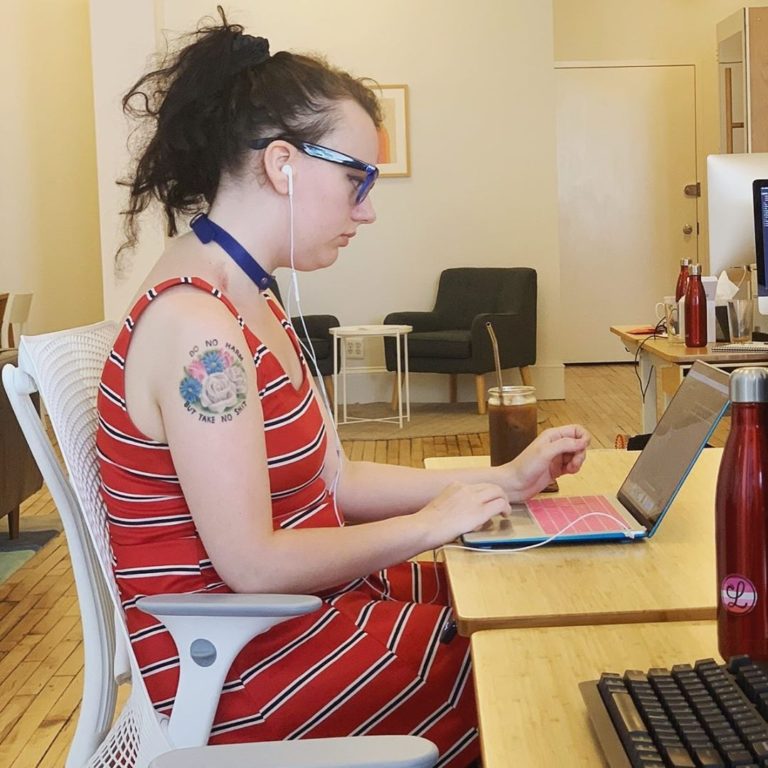
I know in my last post I proselytized the joys of having a functional at-home workspace, and that’s still important, but I nonetheless can’t imagine always writing at my desk at home. Eventually I always get bored and/or lose motivation. That’s when I know I need to shake up my location.

Coffee shops and libraries are great for this, and are staples for many writers – for actual scientifically-backed reasons, in some cases! If you know of a bar that’s chill about people bringing their laptops, that’s nice too (Northwood early on a weeknight is my Platonic ideal of a relaxed writing spot). I’ve known writers who loved to write in mall food courts, public parks, or subway trains. Just make sure that if you go somewhere with no WiFi (or with dicey WiFi), you prepare in advance any research materials you’ll need, so your work won’t be stymied by the lack of connectivity.

Of course, co-working spaces are also an option, but most freelancers I know don’t make enough money to be able to justify the expense. (For example, the Toronto Writers’ Centre charges $135/month, and Lemonade – Toronto’s answer to The Wing – charges $300-500/month. There are cheaper spots but all of them cost more than I’d ideally like to pay.) To approximate the co-working experience in a lower-budget way, you could head over to a friend’s house and work alongside them – just make sure to extend them the same courtesy another time, and bring snacks or coffee or something to express your appreciation for their generosity with their space!

#5: Give yourself structure.

This is probably the hardest part of working from home, and also the most important. Without a boss breathing down your neck, it’s easy to lose track of time and accidentally spend an hour scrolling through tweets on your phone or falling down a Wikipedia rabbit hole instead of doing your actual work.

The most beneficial thing for me in this regard is also very basic: a to-do list. The psychological pleasure I get when I tick an item off the list – or, better yet, when I tick all the items off the list – is a powerful motivator. This is doubly true because my partner has access to my digital to-do list and can check on my progress throughout the day. Having an “accountability buddy” can be a big help!

Some writers have strict daily schedules that they stick to. My work is too sporadic to be able to commit to something that stable, but if it works for you, do it! I also know lots of writers who use task management tools like Trello, Asana, and Teamwork – the latter of which I use at my dayjob and enjoy, because it allows me to track the amount of time I spend on each task so I’m more aware of my own time-wasting/procrastination tactics as they’re happening.

#6: Pay attention to your natural rhythms and arrange your work accordingly.

For example, here are some things I’ve learned about my own rhythms:

  • With very few exceptions, I am not very creative before 11 a.m., so mornings are best spent on more rote or administrative work (e.g. answering emails, scheduling tweets).
  • I am pretty useless for at least a day after arriving home from traveling, so I do my best to ensure I have no deadlines during that window, or that if I do have one, I complete the work in advance.
  • Nights aren’t usually very creative for me, unless I give myself a second wind with caffeine (which peps me up) or alcohol (which opens my mind to making more freeform connections).
  • If I’m really, really into a piece of writing – I’m talkin’ flow-state, “don’t talk to me, I’m working” levels of absorption – I should keep working until that feeling dissipates, if possible, because that’s often when my best writing happens.

Work in our society is largely structured around the idea that you should work at appointed hours all the time even if you don’t feel like it, which – setting aside the hellish capitalistic labor-fervor involved in that idea – just isn’t really in line with how the human mind functions. Freelancers (sometimes) have the luxury of being able to follow our own natural creative rhythms and take advantage of their gifts; this is one of my favorite things about my job(s)!


More tips to come later this week! Have you found any of these principles helpful in the past?

Remotely Helpful, Part 1: Flexible & Delightful

This is Remotely Helpful, a new mini series of blog posts where I’m writing up my best tips for working from home, ascertained from years and years of it! Here are my first 3 major suggestions…

#1: Take advantage of your flexible schedule.

Granted, depending on your exact work logistics, your schedule may not actually be as flexible as people tend to assume it is. (I have to get up at 9 every weekday for my dayjob, for example.) But if you do get to set your own hours, at least some of the time, I would strongly recommend making the most of that good fortune!

I love being able to do my laundry at 10 a.m. on a Tuesday when no one else is using the machines, or trotting down to my local movie theatre to take in a weekday matinee when my brain needs a break. I love finishing tomorrow morning’s work early so I can go see a comedy show tonight. I love making time to see a friend for coffee on a Thursday afternoon. I love that if I have an unmissable doctor’s appointment or international flight in the middle of the workday, I usually don’t have to ask anyone’s permission or move anything around, so long as I get the work done at some point.

In the capitalist hellscape that is our society, too often we’re trained to always be thinking about work, and to arrange our entire lives around our work. That’s bullshit, and not even compatible with keeping your brain in top-notch working order. If you have the freedom to do otherwise, you may as well!

#2: Putting effort into your aesthetic makes it easier to put effort into your work.

This isn’t true for everyone, but it is certainly true for me: if I take a shower, get dressed, and put makeup on, I will be plenty more productive than I would if I just lazed around in sweatpants all day. True, working in pajamas is one of the great joys of working from home, but if you find it makes your work ethic worse, it might not be worth it! (I am admittedly naked and wrapped in a bath towel right now as I write this, though, so… do as I say, not as I do.)

Some life hacks I’ve found for this: super stretchy jeans look like “real clothes” but can feel like pajama pants, lipstick makes me feel way more pulled together than I actually am, and nice loungewear is a step up from ratty pajama pants for days when I really can’t manage an outdoors-appropriate outfit.

#3: Your space should be as functional and pretty as you can make it.

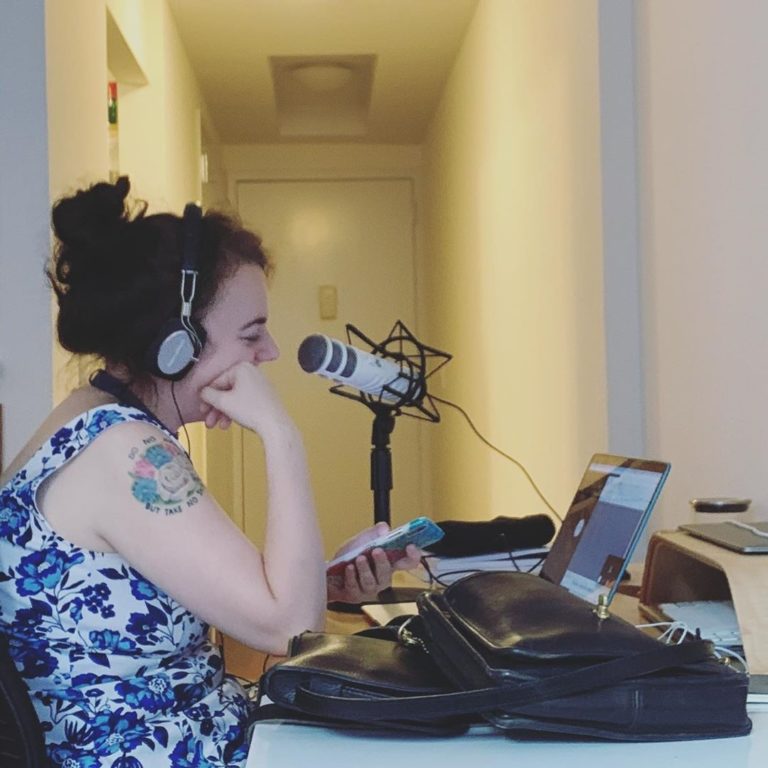
For years, I found myself going to cafés to work almost all the time, and I eventually realized part of my reason for doing this: my workspace at home just wasn’t very inviting! It was dark and messy and boring. In the years since, I’ve become more stringent about keeping my workspace clean, and have spruced it up with additions like scented candles, inspiring photographs, and visually interesting knickknacks. One side of my desk is more podcast-focused (mic, pop filter, headphones, pencil and notepad for jotting things down during recordings) while the other side is more writing-focused (pens and pencils, research materials) so I can keep my head in the game. Inside my desk drawers are notebooks, more pens and pencils, and snacks to keep me going.

Other things that might work well in a freelancer’s workspace: good speakers, indoor plants, cable organizers, an ergonomic chair, an external monitor, and a timer (for using the Pomodoro technique or similar). A collection of reference books is also a must – I have journalism style guides within close reach, a whole bunch of sex books, and a stack of my old journals for when I plumb my sexual history to research a piece.


More tips to come! What’s your best working-from-home advice?

11 Ideas for D/s Writing Assignments

I’m a writer, an overachiever, and a submissive, so of course I love when my dominant gives me writing assignments. They feel like a task at which I can tangibly succeed – plus, unlike with many other types of scenes, I’ll have the evidence forever if I want to look back at it. Writing tasks have become a major (and majorly satisfying) part of my dynamic with my partner.

That said, we weren’t always as amazing as we are now at coming up with these assignments – so I’ve put together this list you can refer to if you’re similarly strapped for ideas. How many of these have you tried?

Describe a fantasy

This can be one of the most deeply embarrassing things to have to write as a submissive (depending on what type of person you are), so of course, it’s a favorite with dominants! It’s one of the sexiest and most tangible ways for a dominant to gather information about what a submissive wants, making it a highly useful tool in a D/s dynamic. The sub can make lists of their fantasies, write one out as a short erotica story, or use any other framing the dominant desires. This is a great way to unearth some unexplored desires or just expound on some desires you already know you have.

Recap a past encounter

IMO, it’s always fun to hear about sex you’ve had from the other person’s perspective. You get to find out which parts they particularly liked, what turned them on, what they want more of. The sub could write out the events of a past scene, erotica-style, or they could list some favorite past scenes and explain why they enjoyed them so much. You could even do this assignment as a collaborative task, with each of you filling in details of the session as you remember them.

Keep a journal

Some dominants require that their subs keep some kind of diary for them. This could be all-sexy-all-the-time, like a daily log of masturbation or fantasies, but it could also be geared toward making positive changes in the sub’s day-to-day life: they could be required to log their food or exercise if that’s an issue for them (tread carefully!!), keep tabs on the ups and downs of their moods and the factors that influenced them, or make a note every time they do something nice for themselves. Becoming more aware of your patterns is the first step in changing them, and a D/s writing assignment can be a lovely way to achieve that.

Summarize a book

I don’t know about you, but the books I was required to write about when I was in school are the ones that have stuck with me the most. It’s a good way to make information stick in your head. A dominant could assign their submissive a book about kink, sex, relationships, or anything else they want to learn more about, and the submissive could write up a classic essay-style book report, a bullet-point list of things they learned, or any other type of book review the two agree on. (Shout-out to Sinclair and rife for initially introducing me to this idea!)

Keep a to-do list

My partner and I have done this for nearly a year now (wow!) and it’s served us very well. My daily to-do list is kept in a note which I’ve shared with them via the Apple Notes app, which syncs across all our various devices. Particularly in a long-distance relationship, it’s a lovely way to maintain a feeling of connection to each other and involvement in each other’s everyday lives. My dominant can keep tabs on me, see how I’m doing with my tasks, and reward or motivate me accordingly.

Craft an instruction manual

Remember the time my partner made me write directions for giving me multiple orgasms as though I were a literal toy? That was one of the first tasks they assigned me, and it’s still one of my favorites. Especially early in a relationship, the sub might know their body and mind better than their dom does, and requiring them to write an instruction manual is one way to ascertain that information from them without breaking role. They could provide directions for physical skills, like how to give them a nipple orgasm or how to spank them properly, or for more mental/emotional skills, like how to comfort them when they’re depressed or how to best help them relax when life gets stressful.

Research a skill

There may be times in a D/s dynamic when either the submissive or the dominant wants to learn or improve upon a skill, in order to better serve/please their partner. These could be kinky skills, like flogging or bootblacking, or they could be “vanilla” skills, like cooking or cleaning. Either way, it’s fun to have the submissive research the skill and write up their key findings, perhaps including a list of links to more detailed information. (KinkAcademy remains the best place to learn a new BDSM skill, BTW!)

Write lines

While traditionally understood as a punishment, making a submissive write out the same sentence over and over can also be a process of edification and improvement if you approach it that way. For example, if your submissive is chronically self-critical, you could make her write “I am a good, kind, talented, and useful girl” 50 times. That said, it can also be a punishment, as I learned the time I forgot to wear my collar when specifically instructed to and had to write lines and mail the page to my partner as proof. Ooh, how mean!

Help the dominant

My dominant has sometimes required me to put together a report specifically designed to assist them with something – like the time I made some recommendations for androgynous clothing items when they were midway through coming out as non-binary, or the time they asked me to recommend some fragrances I thought they’d like. This is a fun way for a dominant to feel served and catered to, while making their submissive feel useful and needed.

Write a love letter

Love letters are romantic and bonding, and they also help create a tangible record of your romance. I think more people (including vanilla people!) should write love letters, because it’s good for your relationship – and in D/s, you can make this mandatory!

Collaborate creatively

Some of my most satisfying moments with my partner have happened while we’ve been collaborating on something: a song, a podcast, a book. You could do this in-person on paper, or online via the multitude of cloud-based writing tools available, like Google Docs or Evernote. Try retelling the story of your first date together or writing a collaborative poem about your relationship, for example.


What are your favorite writing-based tasks you’ve assigned or been assigned in a D/s dynamic?