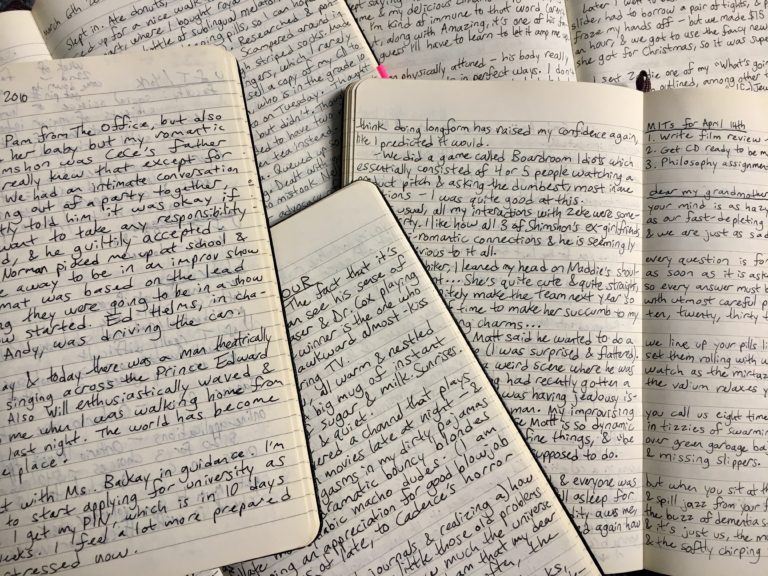
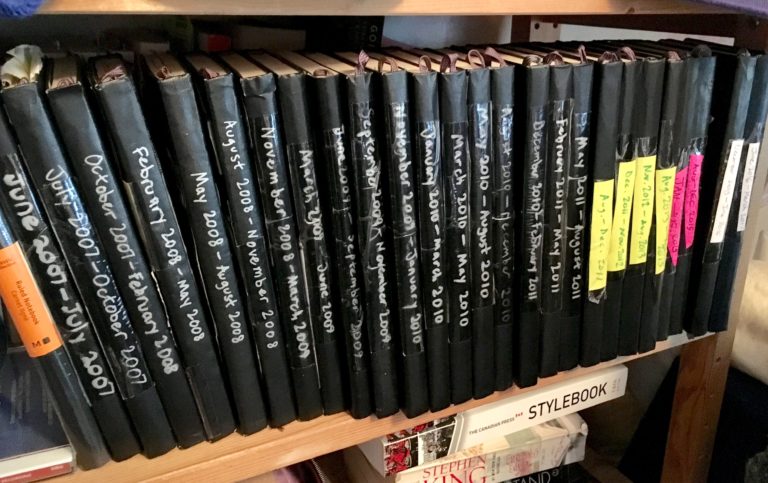
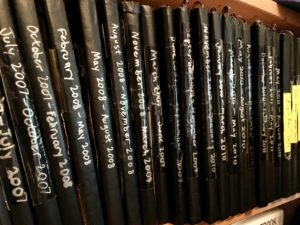
The other day, I was lovingly stroking my stack of Moleskine journals – as one does – when I noticed that the first one was dated June 2007. Oh my god, I thought. Have I really been writing in these things for TEN YEARS?!
Apparently so. I bought my first Moleskine in a local bookstore when I was 15, influenced by bloggers and Flickr friends whose nerdy glamour I revered. My first entry muses, “I paid $22.95 plus tax for this notebook, so I hope the price will be returned to me in the form of emotional and historical investment.” While Moleskines are still probably overpriced (the type I use goes for about $24 in Canadian bookstores today), I do think they’ve been worth their weight in gold to me, for the experiences I’ve documented therein.
The thing about fancy notebooks is that they make you want to write in them. (Once you get past that scary, first-blank-page, don’t-wanna-fuck-this-up feeling, at least.) When you shell out for pricey stationery, there is a certain sense of obligation to actually use said stationery. The smooth, creamy paper used in Moleskines is a joy to write on (especially with my pens of choice, Pilot V5s), and that tactile pleasure is what initially cemented my journaling habit. The sensual joys of journaling introduced me to its psychological joys soon thereafter: I’d always feel better after an exhaustive journaling session, even if my hand ached from writing.
I wanted to collect some excerpts from my decade of journals, but there are just too many good ones, so I decided to limit myself to excerpts about sex and love. (That’s still way too many, to be honest with you.) Here are some oft-embarrassing musings from my past ten years in Moleskines…
June 14th 2007. I read somewhere that if teenagers don’t fall in love at least once during their formative adolescent years, they may completely lose the mental capacity to do so for the rest of their lives. I used to find this merely interesting, a notable thought that was nonetheless nothing to worry about. I was always positive, growing up, that I would acquire a perfect boyfriend shortly after entering high school – as if every girl was paired up with a boy in grade nine because those romantic relations are expected of teenagers. Now that I’m actually in high school, I know it’s not like that. Not everyone has someone by default.
Many of my friends are desperate for boyfriends. They feel they would be happier with a boy in their lives. Oddly, I have no interest in high school boys. High school boys don’t bring you soup when you’re sick, or stroke your hair, or take you out for romantic hillside night picnics, or ask you to marry them. They like computers and the Beatles; very few of them like Sondheim or blueberry scones.
I guess I’m desperate for a boyfriend too, but not the kind my friends want. I want to spend my nights with a mature adult male who can talk culture and isn’t afraid to tell me I’m beautiful and he loves me.
June 19th 2007. Just had a thought: is it at all possible that I am a full-out lesbian? The feelings I have for women are so very different from those I have for men, possibly even more intense. It’s hard to tell, though, because it seems to go in phases. One week or month I want the tenderness, soft lips and pussy; the next, I want roughness, hard muscles and cock. And yes, I realize that girls can be rough and guys can be tender, but that’s often not how it goes in my head.
February 27th 2008. Half the class was away in English, so we opted to have a class discussion. It moved to the all-consuming, omnipresent topic of love/crushes/relationships. Mr. M. asked us to visualize the person we most wanted to be with, and then asked: “WHY do you like this person so much?” (No generic answers allowed.) Julian talked about deep blue eyes; Kaiya talked about mystery and intrigue; Giordie talked about immense comfort; I talked about never getting bored of E___, never getting sick of her, even when I fucking hate her I still want to talk to her, and it’s like there’s this endless ocean of future conversations and experiences stretching out ahead of us, waiting to happen. I need to stop talking so highly of her, because it’s only reminding me of all the things I can’t have – but I can’t help it, she’s the only person I feel this way about, the only person I’ve EVER felt this way about.
July 23rd 2008. It’s rather terrifying how grown-up I’ve become. Like, I’m no longer a virgin (in a sense). When I think or say that, it just feels like I’m pretending. Like I’m in some story, a soap opera maybe, where the sex is good and the stakes are high.
September 18th 2008. I often wish I had some interesting identifiable sexual fetish to match my sexually open-minded nature – but I realize, I do kind of fetishize being begged for sex. (Maybe we all do? Maybe it’s just part of the human condition to want to be wanted?) This is why I can never decide if I’m a dominant or a submissive – I like to be taken fully, but I also like to hold the keys to my own castle, and to be seductively coerced into giving them up.
Like the other day on my porch, when I was pinned against the doorframe, and D___ kept getting closer and closer, and began fondling my breasts, and I tried to get her to stop for the sake of potentially nosy neighbors, but she just couldn’t keep her hands off me (so hot). When it wasn’t my breast, it’d be my waist or hip. After a while, I told her maybe she should get going, and she replied, coolly and confidently, “Or I could have sex with you.” I kind of knew, even before I knew, that I was going to say yes.
November 5th 2008. In drama class, we did a Method Acting exercise involving envisioning an object that brings up intense memories of joy, and I chose my rippled glass dildo, which proved to be embarrassing when Mr. B. asked me what my object was. I lied and said “a love letter” to spare myself from total humiliation.
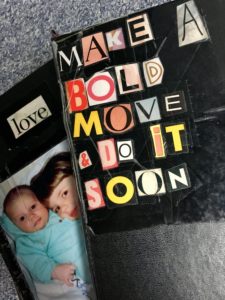 March 14th 2009. I’ve been thinking a lot about polyamory lately, and considering whether I’d ever be interested in delving into that lifestyle. It intrigues me in theory, but I’m pretty sure that if I ever actually entered into an open relationship, I’d become intensely jealous very quickly. I mean, I’m not even attracted to D___, but I get jealous if she blows me off to hang out with her MOM. It’s totally absurd, and makes me question my ability to be poly.
But at the same time, I feel like, once you agree that your relationship is open, you’re kind of giving yourself permission to be jealous, and telling yourself that it’s okay, it’s natural, and it’d best be ignored.
For years I’ve been reading this blog called We Sleep Together, which is written by a geeky, sex-positive guy in an open marriage. He just seems SO happy, and so does his wife. He goes on dates, getting to have the thrill of meeting and being with someone new, and every time he gets home from an external sexcapade, he tells his wife all about it, and often the story turns them both on so much that it prompts sex. They have threesomes and stuff too. It honestly seems like a pretty sweet life, but obviously it’s all hinging on good communication.
December 20th 2009. This has officially been the weirdest day of my life… I found out that T___ had sex with D___ (!!!!) after my caroling party the other night. No use dwelling on this now but I was SO pissed at D___ because she KNEW that was an asshole thing to do (T___ didn’t, necessarily). I spent much of the day, after that little revelation, teetering between hysterical laughter and full-out weeping. Called Max, burst into tears, took the subway home, ate a brownie, Max held me a bit.
About 15 minutes after I got home, while I sat checking my emails with a brownie in hand and a tearstained face, there was a knock at the door. It was T___. He said, “I really like you. I gave up drugs for you.” I thought he was joking, pulling a prank, trying to embarrass me… I kept saying, “Really? Seriously?” He said, “Do you want to go out with me sometime?” I said, “Yes! Yes.” I hugged him tight. He said, “Are you doing anything right now?” I said, “Just eating a brownie and crying…” Then I said, “Let me get my coat.”
Then T___ and I walked out into the cold. I was so disbelieving that I became incoherent and felt like I was going to puke and/or have an asthma attack (he kept asking, “Are you okay?”). We walked to a café. I said, “I feel like I should call Kaiya… but that would be rude.” He told me to go ahead, so I did, and said, “Umm, I am on a date right now… with T___,” and she freaked out.
January 16th 2010. Why am I doomed to be dumped on the 15th day of winter months by bisexual genderqueer brown-eyed Jewish improvisors who love drugs and don’t deserve me?
Spent much of the morning moping, playing ukulele songs, lying in Max’s bed inhaling his comforting scent, emo-tweeting, eating, and just generally being a drain on society. I am wearing the same clothes I wore yesterday and slept in – it seemed somehow blasphemous to cleanse myself just yet. I will tonight though – lunch at Bubbie and Zaidie’s tomorrow. Pretending to be cheerful and well-adjusted. Hooray.
People were commenting on the relationship status switch on T___’s Facebook profile. They all seemed to assume that it was ME who had dumped HIM. “You don’t deserve that,” etc. One girl even offered herself up for him to “confide in” if necessary. He replied that he’s alright, he hopes I’m doing okay, and he’s going to take a break from “relationshipping” for a little while. I kind of wanted to punch him. What a fucking martyr.
March 6th 2010. Sexuality stuff I’m pondering lately: I am definitely attracted to men and boys in a romantic way. I look at someone like V___ and concoct fantasies about cuddling, kissing, holding hands, spooning, him opening doors for me, buying me lattes, calling me, saying my name, smiling at me, etc. Thinking about sex with men, however, almost always leaves me cold, unsettled, unnerved, and even afraid. I have occasional moments where I crave it (or think I crave it?) but 98% of my sexual fantasies are about women.
I can imagine having sex with a woman and feeling comfortable and safe doing it. I wouldn’t be very scared if I were to go down on her or vice versa, if I were to fingerfuck her or vice versa. The task of making another woman come does not seem hugely daunting, terrifying or invasive, the way the prospect of heterosexual relations does.
But I have no desire to do any of those gooey, romantic, relationshippy things with women (with the exception of an occasional boyish/butch lady). So I’m pungently unattracted to penises and going on dates with femmes, but potently attracted to clits, labia, and snuggling with boys in coffee shops. It would be a really difficult life to be a heteroromantic homosexual. I hope I’m not. Ahhh, confusion!!
May 18th 2010. Secret confession: throughout my relationship with T___, I continued to have very explicit sexual fantasies about V___. I told T___ this, during a conversation-bordering-on-argument about how he doesn’t get jealous and how that pisses me off. He didn’t care. Maybe he would’ve if I’d gone into detail… like about how most of these fantasies have to do with blowjobs, VERY uncharacteristic for me.
I’m kind of embarrassed that I just wrote down on paper that I basically want to make V___ come repeatedly in my mouth… but at the same time, it made me think about it, and want it (still). Ugh.
January 22nd 2011. I looked at pictures of V___ today – new cute ones from a trip he took with his girlfriend – and my heart didn’t snap in two. In fact, I felt pretty detached. It was like the pictures were from a quantum alternate reality, a potential life I never led where V___ was my boyf, but I wasn’t especially sad about it. I think, to get over a person, fully and totally, you have to be convinced that the two of you are wrong for each other, and you have to allow yourself to be distracted for a little while – just long enough that you have time to regroup, to rediscover what your heart feels like without the weight of dissatisfaction weighing down on it – and then you can get your life back and cut the cord that’s tethering you to these old issues and this old person.
What I have learned about unrequited infatuation, primarily, in all my field research, is that a little bit is a deliciously exciting propeller of euphoria, but a lot is a troublesome weight to bear. The trick is to avoid progressing to the “longing” stage – you have to keep it fun and light and happy, by maintaining the belief that it’s OKAY that it’s not going to go anywhere. Once you start blaming yourself for the painful stagnancy, or hanging your hopes and self-worth on the fictional attainment of this person, you are wading into dangerous territory. Though, of course, escaping from that sort of situation is easier said than done.
May 16th 2011. E___ AND I HAD SEX and I decided I needed to journal right away, to process my thoughts. Congratulations, journal – you are officially my number-one confidante.
It was like nothing. It was like a dildo pushing inside of me, speeding up and slowing down sometimes. I didn’t feel anything break; maybe I don’t have a hymen after all. It lasted maybe 3 or 4 minutes – I didn’t mind his lack of stamina, though he was very apologetic and offered to go again (I said no, politely).
I don’t feel that anything has really changed. Those weird “violated/used” feelings I had feared are here somewhat, even though I know they’re irrational as fuck. I feel overwhelmed. I feel worried that I didn’t enjoy it more than I did (although first times are supposed to be awful). I feel heteronormative. I feel like I want to talk and talk and talk about how penetrative sex is basically how I imagined it but didn’t really Feel Like Sex to me – it felt like I was lying there and something happened to me and afterward I got all confused and conflicted and speechless and wide awake.
There is a naked man in my bed and I am no longer a virgin. I really don’t know what to make of this.
November 2nd 2011. Here’s what’s interesting about allowing myself to have small, transient crushes on people outside of my monogamous relationship: The feeling of infatuation tends to refresh anything it comes into contact with. That flutter of crushness brightens my mood and further motivates me to put more time and energy and love and passion into my relationship. Limerence is a massive renewable resource with no drawbacks, so long as it’s understood and accepted from the beginning that nothing will come of it.
March 26th 2012. Tonight I had the brilliant idea to start my own sex toy review blog. Immediately registered “Girly Juice” on Tumblr (after finding that “Sugar Cunt” and “Lady Juice” were both taken) and began scheming and dreaming. So far I’m only working with EdenFantasys to acquire stuff to review (they mailed me a book of spanking erotica today for free, YAY!) but I’ll probably branch out to other stores in due time. Could be my summer project!
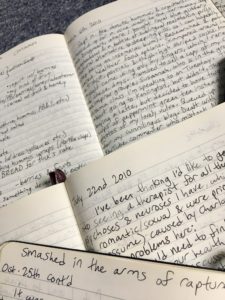 January 28th 2013. I have severe doubts about my ability to stay monogamously committed long-term, and yet I haven’t encountered any situation in which I had an opportunity or even a temptation to cheat. I talk about needing the freedom to kiss and flirt with other people but I don’t actually do it, I just feel good about being allowed to. Sometimes I think I’m bored of sex with E___ but then we have sex and I’m reminded that our sex consists of things which matter to me and make me come and leave me satisfied, such that I don’t really ever have a desire to fuck other people because I just know they wouldn’t be as sexually compatible with me as he is – maybe they wouldn’t like giving oral, maybe they’d hate my labia, maybe they’d want marathon sessions with acrobatic positions, maybe they’d be perplexed at my needing clitoral stimulation to get off.
But if I don’t want to fuck other people, and I don’t particularly want to date or pursue other people, then the only remaining options are E___ or being single, and since he’s nice to me and we have good sex and we go out for nice dinners and he keeps me warm in bed one night a week, I see no reason to pick singleness over him even if I no longer have any burning desires for any aspect of him anymore.
Maybe this is what long-term relationships are supposed to feel like: somewhat static, more like a room’s wallpaper than the things in the room. There are people who seem constantly challenged and delighted by their partners, ecstatic every day even after years, but I have to wonder if those people are faking it.
June 16th 2013. I have a lot of complicated thoughts and feelings around the idea of sexual monogamy. I HATE the whole concept of my body being “possessed” by someone just because we are in a relationship. It grosses me out to think that there are expectations and limitations placed on what I can and can’t do with my own body on my own time. Why is it okay for me to be naked in a body image workshop but it somehow becomes problematic if I’m naked on GoneWild? People can jerk off to the mental image of my body either way. Hell, they could do that even if I always remained clothed.
There is something to be said for emotional fidelity, in that sharing your life and your deepest self with someone can take a lot of trust and sometimes you only want to share that depth with one person at a time. But I don’t see why that should be mandatorily connected to sex. Sex is touch and fun and pleasure and exploration and it doesn’t always require commitment or emotional intimacy or love or anything. Sex can just be sex. And since it is something I do with my body, it’s strange to me that our culture mandates I can only do it with the body of the one I’m emotionally committed to. Ugh.
August 29th 2014. I have to rip the band-aid off and break up with E___. I have to. It’s awful to both of us that I’ve let this drag on so long. I’m not happy; my head and heart aren’t in it and I don’t have the time or energy or desire for a relationship anymore. It has to end. When am I going to do it? Soon. It has to be soon.
September 11th 2014. One of my professors is totally foxy in an older-man sort of way. While listening to him talk about courtroom publication bans tonight, I couldn’t help but fantasize about him giving me stern instructions while smacking my ass with a paddle and slowly inserting a lubed butt plug as “punishment.” It feels good to want people again, to experience desire, to imagine possibilities.
April 3rd 2015. B___ told me two things I already knew about F___: that he has a big dick, and that he’s on the submissive side. That’s not a great omen for our potential sexual compatibility but I’m also still kinda unclear on how subby I really am. Sometimes I wonder if it’s one of those things I enjoy in fantasies but wouldn’t be that into in real life. In any case, during our drunken interview last week, he mentioned to me that he is “orally inclined,” so we’d at least be compatible in that way. (And let’s be real: that’s more important to me than dom/sub stuff anyway.)
Max and some others have suggested to me that it would probably be best to just come out and ask F___ whether his intentions are romantic or just friendly, but I’m scared to make things explicit because I really do like having him as a pal and it feels nice to have made a new friend, and I don’t want to mess that up. I really don’t know how people date out in the real world. Is it normal and expected to have casual friend-hangouts for a while first? Is cuddling in a bar a normal-ish thing to do with a platonic opposite-sex friend? These questions sound stupid when I write them out like that but I genuinely don’t know. There are so many variables.
August 9th 2015. It is 7:05 and I am meeting C___ for coffee at 8!!!!!! I tweeted earlier about being sad that I’m so so celibate, and he asked me a clarifying question about the tweet, and I cackled like a loon and thought about how funny it would be if that dumb tweet led to us meeting up. And then I took a nap, and when I woke up, I had received a DM from him, just as I had in fantasies I’ve had about this possibility, and we chatted back and forth a bit and eventually decided to meet for an evening coffee tonight. OMG, OMG, OMG. I texted feverishly with friends while choosing an outfit, doing my makeup and cleaning my room in preparation for possible imminent sexytimes. I don’t know how casual dates/casual sex work at all. I’m very freaked out and very excited and ahhh!!
LATER (past midnight)… We met up and ended up talking for ~4 hours. He is sweet and smart and charming and makes me laugh. A lot of what we talked about was movies and sex and nerdy shit. He is more-than-passingly familiar with my blog and my tweets. He is also cute and significantly older than me and talks a LOT but it’s all interesting. He said we should hang out again sometime. OMG, OMG.
August 30th 2015. Holy shit… Last night. LAST NIGHT!! H___ had told me he’d be working and would have to arrive at the party late, but it turned out his work ended ahead of schedule so he was already there when I got there. I walked in wearing my floral-print AA skater dress with babely hair and makeup and he turned around from his seat at one of the tables and said, “You look gorgeous.” It was exactly what I wanted to hear at that moment.
I’d been invited to perform so I clambered onto the tiny stage and played “Addressee” + “Jump Your Bones” for the extremely appreciative, supportive crowd. I explained how “Addressee” is about my frequent inability to tell if someone is flirting with me… Afterward, a bunch of people came up to me and complimented me on my music… Then H___ was like, “Can I compliment you now? Now that everyone else is done complimenting you?” He told me he likes that my songs are so honest, that it’s “arresting” and “disarming.” He gives really good compliments, and I told him so.
In response to my song, H___ told me, “For the record, I am always flirting with you.” (!!) He kept trying to get me to dance, because dancing is fun and whatever, but dance-club party atmospheres make me feel really anxious and weird… We got around to talking about his ex and my ex and my weird ambiguous situation with F___, and he said he doesn’t like wasting time on people who are ambiguous (not in a mean way, just matter-of-factly and sympathetically to my situation), and I said, “Well, just to be clear, I’m really into you,” and he seemed surprised but happy and told me he’s into me too, but that he hoped I wasn’t just saying that because of being drunk (I wasn’t).
And then – like the universe was standing up to applaud our bravery – the Carly Rae Jepsen song “I Really Like You” started playing, and because H___ and I have a shared love of Carly Rae, our heads whipped around and he said, “Okay, let’s go,” and we sprinted to the dance floor and got down to fucking “I REALLY LIKE YOU” just after admitting we really like each other. Holy shit.
 January 17th 2016. Last night I had an impulsive late-night sex-date with L___. I was apprehensive and unenthused about going over there because I’m just not attracted to him and that has become increasingly obvious lately. But I think some part of me feels like I should take sex where I can get it. Like good sex is a rarity, especially for someone like me, and I shouldn’t turn my nose up at it. That’s such bullshit and not true and I deserve better than someone who doesn’t turn my crank, but good heavens, these deeply internalized beliefs are so hard to unlearn sometimes.
I was already feeling vulnerable and insecure and inadequate and unsexy in general, and should’ve known better than to do something like kink that would require even more vulnerability. But alas, live and learn. I went into L___’s bedroom and he started spanking me, and it seemed like he was going harder than he typically does, and eventually I started crying. Not brief sobs of sexy pain – actual crying, with tears and shuddering breaths and a deep sadness. I could feel L___’s uncertainty about how to proceed, but he asked if I wanted more and I said yes. I just felt so sad. And it felt like all of my obsessive, anxious, self-doubting thoughts were being whipped out of me, like I was being punished for them, but it wasn’t working.
L___ cuddled me and told me I’d been a good girl, and that was a nice gesture but it still just didn’t feel right. He isn’t the right person to be my daddy dom. I don’t have the romantic feelings I’d need to have in order to want to please him, to be a good girl for him, to change my behaviors and habits and patterns to make him happy. It’s like, he’s saying the right things, but he can never be the kind of person I wish would say those things to me.
February 12th 2016. So yesterday was completely wacky. Bex left at noon and I spent the whole afternoon and early evening feeling kinda gloomy, because of “Bex-drop” but also because I wanted C___ to invite me to hang out again but didn’t want to initiate this myself for fear of seeming “un-chill.” But then at night, I was lying in a bubble bath, half-heartedly trying to masturbate while unable to stop thinking about blowing C___, and I happened to have brought my phone into the bathroom with me, and I impulsively decided to send him a DM saying I had been thinking about going down on him and would 100% be down to do that again sometime soon. After some hemming and hawing about location, he eventually invited me over. I got dressed, did my makeup, and got on the streetcar. It was cold as fuck outside but I was motivated.
When I got there, he was all freshly showered for me and smelled good and we went into a cozy room where he had dimmed the lights and put on an internet radio station of “ambient groove” jams. We sat on the couch, talked a little, made out a bunch, and then I got on my knees between his legs and blew him. YUP, still as good as I remembered. He told me later that he could’ve come in like 15 seconds, but we were both trying to savor it. I know I have written this about 800 different ways here in the past few days, but he is honestly my Ideal BJ Recipient. I told him to let me know if he wants one any time and that was an honest offer.
After, we decided to go to the brew pub for some beer and food. It was really nice and date-like and I felt very heart-eyes-emoji toward him. We talked about sex and video games and our careers and music and all kinds of stuff. He indicated (without saying so, really) that he doesn’t have romantic feelings for me and doesn’t want me to catch feels, and I said, “I have caught mild feels but I have made peace with that,” and he said he knew. Sigh. I know he’s never been destined to be my boyfriend or anything, but I’m very struck by how much he’s almost my ideal partner on multiple levels so it’s still a bummer. Oh wellz…
July 24th 2016. This morning C___ had set his alarm early enough for us to sit and have coffee and hang out a bit before he had to go to a brunch date with some new girl from the internet. It continues to hurt my feelings that he is seemingly so desperate to get into a relationship but inexplicably doesn’t consider me a contender to fill that role for him. But regardless: we always have a good time together, and I adore being around him.
Because my days are so empty now, and because I’ve been so depressed lately, I mentally sort days into “days I’m seeing C___” and “days I’m not.” This is ridiculous and unhealthy for so many reasons. I should have more in my life, so it doesn’t feel like he is the centre of it. And I should feel this way about B___, if anyone, because he’s the person who actually has romantic feelings for me and wants to date me, not C___.
With B___, I sometimes (okay, often) find myself wanting to skip the small talk and get straight to the sex, because he irritates me less when we’re banging instead of talking. With C___, I hang off his every word and want to ask him all the questions in the world so I can absorb his opinions and wisdom. The sex is great, but so are the makeouts, the cuddling, the just being near him, the conversations, the solemn silences as we listen to meaningful music together, the being on our phones in the same room, the aimlessly deconstructing our respective romantic lives, the casual being around each other while the mundanity of life plays out. His very presence captivates and uplifts me no matter where we are or what we’re doing.
January 26th 2017. This trip has been hard because, as per usual, travel stresses me out and also I am wont to experience “C___-drop” after seeing him. It’s gross and makes me feel bad. I only want/need/love him when I’m depressed and/or extremely anxious; that’s when my brain reverts to believing he is the source of all my comfort and the solution to all my problems. It is embarrassing to have done all these months of processing and “getting over him” and to find that it can all unravel, or seem to, so quickly and suddenly. But I need to remember that healing is not a linear process; there will be setbacks and backslides and fuckups and falters. I am doing my best and it’s okay if sometimes that’s not very good.
May 3rd 2017. I am soooo New Relationship Energy-hazy. Nothing fucking matters. My emails and deadlines and unreturned texts are utterly insignificant and I will get to them when I get to them. All I want to do is flirt and fuck and cuddle and touch and talk about Feeeelingz and smile at each other like a couple of goons. It’s ridiculous. Somebody save me from this silliness. Except actually don’t; I’m happy.
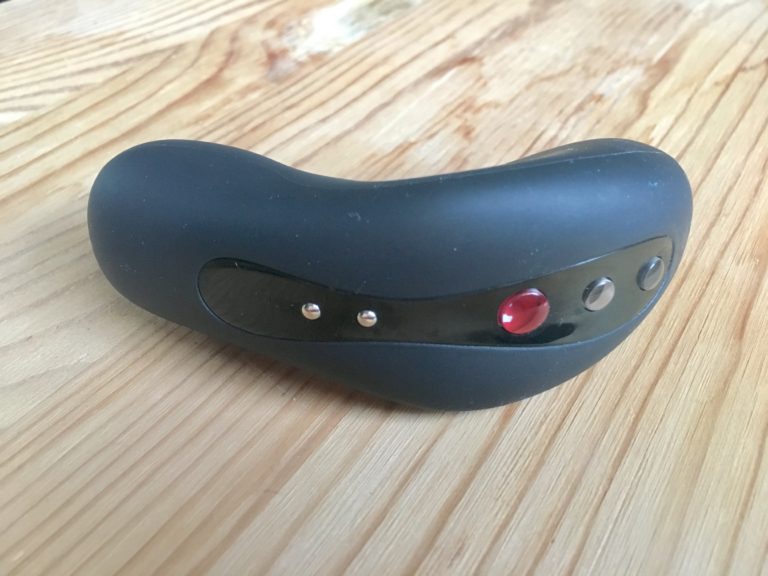
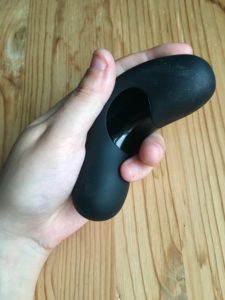 This new model has the exact same shape and dimensions as its predecessor, so devotees of the classic will dig it. The Layas’ shape is one of the things I like best about them: the rounded tip can dig into my clit with the moderate pressure I like, and is broad enough to cover the whole head of my clit but pinpoint enough to stimulate only where I want it. It feels comfortable in my hand, which wraps around it ergonomically such that my index finger can rest over the controls. It’s really quite a well-designed vibrator, shape-wise.
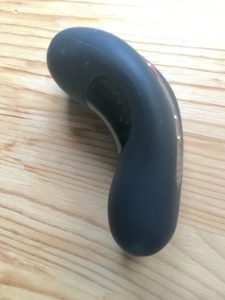 These vibrations are also loud. They make a high-pitched, jangly clattering noise that reminds me simultaneously of bees and snakes. And they numb my hand. Like it’s been stung and/or bitten by a bee and/or a snake.