Links & Hijinks: Selfies, Scents, & a Bag of Dicks

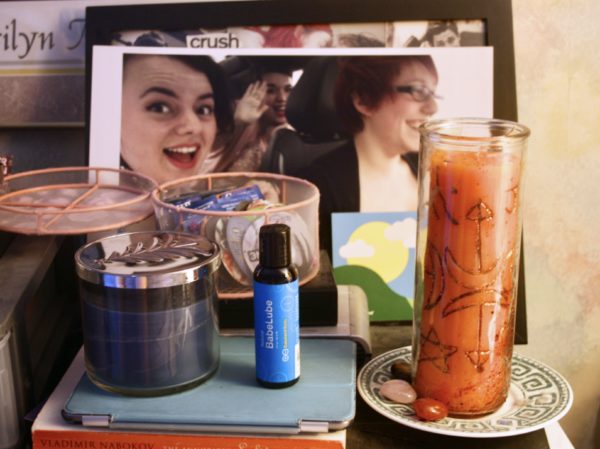
a dildo, a vibrator, and some red panties

Need some new media with which to populate your brain this weekend? Here’s some of my favorite stuff from around the internet as of late…

• I love to read about interesting kinks. Here’s a piece on a man with a smoking fetish and what appeal the act holds for him. “I’m also into specific rituals and mannerisms. For instance, I love when a woman is dangling a cigarette from her mouth while fishing through her purse for a lighter,” he says. “I love lighting women’s cigarettes, too; it’s an intimate moment that’s all about eye contact.” (My friend Caitlin also likes this moment.)

• The folks at xoVain wrote about how they take selfies and it’s fascinating (plus useful info for rabid selfie-takers comme moi).

• If you’re looking to shake up your music collection, I can’t recommend Said the Gramophone’s annual Best Songs of the Year list highly enough. Sean writes beautifully about each and every song on his list. I’ve already discovered a few new gems to obsess over.

• My friend Sarah wrote about the unpaid work sex bloggers are asked to do, although pretty much all creative types are asked to work for free all the damn time. “Paying people for their labor shouldn’t have to be a revolutionary thing,” she writes. “If you think bloggers’ work is good enough for you to want to partner with us, pay us. It’s truly that simple.” Yes girl yes!

• Even if you’re not all that interested in perfume, you might enjoy The Dry Down, a perfume-focused newsletter written by Rachel Syme and Helena Fitzgerald. The one sent in early January was a beautifully written treatise on how perfume interacts with gender and economic privilege, and what perfume can be when it’s not about “inaccessible, monied femininity.” Fragrances, Helena writes, are “a way to invite both other people and yourself to play, to explore whatever gender or expression thereof interests you, whatever memories you want to crawl into the warm burrow of and sleep pressed against through the winter, whatever dormant stories you want to unlock from your own closed archives.”

• Caitlin wrote about the difference between a vulva and a vagina. Messing up this distinction is the quickest way to piss off a sex blogger, FYI…

• After reading my piece about feeling addicted to love, a friend sent me this article about “the shadow side of alternative sexuality,” and how kink and polyamory can “[paint you] into a corner of identity politics that nobody will be able to rescue you from because it feels too much like sex-shaming.” It’s heavy stuff, and I don’t think it’s a perfect match with my own experiences by any means, but it’s definitely some food for thought.

Brandon Taylor – who is fantastic – wrote a Twitter thread about lessons he’s learned. Some faves of mine:  “47. If you want to suck a dick, then suck one. Don’t take your sexual frustration and confusion out on others with oppressive legislation.” ✨”52. There is no making it. There is no line. There is no point at which you’ve achieved all your goals. Always be scheming and dreaming.”✨ “27. Gay men, LOL. Yikes.”

• This piece about the origins of the phrase “eat a bag of dicks” made me cry with laughter. “They say necessity is the mother of invention; at some point, it’s obvious that we as a society simply realized that telling someone to suck or eat one dick was no longer an adequate insult,” Tracy Moore writes. “We needed to go bigger.”

• Shon Faye’s “guide to everything you need to know about your twenties” is so, so good. Read it.

• “I have a depression and I always will,” writes my pal Sarah in this poignant, painful, but ultimately hopeful blog post.

• I’ve been swoonin’ over this Paul Cook song, “A Real Thunderbolt.” It’s such a lovely crystallization of what it feels like to be suddenly, profoundly attracted to someone. 🎵Someone who makes your heart jolt. Not some “okay” girl. A real thunderbolt.🎵

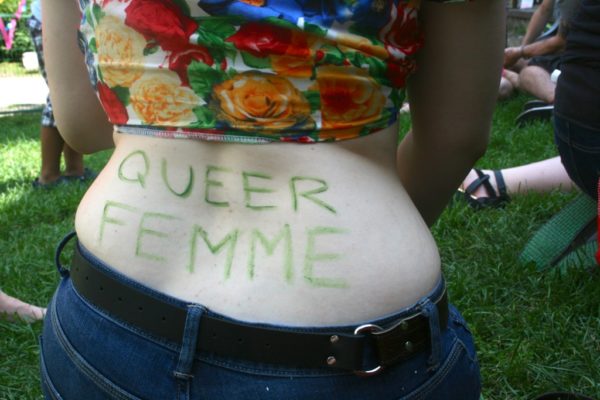
Queer femmes’ online communities are super important, flying in the face of misogyny (both the sociocultural and internalized kinds), homophobia, femmephobia, and millennial-shaming. “Having queer femme friendships is essential. It’s non-negotiable,” says one interviewee in this article, and I am wont to agree.

• This poem on “how to make love to a trans person” is gorgeous.

What were your favorite things you read/wrote/listened to this month?

Why (and How) to Keep a Sex Spreadsheet

screenshot of my sex spreadsheet

When I talked about my sex spreadsheet on The Dildorks and later posted a screenshot of it on Twitter, I got asked a few times: “Why do you keep a sex spreadsheet?!”

While at first I was taken aback by this question – who wouldn’t want all kinds of nerdy data about their sex life?! – I pondered it more and realized it’s a totally fair thing to ask. Not everyone is as geeky about sex as me and my friends, and not everyone delights in neatly organized spreadsheets like we do.

So why keep a spreadsheet of your sexcapades? Here’s a few possible reasons…

To track your sexual patterns. My sex spreadsheet was instrumental in my decision to avoid one-night stands in 2017, because, in looking at the data, I saw that none of my one-night stands this past year resulted in orgasm for me. Granted, orgasm is far from the only measure of good sex, but it’s a starting point – and that piece of data got me thinking about how one-off sex with near-strangers disappoints me in bigger ways, too.

It was also helpful for me to think back on the sexual encounters I remembered most fondly, and look at the data to try to figure out why those particular experiences were so great. Do certain toys work especially well for me in partnered sex? (Yes.) Do I have better and more consistent orgasms with partners I’ve already banged a bunch of times? (Yes.) Do certain sexual acts rev my motor more than others? (Yes and yes.) You get the picture.

For health reasons. When pregnancy and STI scares happen, it’s useful to be able to go back through your sex record to see when conception or transmission may have happened, and with whom. If you’re armed with this knowledge, you’ll be able to get better and more accurate medical care if needed, and you’ll have fewer mysteries to worry about.

I also found it interesting this year to track my partnered-sex orgasms while I was (briefly) on sensitivity-stunting antidepressants. I was on sertraline (generic Zoloft) for most of the month of May, and I didn’t start having orgasms with partners again until July. Yikes.

As a self-esteem booster. When I’m in the throes of a depressive episode, I believe myself to be useless human garbage who no one could possibly find attractive or interesting. In combating this, it can be helpful for me to read compliments friends have given me in the past, mentally replay my greatest achievements, and – yes! – look at my sex spreadsheet.

Of course, the amount of sex you have is not at all a measure of your worth as a human. But when I’m feeling down, and half-believe no one will ever want to fuck me again, I can glance at my spreadsheet and see all the people who have wanted to fuck me, and all the many times we have indeed fucked. It reminds me that I’ve been a foxy hottie before and will feel like one again, someday.

For the nerdy fun of it! Having data at your fingertips is exciting for any nerd. You can do so much fun shit with it!

For example, in analyzing my 2016 sexsheet, I learned that:
• My highest-earning months were also my most sexually active months.
• I gave somewhere in the neighborhood of 47 blowjobs in 2016.
• A high orgasm ratio does not necessarily guarantee a good partner. (My fave sex partners of the year gave me orgasms about 60-70% of the times we fucked.)
• Of all the sexual acts that can potentially get me off, fingerbanging is the one most highly correlated with orgasm for me.

screenshot of my sex spreadsheet

Finally, some tips on how to make a sex spreadsheet of your own

Make columns for anything you’re interested in tracking. I think “Date,” “Partner(s),” and “Location” are must-have columns, but beyond that, it’s up to you what you want to keep a record of. My spreadsheet measures the following: whether I had an orgasm (and how many), whether my partner(s) did, how many times I had had sex with that particular partner at that time, what toys we used, and which of my favorite sexual acts we partook in (fingerfucking, BJs, spanking, PIV, and cunnilingus). I also have a “Notes” column which is for any miscellaneous information I might want to remember about that encounter – e.g. that I was sick that day, that we were both stoned, or that we had just had a big argument about feminism…!

Add new entries ASAP, or else you’re apt to forget the details. I have a few cells in my spreadsheet that simply say “??” because I cannot remember, for example, whether I gave a BJ that particular night, or which vibe I used. I guess that speaks to the forgettability of those encounters, but it also frustrates me in retrospect, because I want my data to be complete, dammit!

Color-code, if you’re into that. I know, I know, the color-coding in my spreadsheet is hideous. I have a different color for each partner, so that I can see at a glance who I was frequently fucking at any given time. I also use green and red to denote yeses and no’s in the “Did I come?” and “Did they come?” columns – again, so that I can see patterns at a glance. I would imagine there are all sorts of creative color-coding schemes you could employ in your own spreadsheet; if you have ideas or suggestions, please share ’em in the comments!

Analyze the data regularly, like at the end of every month or every three months or every year (depending on how much sex you’re having, I guess). Look for patterns, problems, places where you could make improvements – and then set yourself some goals or challenges accordingly. Data is useless if you don’t learn anything from it!

Try not to stress yourself (or your partners) out. You absolutely do not have to keep a spreadsheet if the very idea gives you nervous sweats! This approach can feel like an overly quantitative, borderline-dehumanizing way to process your sexual experiences, and I get that. For me, it’s good nerdy fun, but for others, it could be a source of anxiety. You do you, babe!

Have you ever kept a sex spreadsheet or any other kind of sex record? What were/are your reasons? What kinds of things do you keep track of?

Farewell, American Apparel: A Love Letter

You can feel about a company the way you’d feel about a person. You can hold its flaws and its virtues in your mind simultaneously. You can love it and hate it, both together, more intensely every day. You can halfheartedly explain away its mistakes because you want, so badly, to believe in its goodness, its honor. You can, and I do.

American Apparel is shutting its doors after a years-long battle with bankruptcy, scandal, and cultural insensitivity. Let me be exceedingly clear: this post is a love letter, but there are many things about American Apparel I do not love and cannot condone. The sexual harassment, the sizeism, the snotty atmosphere that causes several of my queer, trans, plus-size, and disabled friends to feel uncomfortable in AA stores… None of this is excusable. I myself boycotted AA for years, for these reasons and more. There are those who would say I am problematic for having supported this company. That’s fair.

Setting aside the things about AA that are actually good – like its labor practices and occasional feminist collaborations – what really made me an American Apparel devotee is the products themselves. The products are what I will miss, when the last remaining dregs of AA in this world are extinguished. The clothes, and how they made me feel.

me trying on a blue dress in an AA dressing roomFor years now, when I have an upcoming occasion for which I need to look slutty and cute, American Apparel has been my one-stop shop. This was especially true during the last couple years, when I had a friend who worked as a sales assistant at the Yonge-Dundas location – I’d text him, “I need some new slutty clothes. Are you working today?” and then I’d come in and he’d bring me things to try. A black pleather bustier. A tight gold skirt. A low-cut dress and the best bandeau bra to wear under it. Whatever my slutty needs might be, AA would have ’em covered. (Or just-barely covered, as the case may be.)

I own three of their “figure skater dress,” because it makes me feel like a fucking glorious bombshell, and that feeling is well worth the price of the dress. I own their ponte pencil skirt in two different colors, and have worn them to job interviews, conferences, and presentations, because nothing else puts me in a foxy-businesslady headspace quite so quickly. I own four of their ribbed racerback dresses and two of their jersey racerback dresses, because nothing else is so easy to throw on, style up, and accessorize. Their basics are indispensable simply because they are indeed so basic, and so well-made.

When dressing for a porn shoot or a sex-positive party, I always consider my AA clothes first. My tiny booty shorts, my fetishistic thigh-high socks, my form-fitting fuck-me dresses. They always do me right.

When I need to transport large quantities of sex toys – to, say, a porn shoot, a hotel sex date, or an out-of-country threesome – my bright yellow American Apparel leather clutch is my favorite vessel. It can comfortably fit my Magic Wand, Eleven, a few more toys, and a plethora of safer-sex supplies. Whenever I take it anywhere, people ask me where I got it. It looks so cute tucked under my arm, and it looks even cuter when I open it and you realize it’s stuffed with sexual accoutrements.

me wearing a shiny gold bodysuitWhen I received an invite to the Smut in the 6ix gala and was told to dress “as smutty as possible” in a black/white/gold color scheme, I knew exactly where to shop. It took me less than fifteen minutes to find the perfect thing on the American Apparel website: a deep-V gold lamé bodysuit. At the gala, I rocked it with a black pencil skirt over top, which I then stripped off when I got up on stage and found I wanted to show more skin. On my chubby frame, the bodysuit looked quite different from how it did on the AA model’s slim body, but I still felt like a luminescent vixen in it. It stretched to skim my curves and made me feel like I could live in gold lamé.

But AA isn’t all party clothes and mega-cleavage. Their hoodies – part of the line of basics which made them famous – are among my go-to loungewear when I’m sad, sick, or depressed. Lined with cozy fleece, they keep me warm and comfortable even when my brainspace feels cold and harsh. I can zip up the zipper, pull up the hood, and tuck my hands into the kangaroo pockets, and it makes me feel snugly, safely bundled up. Insulated from the world by polyester and cotton.

The AA stores in my city – and probably yours too – are currently plastered with sale signs: “75% OFF!” “EVERYTHING MUST GO!” Inside, they’re practically barren. Everything is on sale, even the furniture. It’s a sad sight. But recently, I ventured into one with my friend Suz, determined to find some final souvenirs to take home with me.

One thing I bought is a dark red hoodie, unisex size small to fit my ladies’-size-large body. I’ve barely taken it off since I bought it; in fact, I’m swaddled in it now as I write this. Like all my AA acquisitions, it’s well-made, dependable, reliable. I feel effortlessly put-together in it; I feel at home. It’s a feeling I’ll miss, as American Apparel shuts its stores, takes down its website, and recedes into history. I will wear these clothes until they disintegrate. I will wear these clothes until I find ones I like better. Maybe I never will.

The Unladylike Project: Calling Men Out

me rolling my eyes and looking exasperated as hell

Empowerment is more easily said than done. There are so many feminist principles that I champion in theory, and that I’d gladly shout from the rooftops or text to friends in all caps, but that I find so damn hard to implement in my actual life.

One such principle is the idea that men should treat women well, listen to us, respect us. Obviously I believe this. I decry disrespectful men on the internet, point out when dudes treat my friends poorly, and criticize shitty men in TV and film. But when it comes to how I’m treated by the men in my life, I find it harder to kick up a fuss.

True, I’m lucky enough that most of the men in my close social circles are fantastic. My little brother is one of my favorite people on earth and treats me like a precious jewel; my dad is an upstanding protector and a fierce feminist; I have several male friends who perennially prove themselves feminist allies. Unfortunately, though, patriarchal conditioning is really hard to unlearn, and even the best men sometimes backslide into toxically sexist behaviors without noticing it. And sometimes I backslide right along with them.

These aberrations come in many forms. There are the family parties where the men sit comfortably in their armchairs after dinner while the women clear the table. There’s the subtle way I and my single female friends are likelier to be harangued about not having a partner than our male friends are. There’s the expectation that women are “naturally better” at emotional labor and are thus expected to nurture and support our male friends in times of need, even when we barely have the energy to take care of our own needs.

Most of the time, I am pleased as punch to help my friends – of all genders – in any way I can. But when the labor expected of me becomes too much, and operates along visible gender lines, sometimes I need to call out my dude-friends for tumbling into troubling tropes. And I’m usually too meek to speak up when I need to, due to yet another gendered trope which says women should be subservient, small, and “ladylike.” Well, fuck that. If someone’s walking all over me, I am well within my rights to point that out and insist that they stop!

Our culture encourages women to cattily compete with one another, while constantly deferring to men and seeking to impress them. This results in a psychological environment where I’m much likelier to blame a woman or get angry with her, even if a man is equally or moreso to blame for whatever slight has taken place. This is internalized misogyny through and through, and I hate that I sometimes unwittingly perpetuate it. I want to take off the rose-colored glasses through which I see men, and expect as much from them as I expect from everyone else in my life: respect, kindness, consideration, integrity. Men aren’t exempt from being decent humans just ’cause I find some of them attractive and want them to think I’m attractive too. That’s no excuse!

Some of my male friends know about my tendency to downplay my own needs and boundaries, so they’ll check in occasionally: “Please let me know if I’m talking about myself too much,” they’ll say, or, “Feel free to ignore this unsolicited advice if I’m totally mansplaining, but…” It’s great that they give me these opportunities to set boundaries when I need to. I should take them up on those offers more often. It’s important to me that I be a polite, kind, supportive person, but you start to lose your energy for supportiveness when people are constantly steamrolling over you. So maintaining better boundaries, and calling out people who mistreat me, is good not only for me but also for my friends. I am a better friend to them when I am mentally and emotionally healthy and happy.

Non-male readers: do you also have trouble speaking up when men treat you badly or carelessly? Got any tips?

12 Business & Blogging Lessons From My Blog Idols

a dildo, mug full of pens, pair of glasses, and laptop on my desk

For years, I wondered what my life’s purpose was. I felt (and still feel) drawn to many different endeavors – journalism, creative writing, audio production, music, even musical theatre – and wasn’t sure how to meld those together into one cohesive career.

But something clicked when I started this blog, almost five years ago. As I tried out different types of content and developed my style, I slowly realized that running a blog could combine my passions in any way I wanted. Now, my days of “blog work” are comprised of writing, editing, social media promotion, taking and editing photos and videos, corresponding with readers, and rustlin’ up sponsors – all tasks I adore and didn’t think I could meaningfully combine, let alone earn money from. How dreamy!

I wouldn’t be where I am today without my blogging mentors: people whose blogs I’ve admired for years, whose instructional and personal content I’ve read and re-read, whose guidance I’ve taken to heart and put to good use. Here are some of those blog heroes, and some of the valuable biz-‘n’-blogging lessons they’ve taught me…

blogger Gala Darling wearing a pink dressGala Darling (galadarling.com)

It’s okay to overshare… selectively. Gala grew up during the height of LiveJournal‘s popularity (as did I, sort of), so her writing has always been tinged with tropes of the online-diary format. In the LJ days, it was commonplace for folks to divulge all sorts of glamorously mundane details from their lives: the music they were loving, the perfume they currently adored, the absurd adventures they’d recently gotten up to. These details were (and are) simultaneously banal and fascinating, when shared in an engaging way by someone in whom you already have an interest. Reading Gala’s work is instructive in striking that balance between “too small to be interesting” and “too showy to feel intimate.” Personal details invite your reader into your life, and – when shared tastefully and artfully – create a delicious connection between writer and reader.

Picture, and know, your “ideal reader.” Gala co-founded The Blogcademy with two of her blogger pals (including Kat, who I’ll tell you about in a minute), and one of the central lessons they impart on their “Blogcadettes” is the importance of vividly picturing your ideal reader in your head when you write. If you know who you’re writing for, you’ll automatically have a stronger sense of purpose and of what kind of content you should be producing. My “ideal reader” is a mental composite of actual readers of mine I’ve met and a younger version of myself. It’s an image that keeps me on-task and helps propel me forward when I’m feeling stuck.

Above all, be kind and loving. Gala’s brand centers an optimistic, adoring attitude, and I’ve always admired that. She is the human embodiment of the tenet, “If you don’t have anything nice to say, don’t say anything at all.” It’s not that she never speaks ill of anyone – it’s obviously valid to call out people/companies/entities who are being shitty! – but she doesn’t engage with cruel trolls or petty gossips. Instead, she mostly just directs positivity and love at her readers. Her blog, brand, and persona are cohesively focused on optimism and integrity. When I’m doing that really well, I see it mirrored back at me, in the form of equally positive and sweet readers – which is exactly what I want!

blogger Kat Williams doing a kiss face and making a peace signKat Williams (rocknrollbride.com)

Treat your blog like a business. Because, spoiler alert: it absolutely can be. Mine certainly is. Kat’s been blogging full-time for years, so she does this magnificently. She’s methodical about her emails and other blog admin tasks, and as a result, she’s able to post fantastic content EVERY DAY (sometimes even more than that!). Depending on your life circumstances, it’s not always possible to pour time and energy into your blog – but Kat inspires me to approach mine more professionally and purposefully, in order to get back professional and purposeful results.

Write kickass, valuable sponsored posts. When I first started writing sponsored posts, I felt super gross about it. How could I possibly get paid to write about a company without coming across like a promotional sleazeball? But bloggers like Kat have set the gold standard for what a sponsored post ought to be: authentic, fun, and valuable to your readers. I don’t accept sponsored-post assignments unless I genuinely feel I can make them fun and interesting for both myself and my readers. Otherwise, the posts would just be an empty sales spiel, and nobody wants that.

writer Alexandra Franzen smilingAlexandra Franzen (alexandrafranzen.com)

Set clear, loving policies. My policies page quotes Alex’s, because she’s brilliant at this sort of thing. Boundaries are crucial, both personally and professionally. Having crystal-clear boundaries in place makes you appear more professional to potential clientele, plus it helps you weed out stressful bullshit and focus only on the projects that actually align with what you want to achieve. I feel like such a badass bosslady when I fire off an email that begins, “Like it says on my policies page…”

Underpromise and overdeliver. Alex says the secret to success is just being really, really, consistently good at what you do. There’s no point making outlandish promises about what you’re capable of; just get super great at blogging, and over time, the readers and sponsors will flock to you, even if your social media and SEO and all those extras aren’t especially on-point. Content is king, and good content – well-written, engaging, valuable content – will build you a devoted audience faster and better than anything else. So practice your writing and try not to stress too much about the other stuff.

You don’t “find” your voice, you create it. Your “voice” as a writer is something you should purposefully craft, not magically stumble upon. Alex taught me that shaping your writing style is a conscious, deliberate act. How do you want your reader to feel? What do you want them to experience or learn as they read your work? What do you want them to take away from your writing? Get clear about this stuff and you’ll find your “voice” gets clearer, too.

an illustration of blogger Lilly doing sex toy science experimentsLilly (dangerouslilly.com)

Never shut up. Lilly is notoriously critical of shady sex toy company practices, toxic materials, and awful toys. This conflicts with my earlier point about being a positive and loving blogger, but I think they’re two sides of the same coin: being a positive force in the world means radiating love most of the time but busting out the big guns when you encounter something worth destroying. Bloggers have the power to change the world, and that is not a responsibility we should take lightly. Fuck shit up, make change, punch up, and dismantle systems of oppression in any way you have access to.

Build community with other bloggers. To be fair, this is important to all my blogger babes, not just Lilly. But she vocally supports blogger solidarity, and adds so much value to my life in doing so. Creating community with fellow bloggers is fantastic not only for social reasons but also for professional ones: you can consult with each other about setting rates, dealing with difficult clients, crafting tricky posts, and any other blogging snafus you might encounter. Since befriending tons of other sex bloggers, my work not only makes me happier and more fulfilled but also brings in more money and feels like more of a professional pursuit.

blogger Epiphora wearing a hat that says "Pay Me"Epiphora (heyepiphora.com)

Get paid first. At companies’ behest, I used to sometimes write and publish sponsored posts before receiving payment for them, with the understanding that I would get paid after publication. I see now how risky that was, and how much it signalled those companies’ lack of respect for me and my platform. “You should not have to do work you weren’t even paid for,” Piph told me. “No need to lift a damn finger until they put the money in your pocket. Fucking insist upon it.” She is always reminding me, through her words but mostly her actions, that our work is worth money and we do not have to put up with rude, unprofessional clients.

Never apologize. Okay, apologize if you fuck up. But never apologize just for being you in a way you’re worried might not be to others’ taste. I can’t count the number of times I’ve written/said/thought some form of, “I’m sorry if this post is really rambly,” or “I’m sorry this post is so personal and emotional,” or “I’m sorry I have so many feelings about frivolous femme shit.” Piph’s writing is unabashed and unapologetic, and I think that’s part of what draws people to her website in droves. As a blogger, your personality is your brand; it’s what your readers are there to read. Stop playing small, stop denying your greatness, stop papering over your glorious quirks and start showing them the fuck off. Your people will find you, but only if you’re being your real, whole, amazing self.

What lessons have you learned from bloggers you admire?