1. Read their work. But like, really read it, though. Soak it up. Tell them what you liked about it. Tell them how it made you feel. Marvel at their clever word choices and melodious phrasing. If you haven’t had time to read their latest piece yet, say, “I’ve been saving it for when I can really take my time with it,” and mean that, and follow through.
2. Brag about them. When the subject of her last piece comes up at a dinner party, inquire, “Did you read her article about that? It was great!” When you introduce him to your friends, tell them, “He’s an incredibly talented writer.” Have her big-deal byline framed. Bring up his accomplishments in spaces where he might be too shy to do so himself. Be your sweetheart’s one-person hype machine.
3. Read their work aloud to them. Whether it’s an in-progress draft or an essay they wrote years ago, they’ll hear it differently in your voice. They’ll adore hearing which sentences surprise you, which metaphors make you giggle, which piece of dialogue trips you up. It’s a sort of artistic collaboration: their words, your voice, mingling to create something new.
4. Don’t offer edits unless asked to. If you’re not sure, ask before you begin to read, “What kind of feedback are you looking for on this, if any?” Sometimes they might want your detailed suggestions. Other times they might just want someone to look it over and say, “This is great!”
5. Nerd out about books with them. Be the person to whom they can text excerpts excitedly, or shriek gleefully about perfect sentences. Recommend them your favorites, and read theirs. Lie in bed together reading, taking occasional breaks to query, “What the fuck is this character doing?!” or “How the fuck is this going to end?!” Give them a gift certificate to their favorite used bookstore, or an annotated edition of their fave novel, or a shiny new Kindle. Hold them and kiss their shoulders while they devour something beautiful.
6. Let them bounce ideas off you. Help them shape the plot of their novel, or the arc of their essay, by listening and asking questions. Tell them what’s working for you and (gently) what isn’t. Point out plot holes or fallacies, and help them fill in the gaps. Develop the skill of being diplomatic but honest when asked, “Does this make sense?” or “Is this funny?” or “Is this any good?”
7. Write them love notes. Their love language is probably linguistic, so they’ll appreciate this even more than the average person. Put into words why you love them, what they mean to you, what they bring to your life. Tell them how their presence in your life heals your past, sweetens your present, and brightens your future. Write things that are meaningful, sweet, and true. Your prose doesn’t have to be flowery or crystalline like theirs is, though maybe they inspire you to make it moreso.
8. Surprise them with beautiful writing supplies. But ideally the ones you know they prefer, since that proves you truly know them. Get them their next journal, a box of exquisite pens or pencils, a year-long subscription to Evernote Premium or a domain for their blog… Whatever you know will get them fired up to write even more.
9. Give them space to write. Don’t take “I can’t; I’m writing” as a rejection; be flattered they trust you enough to be honest with you about their boundaries and needs. Don’t interrupt them when they’ve retired to a private space to write – or, if you must, ask first if it’s okay. Find ways to work on solitary pursuits, independently but together – they will feel adored and accepted when they see you can amuse yourself with some other activity while they write, happy just to be near them. They’ll be happy to be near you, too.
10. Give them things to write about. Magical experiences, poignant moments, deep and true love. Kiss them in pretty places, hold their hand in bustling streets, shoot them meaningful glances from across a room. Incite in them joy and lust and exhilaration and whatever feelings you’d want to read about – because they want to write about those feelings, but more than that, they want to feel them.
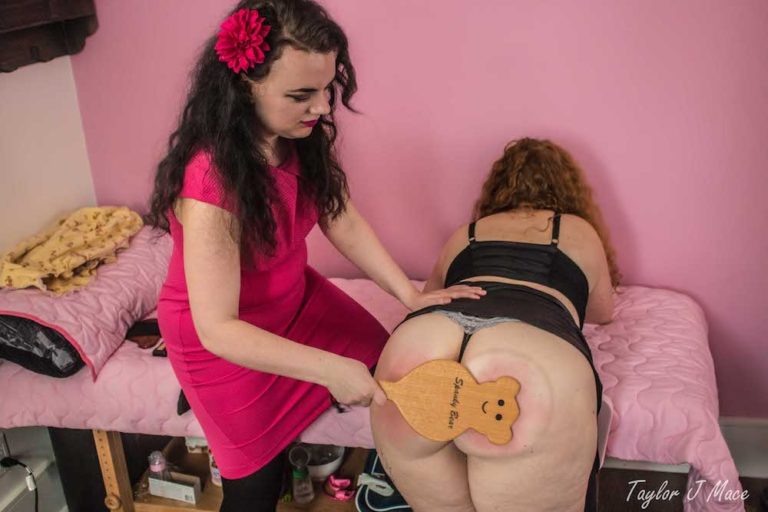
They say that if there’s something in your life you don’t like, you can either change the thing itself, or change your attitude about it. That’s an idealistic oversimplification when it comes to complex issues like poverty or chronic illness – but if we’re talkin’ consensual pain, then yes, I find changing my mindset makes all the difference in the world.
My first forays into consensual pain were mild spankings – first, with a long-term boyfriend, and later, with a super-kinky FWB. Almost as soon as the sensation veered from “scarcely noticeable” into “actually painful,” I would call an end to it. It didn’t feel good, so I couldn’t enjoy it. Right?
I’m sure this is true for many people, and no one should feel pressured to pursue sexual experiences they don’t actually enjoy or want. But in my case, I had Kink Feelingz about the idea of taking pain, so I wanted to keep trying. I was determined that my pain tolerance in reality would one day catch up to my pain tolerance in fantasy.
So I started learning and practicing what I call cognitive strategies for dealing with pain. I’ve helped a number of baby-kinkster friends through their initial adventures in masochism, and I think, in many cases, mental strategies help more than physical adjustments (although both can be helpful). Here are 8 tricks I’ve picked up that help me when I want to take a lot of pain; they’re not new or revolutionary, but they work for me.
1. Establish safewords and safe-signals. This is a 101-level kink safety requirement, but beyond being necessary to keep all participants safe, I also find these tools help me take more pain. When utilized with a communication-savvy partner who reads my body well and checks in as needed, these tools can help me moderate the sensation I’m receiving without breaking role or feeling pulled out of the moment. Try these:
The top can ask, “Where was that last hit on a scale from 1 to 10?” The bottom rates the hit. Then the top has a better sense of the bottom’s current pain tolerance, and can ask useful follow-up questions like, “Where would you like to be, on a scale from 1 to 10?” or “Do you think you could take a 7 for me right now?”
The top can ask, “What color are you?” and the bottom can answer either green (“I’m fine; you can continue”), yellow (“I’m okay but I need you to slow down/decrease the intensity”), or red (“I need you to stop immediately”).
You can develop a nonverbal communication strategy, e.g. the bottom taps the top’s leg/arm if they want the sensation to slow down, and squeezes it if they want more sensation. (This approach doesn’t work great for me because I tend to do these things involuntarily while receiving pain, but if you have more control over your body at that time, you might find this a useful technique.)
Notice that these strategies only ever require one-word answers from the bottom, if that. Pain can put a lot of people into a nonverbal headspace, so adapting your communication strategies in this way can help make sure everyone is safe and getting what they want, even when the bottom doesn’t entirely have their wits about them.
2. Warm up properly. This is less a cognitive strategy and more of a physical one, although really, when done well, it’s both. I can’t delve straight into an intense spanking sans warmup, both because my body isn’t ready for it and because my mind isn’t.
Regardless of what kind of pain you’re playing with (spanking, face-slapping, E-stim, nipple clamps, what have you), you can warm up by starting the pain at a mild level and slowly increasing it as the bottom goes deeper into subspace and can handle more. (As a top, if you’re not sure if the bottom is ready for more, the above communication tools are ideal for figuring that out.)
Note that some people prefer pain to feel “too” intense too quickly, and may want to skip warmup for this reason. I would only recommend this for people who already know their body’s pain responses pretty well, though.
3. Breathe. You hear this “tip” at every yoga class and in every meditation video. If you’re anything like me, you get a little annoyed by it after a while. I know, I know. Breathe deeply, you’ll think with an irritated eye-roll.
However, controlling my breathing has been one of the most useful skills I’ve learned in increasing my pain tolerance (there’s even scientific backing for this). I think that’s mostly because it gives me something to focus on that isn’t the pain, and lets me feel like I’m doing something, rather than just helplessly, hopelessly suffering.
Experiment with different breathing patterns to find what works for you. Personally, I like to take long, slow, deep, steadily rhythmic breaths through my nose. Sometimes my rhythm gets messed up when I get hit particularly hard, but I just try to remind myself to refocus on my breathing, and that helps a great deal.
Note: a bottom who uses breathing techniques to get through pain might find it disruptive to be told to count impacts out loud, repeat mantras, answer a top’s frequent questions, etc. If you are a top who likes to ask bottoms a lot of questions or make them count aloud, maybe check in beforehand with each bottom to see if they think that practice will fuck with their ability to modulate their pain the way they prefer.
4. Establish finite limits to the pain. I find this helpful for the same reason it’s helpful to know the length of a long-distance race before you run it: discomfort is so much worse when you have no idea when it’ll end.
This is not to say you have to start a scene by announcing, say, “I’m going to spank you for exactly thirty minutes”! For me, the quantification of pain often happens on a smaller scale during a scene. For example:
“I’m going to hit you really hard 5 more times, and then we’ll be done.”
“Think you can take 10 more hits like that?”
“I’m only going to hit you for one more minute. You can keep an eye on the clock if you want.”
“If you can get through another 30 seconds of pain, you’ll have earned lots of cuddles and chocolate.”
“You’re getting 25 more hits – unless you make another bratty remark, in which case, your punishment will be much worse.” (I learned this technique from spanking fetishist extraordinaire Jillian Keenan, who recommends it as a way of indirectly inquiring about a bottom’s limits without breaking D/s roles. Brilliant.)
Note: some bottoms prefer the chaotic unknown. Having no idea when a scene will end may increase their sense of fear in a way they find hot and/or cathartic. As with many of these tips, you can clarify your approach as a top by asking your bottom lots of questions about what they like about receiving pain, what specific feelings they’re seeking when they crave pain, how they conceptualize their pain, etc.
5. Use rhythm. This is a super contentious point amongst bottoms, I find. Ask 10 masochistic bottoms how they feel about rhythm versus randomness when they take pain, and you’re likely to get 10 different answers.
Personally, I find it so much easier to take large amounts of pain if it’s occurring at steady intervals. Randomness causes my body to tense up erratically, so I can never really relax or breathe deeply or give myself over to endorphin-y subspace in the way I prefer to.
That said, I’ve met many bottoms who find it exciting and hot to have no clue when the next hit will land (or the next zap, punch, scratch, etc.) – so now, when I’m topping, I usually ask bottoms beforehand whether they like their pain to be rhythmic or not. It’s a seemingly small thing but it can make a huge difference.
6. Remember why you’re doing this. As with any kind of suffering in life – consensual or not – it’s easier to get through pain if it feels like it’s for a specific reason, and you believe that reason is a good one.
As a bottom, sometimes I’m taking pain to impress a top, to serve them, to show them how good I can be for them. Sometimes pain is a tool we’re using to achieve a certain effect, like bringing me into subspace, turning me on, or giving me bruises we can admire later. Sometimes pain is a punishment, sometimes it’s a reward, sometimes it’s a fun bonding activity… It can be so many different things, and it helps to clarify, before any given session, what it is going to mean on that particular day.
As a top, here are some examples of how you can remind your bottom mid-scene of their pain’s purpose. As always, adapt these approaches to fit your bottom’s specific tastes and motivations for enjoying pain, which you can find out by – spoiler alert! – asking them.
“I love seeing you in pain like this. You’re taking it so well.”
“This’ll teach you not to [do x thing they’re being punished for] again, won’t it?”
“You love how subspacey and turned-on you get when I hit you, don’t you?”
“I wonder how much more you can take for me.”
“Your bruises are going to look so pretty for me once we’re done.”
7. Repeat an affirmation. (Also known as a mantra, though I’m trying to use this term less because some say it’s culturally appropriative.) I find this useful for many of the same reasons I find rhythmic breathing useful: it gives me something to focus on that isn’t the pain, and feels like a life preserver I can cling to in a hopeless, roiling sea of pain.
The two phrases I’ve thought most often during spankings are “no moment is unendurable” (originally from David Foster Wallace’s Infinite Jest) and “this too shall pass.” The latter has been so useful for me in so many situations that I have it tattooed on my wrists – a handy placement, ’cause I can hold my upturned hands out in front of me during a spanking and read my ink over and over to help me get through the pain!
As a top, if you know your bottom finds these repeated affirmations helpful, you can give them one and tell them to think it or say it over and over while you hurt them. For example, my partner sometimes asks me mid-scene, “What are you?” and my ritualized answer is, “I’m your helpless little slut.” It helps recenter and refocus me on my desire to serve him, which can be nice when we’re doing something I find challenging. You can also just repeat a phrase at them if there’s one you think they’d find helpful – e.g. “You’re a good girl,” “Take a little more for me,” “You’re doing so well,” “You get what you deserve,” and so on. (Not to sound like a broken record, but you should really inquire about your bottom’s motivations for enjoying pain before you try this; telling a punishment slut they’re a good boy, for example, is unlikely to be effective.)
8. Focus on another sensation elsewhere in your body. I had a partner last year who would often put one hand on my lower back while the other spanked me. It was ostensibly just to steady himself so he could aim better, but it had the unforeseen (for me) effect of increasing my pain tolerance – because whenever the sting on my ass got too intense, I would just reroute my focus to my partner’s warm hand on my back. That touch felt so loving compared to the wallops of pain his other hand was serving up, and even that small cognitive adjustment helped me tune out the pain and focus on the affection that fuelled it.
I’ve sometimes found it helpful to bite my lip or dig my nails into my arm while getting spanked, because that less-intense pain helped draw my focus away from the spanking when it became almost too much to bear. A similar effect is achieved when a partner lets me hold a vibrator against my clit while they hit me, or allows me to grind against their lap.
Even if there’s no deliberate touch going on except for the pain, you can still focus on other tactile sensations: the bed underneath you holding up your weight, your clothes (if any) sliding against your skin, a collar tight against your throat. You can bring your mind back to the pain when you’re ready, but tuning it out for even just a few moments can help you get through a difficult interlude when you need to.
What strategies do you like for enduring (or helping a partner endure) consensual pain?
Ah, the delicate and controversial DM-slide! I remember nodding vigorously when I read Priscilla Pine’s essay “What Comes After Tinder?” and got to the part about Twitter. “Most of the friends I polled who were active Twitter users mentioned it as the app where they had had the most success meeting potential partners, and I know at least one person who eschews dating apps entirely because her DMs have been so fruitful,” Pine wrote (emphasis mine). “In a way, that makes sense: Twitter mimics traditional social interaction in that you can find new people via friends and observe their personalities and senses of humor over time before feeling compelled to proposition them for a date.”
It was a succinct statement of something I already knew to be true: that Twitter was the social platform likeliest to introduce me to new crushes and fan the flames of those feelings, and that Twitter was probably the platform on which I’d be most open to a stranger asking me on a date. Not proportionally, you understand – of 100 people who express interest in me on OkCupid or Tinder, I probably go out with 5 of them, whereas the same calculation on Twitter would be more like 1 out of 300 – but if I develop a Twitter crush, I’m way more motivated to turn our flirtations into an IRL date, if possible, than I am with online-dating randos. I’m already more-or-less sold on them, from consuming their brain in 280-character chunks.
Having met three romantic partners (this guy, this guy, and this guy) and three casual sexual partners (this guy, this guy, and this guy) via Twitter, I’m pretty clear on what I like and what I don’t like, vis-à-vis people sliding into my DMs. Here are 5 elements your next DM convo with a stranger should definitely possess…
Previous rapport. Like Bex says in our Dildorks episode about social media flirting, DMing someone you’ve never actually interacted with before (aside from, maybe, faving their tweets) is like going up to a stranger at a party, tugging them into a closet, and declaring, “I have to talk to you.” They’re probably gonna be freaked out and wonder what the fuck you’re up to.
Establish rapport by adding value to your Twitter crush’s life. Most of my successful DM suitors replied to my tweets with funny jokes, helpful suggestions (when requested), and supportive cheerleading – as relevant – before they dared take things to the next level by DMing me. This is important. When your name and face show up in my inbox, I should recognize them and ideally have a positive association with them from our previous interactions. Hint: if your crush has never faved, replied to, or otherwise acknowledged your public communiqué, they’re probably not interested – or you just need to build rapport for longer before you ramp things up.
A specific reason to message them.Bex recommends following up on a previous conversation the two of you had publicly – e.g. if you and your crush recently commiserated about something sad that happened on your mutual favorite TV show, you could DM them a link to a great article about the show a few days later and say, “Thought you’d like this!” Or you could DM them a link to a local event you think they’d enjoy attending, a thought you had about their latest blog post/podcast/tweet that seems too specific to say in a public tweet, or a thank-you for something they helped you with or introduced you to.
The first time my Sir DMed me, he was following up on a compliment I’d tweeted at him earlier in the day. “Hey Kate! Thanks for that compliment earlier, it made me blush,” he said. “You’re very cute yourself!” This is simple but it worked well because it gave me the opportunity to talk to him more if I wanted to (which I did) or to just say “Thanks!” and move on if I wasn’t interested. Similarly, my first DM from an erstwhile FWB was a response to me tweeting about being sad about the sexual dry spell I was going through at that time: “Sounds like we have similarly sparse dance cards lately,” he said. “Toronto’s been great for work, but surprisingly boring socially.” You’ll notice that this wasn’t a direct date-ask – he left me space to suggest we get together, if I wanted to, which I did – but was nonetheless relevant to our earlier public conversation.
Sometimes your specific reason for messaging them might just be wanting to ask them out. That’s okay, if done well. See “a statement of intent,” below.
An introduction. You might not need to front-load this into your first message if you think your crush is already aware of you and what you do, but it’s nice. Even something as simple as “Hi, I’m [name]! Long-time follower, first-time DMer” could be enough. Introducing yourself is respectful and polite. You probably wouldn’t go up to a stranger at a party and launch into a monologue without at least saying hello and telling them your name, so try the same thing in your Twitter approach.
My Sir did this in his second message to me. “I’m [name], a New York-based [job title]/sex nerd,” he wrote. “Recently found your work and your tweets and it’s all great stuff.” It was a concise statement of who he is, what he does, and why he followed me. Along with his respectful approach, it told me everything I needed to know in order to decide whether I wanted to get to know him better (I did).
A statement of intent. You probably don’t wanna put this in your very first message, because asking someone on a date (or whatever) before establishing rapport is risky, scary, and less likely to work. But if you do decide to ask your Twitter crush to meet up with you, you should give them some sense of what you’re actually asking. Don’t couch your romantic or sexual intentions in a vague request to “pick their brain over coffee” or “talk about [their work].” (And hey, if your intentions are strictly professional, or even casual or platonic, you should find a way to mention that, too. Less confusion = better results for everyone.)
You can straight-up tell them you’d like to take them on a date. You can tell them you’d love to get to know them better over coffee/drinks. You can suggest a specific activity you know the both of you enjoy (e.g. going to a comedy show), ideally one that’s culturally coded as date-y. You can disclose the nature of your feelings about them so they can infer you’re asking them on a date (e.g. “I think you’re really cute and cool and I’d love to take you out sometime” or “I’ve been crushing on you from afar for a while and would love to hang out in person if you’re into that”). My Sir said, “If you’re ever in New York and want to meet a Twitter admirer in person over coffee or something, I’d love that,” which is perfect because it expresses enthusiasm, indicates a specific activity, and gives me an easy out. So many good ways to ask cuties on dates!
Some fucking respect. Twitter isn’t a magical universe where you get to treat people like garbage. Those are real humans in there, so be good to them! Be polite, take “no” for an answer, and be appropriately apologetic if you fuck up.
Make sure you keep in mind, too, that someone ignoring your DM or declining your advances might not have much to do with you. They might be busy, or stressed, or going through a complicated situation of some kind. Don’t take this shit personally, if you can help it. You’re great, and there are always more Twitter crushes in the sea!
Have you ever asked someone out – or been asked out – via Twitter DM? How did it go?
I always vowed, as a young naïve little thing, never to get into a long-distance relationship. Touch is one of my major love languages, and I’m not the type to need a lot of “space” in my relationships: if I love someone enough to want to be their girlfriend, usually I want them as close as possible, in every way possible.
So it was a surprise when I met a boy who lived in New York and wanted him to be my boyfriend. I knew more-or-less what that would entail, and I still wanted it. I knew how hard it would be, and I still wanted it. I had often wondered, unempathetically, of friends in LDRs, “Why can’t you just find someone closer to date?” and I see now that that’s a question akin to when folks used to ask me, “You’re attracted to butch women? Why not just date men?” The answer is, you can’t control who you fall for. When you want that specific person, it’s neither appealing nor always possible to find a passable stand-in. You want who you want, and you love who you love.
Like the relationship nerds we are, my partner and I have experimented with lots of strategies for feeling closer when we’re far apart. Here are five things I’ve found helpful…
He told me to order a Manhattan because that’s where he lives. What a dork.
Phone dates. My partner and I talk on the phone almost every day for at least an hour or two, which – oddly – means I’m in touch with him more consistently and intensely than I have been with anyone else I’ve dated, despite him living 500 miles away from me. It’s so nice!
Like in-person dates with a nearby beau, these can be either pre-planned or impromptu, and they’re delicious either way. Sometimes we talk aimlessly for hours while we’re both lying in bed; sometimes I get dressed up for a jaunt to my favorite restaurant and he chats with me throughout my meal; sometimes we have raucous phone sex (see below). In the early days of our relationship, we frequently stayed up all night talking for six or seven or eight hours, and it felt akin to those love-drunk dates where you watch the sunrise together on a rooftop or some romantic shit like that. Aww!
We also do weird-cute things like hanging out on the phone while we’re each separately working on our own stuff. Or like… I’m screensharing with him right now as I type this. (We’re nerds, okay?) Jasdev Singh uses the term “ambient intimacy” which reminds me of this kind of low-pressure, casual “date.”
Whether you go with Skype, FaceTime, or the actual goddamn phone, I think the real-time aspect is important here. Texting is fun, but it can feel like your partner lives in your phone – and you want them to feel real to you. So make the time for actual, meaningful chats.
Wearing his shirt. Aww
Physical mementos. I have a T-shirt of my partner’s that I keep in a Ziploc bag so it’ll continue to smell like him, and when I take it out and press it to my face, I almost always burst into tears. #OverEmotionalSlutLyfe, amirite?
I collect other little tokens, too: love notes he’s written me, tickets from shows we’ve gone to together, room keys from hotels we’ve stayed in, li’l gifts he’s given me, and so on. The ones that are flat enough get carried around with me in the back pocket of my Moleskine journal, so I can take ’em out whenever I need a reminder that I am loved. (Not sure what the people on the subway think I’m doing when I giggle awkwardly at a postcard I produce from the back of my notebook, but whatevs.)
Sending each other gifts in the mail is also adorable when feasible. I will never forget the time my partner sent me an enormous flower arrangement on Valentine’s Day, for example, and it still makes me smile to flip through the book he bought me just a few days after our first date. These keepsakes make our mostly-digital relationship feel more rooted in the material world. Like hickeys, bite marks, and bruises, they remind me that someone cares about me, even when he isn’t physically there to tell me so.
Digital intimacy. I used to staunchly believe you shouldn’t follow your beaux on Twitter, but, uh, I met this one on Twitter, sooo… maybe I should reconsider that policy. I get a li’l rush of adrenaline every time my love faves or replies to one of my tweets. Likewise when he texts me, emails me, Snapchats me, makes me Spotify playlists of songs that remind him of us… um, you get the picture.
We do nerdier shit, too, like using iOS’s “share location” feature so we can keep an eye on each other throughout our days, and adding continuously to a shared photostream that chronicles our relationship in snapshots and screenshots. (And, uh, cumshots.)
Lots of my LDR-experienced friends enjoy watching shows and movies online with their partner, by screensharing or using a service like Rabb.it. Could be a cute date night!
A lot of archaic h8erz will tell you that connecting via the internet is less legitimate than connecting physically, but a) I’ll take what I can get and b) they’re wrong. It all strengthens our relationship and makes us feel closer to each other so it’s all valid and important.
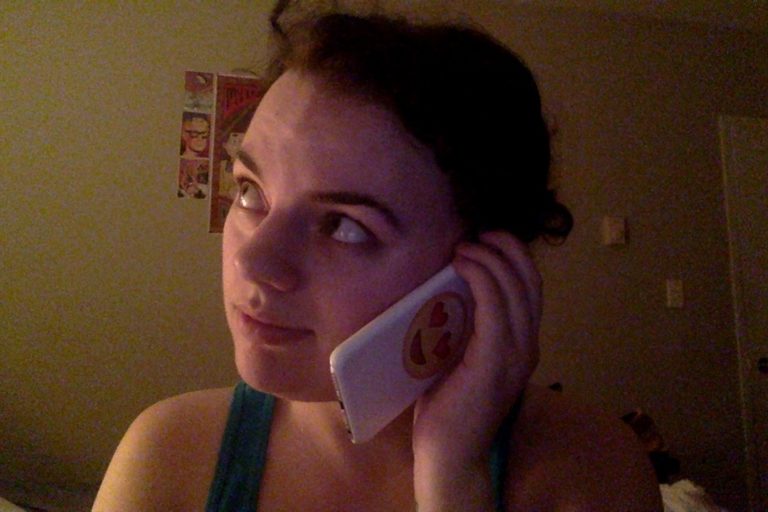
Phone sex. I HAVE A LOT OF FEELINGS ABOUT PHONE SEX. Eventually I will write some kind of how-to, although I don’t think I’m very good at it. (Suz is, though, and she wrote a good piece about it.)
Like in-person sex, phone sex can be whatever you want it to be. It can be as standardly vanilla or as deviantly kinky as you please. It can be hypothetical and distanced (“If I was there, I would…”) or immersively in-the-moment (“Get on your knees and suck my cock, little girl”). You can use toys (including app-compatible, LDR-friendly toys like the We-Vibe Sync!) or just get off the old-fashioned way. You can be yourselves, or play roles. You can craft detailed storylines, or just touch yourself and lapse into breathy moans.
Even though what we do during phone sex is essentially masturbation, it feels entirely different to me. The psychological and emotional aspects are much closer to my experience of partnered sex, and the orgasms are extra satisfying and exhausting the way that orgasms with partners usually are for me. Post-orgasm, when all that oxytocin is flooding my body, it’s so lovely to feel like I’m auditorily curling up with my partner for sweet cuddly aftercare. The whole process makes me feel so much closer to him and is often so good that I only miss fucking him IRL a little. (…Okay, more than a little. But less than I would if we weren’t having so damn much phone sex, that’s for sure.)
Proper goodbyes. The goodbyes my partner and I exchanged at the end of our second date were so disastrously bad that we vowed to never let that happen again. That farewell was rushed, took place in a crowded New York subway station, and ended on the sad note of us commiserating about how much we would miss each other and how hard it was to say goodbye. Then I got on the subway and he got into a cab and we both cried while texting each other about how hard we were crying. Not good!
In relationship-nerding about how to fix this issue for next time, we decided we needed to look at our in-person dates as if they were kink scenes – since they were just as emotionally and sexually intense as most kink scenes – and do proper aftercare. We needed a structured process to help us work through what we’d just experienced and float back into our regular lives without the harsh emotional drop we’d experienced that previous time.
Here’s what this looks like for us. We leave ourselves lots of time at the end of a date so we don’t have to rush our goodbye. We go for a leisurely meal or coffee. We talk about our favorite parts of the time we just spent together, both sexual and nonsexual. If possible, we try to nail down when our next date will be, even if it’s a month or more away, so we’ll have that to look forward to. We don’t say goodbye on the subway or in a cab, if possible, because that abruptness is the worst. Our goodbye on our third date took place outside his office building, where we could hug and kiss and stare moonily into each other’s eyes, etc., and we both left it feeling happy, hopeful, and only a little bit sad. Developing a farewell ritual that works for you is crucial, and worth taking the time to do!
What do you like to do to make long-distance relationships easier and more fun?
‘Cause I know I am! [Laughs a joyless laugh that eventually peters out into sad awkwardness]
One of the ways my anxiety manifested, in the months after my last break-up, was a near-constant fear that I would run into my ex – on the street, in a store, in a coffee shop. This was exacerbated by the unfortunate fact that I moved into an apartment coincidentally near his, mere weeks after the break-up. Worst.
In working through this anxiety with my therapist, talking to friends about it, and journaling about it, I came up with a bit of wisdom on this. Here are a few questions to ask yourself if the thought of running into your ex terrifies you. It’s not much, but hopefully it’ll help you if you’re going through something similar.
What’s the worst that could happen? One of my best friends is a social worker, so she knows all the smart questions to ask me when I’m spiralling into anxiety – and she asked me this every time I mentioned this fear to her.
Here’s my personal “worst that could happen,” with regards to running into my ex: I could run into him while he’s with a partner of his, and while I’m rumpled/makeupless/depressed-looking, and they could both look at me pityingly and/or attempt to talk to me. This could result in me bursting into tears, which would, of course, make the whole situation even more embarrassing and pathetic.
Stating my “worst-case scenario” makes it clear to me that even if the worst happened, it wouldn’t actually be that bad. I’d get through it. It wouldn’t be the first time I’ve cried in front of someone it’s embarrassing to cry in front of, nor would it be the first time I’ve seen a former flame with their achingly gorgeous new paramour. I got through those other times. I didn’t fall into a chasm in the earth from pure and total humiliation. I’m still here. And the same will be true if I run into this ex, too.
Do you really have anything to feel bad about? This is another question my social-worker friend posed to me, and she’s so right. She picked up on my feeling that it would be shameful for me to run into my ex – like I should hide from him, because the end of our relationship was somehow a failing on my part. But the thing is, it wasn’t! He ended the relationship, for reasons personal to him, and it wasn’t my doing or my fault. I have nothing to feel ashamed of. I can reasonably hold my head high if I do encounter him.
Even if you did do something wrong in your relationship, it’s likely by now that you’ve either owned up to it and apologized for it or that enough time has elapsed that both of you have moved on with your lives for the most part. If you feel you still owe your ex an apology, maybe you can reach out and issue that apology. But otherwise – why feel bad if you run into your ex? Why hide your face like you’re a pariah to them? There’s no reason for it!
Could you get away if you needed to? A friend reminded me that even if I did run into my ex and he did try to talk to me, I would always have the recourse of simply ignoring him and walking away. I would not be obligated to enter into that interaction if I didn’t want to.
If escaping your ex is an actual safety concern for you – i.e. if they had/have abusive tendencies and/or you think they’re upset enough with you that they might try something violent if they saw you – you could try using a safety app like bSafe whenever you’re in a neighborhood where your ex might be, and maybe consider some self-defense options if that’s your style. (Pepper spray isn’t legal where I live, and sometimes, when random men follow me down the street late at night, I wish it was…)
What would make you feel stronger? A lot of the cognitive-behavioral therapy I’ve done has focused on the practice of accepting the things I cannot change and changing the things I do have control over. In this case, that means figuring out what would help me feel less freaked out about running into my ex, and putting those measures into place.
I used to wear dark sunglasses and headphones when I had to walk in the direction of my ex’s place, so I could plausibly ignore him if I did see him. I’d put on clothes and makeup that made me feel strong. I’d often text a friend about my situation so I felt emotionally supported in what felt like a brave act. I’d listen to music that made me feel happy and badass. And for the most part, it worked!
Have you ever been afraid to run into an ex? How did you deal with it?

 3. Breathe. You hear this “tip” at every yoga class and in every meditation video. If you’re anything like me, you get a little annoyed by it after a while. I know, I know. Breathe deeply, you’ll think with an irritated eye-roll.
 6. Remember why you’re doing this. As with any kind of suffering in life – consensual or not – it’s easier to get through pain if it feels like it’s for a specific reason, and you believe that reason is a good one.


 Phone sex. I HAVE A LOT OF FEELINGS ABOUT PHONE SEX. Eventually I will write some kind of how-to, although I don’t think I’m very good at it. (Suz is, though, and she wrote