What My Objectification Kink Taught Me About Relationships

There are many forms of “objectification play” that I’ve experimented with, and the older I get, the more I seem to enjoy this kink.

There’s the version where I’m a literal object, usually a piece of furniture like a footstool or drink-holder, performing a functional service that may not appear outwardly sexual but can feel very sexual on the inside.

There’s the version where I pretend to be a doll – either a literal, porcelain doll, or a full-grown adult who’s been transformed via hypnosis or drugs into a “human sex doll” – and then get to be “used” by my “owner.”

There’s the form of objectification that most non-kinky people are familiar with, the kind that shows up in fashion magazines and in plenty of porn, wherein I’m viewed as a sexual object without agency or personhood, just a series of willing and fuckable holes.

And there are lots more ways this kink can play out that I haven’t even tried yet.


As with many kinks of mine, a lot of what appeals to me about objectification is the way it helps me reclaim and subvert shitty nonconsensual experiences I’ve had in the past. All the Tinder bros who text shit like “u up?” and “ready to be my fuk machine tonight?” All the hookups who cared more about getting off than giving pleasure. All the times I thought I meant something to my date on an emotional level – even one as simple as “I like her and like having conversations with her” – but it turns out that apparently I didn’t.

The sting of these mistreatments has eased a bit after several years, but I can still bring those feelings vibrantly to mind if I focus on those memories. Because I’ve paired that type of objectification with consent and pleasure in roleplays with trusted partners, the idea of being sexually objectified in this way is no longer quite as abhorrent to me – because I know it can be done in consensual ways.

Granted, none of the people with whom I’ve play-acted objectification actually saw me as objects; that was what allowed the play-acting to indeed feel like play and not like senseless cruelty.


As someone who writes about sex toys professionally (including, occasionally, sex dolls), I find it oddly gratifying to pretend to be a sex toy of sorts from time to time. There’s something subversive and relaxing to me about setting aside the sexual machines I’ve been writing about all day and then getting to morph into a sexual machine myself.

See, when I’m being objectified in a deeply consensual and intentional way, my mind gets to shut off. And I value that a lot, as someone whose mind is always racing with anxiety and deadlines.

But also, in my career as a sex scribe, I’ve encountered countless people who thought that my career choice was an invitation for harassment and nonconsensual sexualization. They thought that my creative interest in topics like sexual psychology and the history of the porn industry was reason enough to see me as a walking, talking sex doll who exists to spice up their boring lives.

I understand the desire to have your life overtaken by someone interesting and magical – it’s the reason “manic pixie dream girl” stories continue to get cranked out year after year. It’s also something I’ve felt myself, during long hours of swiping on Tinder late into the night, always hoping that the next swipe would conjure a life-altering force, someone so cute and charming and kind and loving that my entire daily existence would take on a different tenor just from having them around.

But as I’ve been learning in therapy, viewing other people as potential “redeemers” or “saviors” gives your power away. It strips you of the knowledge that you have the ability to make yourself happy more readily and more profoundly than any external person can. It makes you feel dependent on people you never actually needed and maybe never even really wanted.


So I’ve been on both sides of the objectification equation: I’ve been objectified (a lot), and in some ways I’ve objectified other people too, seen them as heroes or saviors or props in my life story.

This is no doubt why it feels so good to me now when I play with objectification, from either side of the D/s slash. Because it shows me the difference between the consensual and nonconsensual versions of these dynamics – and even equips me with the communication tools I need to say, “No. Stop. You’re putting me in a role I didn’t consent to, and I will not stand for that.”


This post was sponsored. As always, all writing and opinions are my own.
4 Mistakes People Make When Buying BDSM Toys

As you might have inferred from the many photos on this blog that feature collars, paddles, cuffs, and so on, I love BDSM accessories so much! They can brighten and broaden your sex life in all sorts of delightful ways.

As someone who often advises folks on upgrading their sex toy collections, I often see the same mistakes being made over and over again. Here are some classic pitfalls to avoid when shopping for new kink toys…


Assuming their partner is on board

I can’t even begin to tell you the number of times I saw customers doing this when I worked at sex shops. They would come in, a wicked smile on their face, and ask for my help picking out a bondage kit, or an electrostimulation toy, or wax-play candles… and when I inquired further, they would reveal that they had not discussed this with their partner, but just thought it’d be fun to surprise them with something spicy.

While there certainly are people who would consent to being surprised in this way, the key word there is consent. You can’t know if your partner has any interest in [x kink] if you’ve never discussed it with them. Chat with your person/people before shopping for new sex toys you plan on using together, so you don’t make them feel pressured when you show up unannounced with a scary implement in your hands – or, even better, involve them in the shopping process directly, so you can make decisions that work for both/all of you.


Not knowing the difference between aesthetic novelties and toys made for rough use

There are a lot of BDSM toys out there, and not all are created equal. Some are made durably enough to withstand even intense scenes between kinksters who play hard, while some would be more suitable for scenes where you’re moreso pretending to be restrained, or spanked, or collared, or whatever – scenes where it’s the idea of the act that matters, not the act itself.

For example, I have several different collars; some are mostly for aesthetics, and would tear or warp if someone tugged on them or attached them to a leash, while some are thick and sturdy enough that I can be yanked around by them without damaging the collar. Pay attention to material, quality of construction, price, and whether the company making the toy specializes in kink gear; these can all be indicators of how it’ll hold up under duress.


Ignoring safety in favor of aesthetics

For instance, while many people fetishize the aesthetic of metal handcuffs, they are actually not considered safe for kink usage. (Or presumably for any other usage. ACAB, forever and ever, amen.) They dig into your wrists, especially if secured too tightly, and can cause bruising, cuts, and even permanent nerve damage. Leather bondage toys are much safer, as are fabric ones.

I have also seen such travesties as spanking paddles with sharp edges, butt plugs with an insufficiently flared base, and gags that would make it nearly impossible to breathe if one’s nose became congested mid-scene. Think about potential safety concerns before you make any purchase, and read articles on safety by BDSM experts if you’re not sure.


Eyes too big for your… whatever

I’ll be the first to admit that I have made this mistake: bought dildos and butt plugs too huge for me to possibly use comfortably, thrown cute but mega-stingy paddles into my cart even though I know I dislike stingy pain, eyed spreader bars despite the knowledge that my legs don’t even spread that wide. It’s a normal human impulse to want to push yourself outside your comfort zone sometimes, but be conscious of which boundaries can be bent and which are actually limits.

If you get a toy home and discover it doesn’t work for you, some shops will let you return or exchange it. If it’s a non-porous product, you may be able to sanitize it and gift it to a friend or partner who’ll be able to make better use of it.


What mistakes have you made while shopping for kink toys?


This post was sponsored by the folks at Tracy’s Dog, who have recently released some new kink toys! As always, all writing and opinions are my own.

I Felt Guilty About Findom, Until I Didn’t

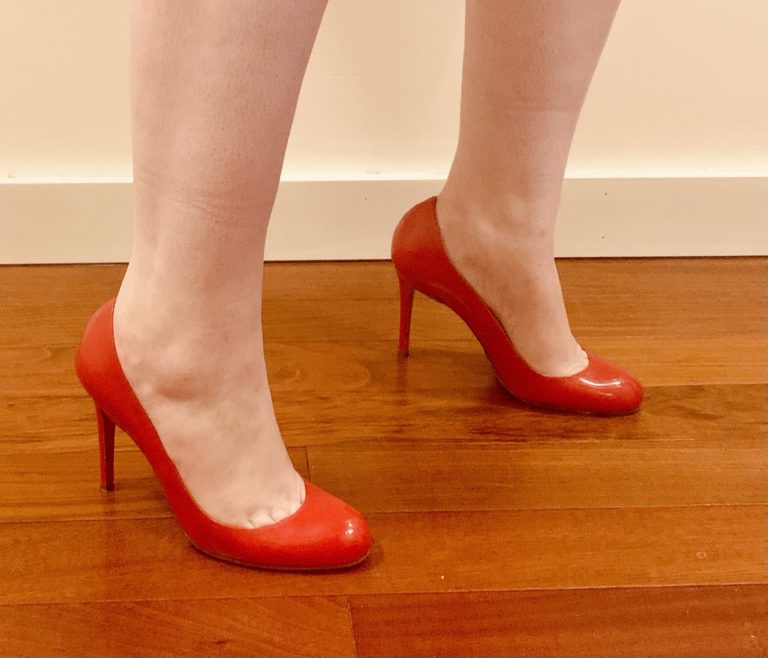
A pair of red patent leather Louboutins my spouse bought for me (which I sadly had to return because they were too small)

Financial domination is one of the most profoundly misunderstood kinks. There’s a common perception that all it involves is “making” someone give you money without giving them anything in return – which, sure, would be exploitative if it wasn’t consensual. But by its very nature, findom is only findom when it is consensual. Otherwise it’s just financial abuse.

Findom is most often done in a professional setting, as an interaction between sex workers and their “paypigs.” Sometimes it may involve exchanging provocative pictures, incorporating adult roleplay chat, and other perks – but in its most basic form, it is quite simply one person being consensually bossed into giving money to another person. In that way, it’s not all that different from any other type of power play in the BDSM world. Sure, money is a more tangible measure of the power being exchanged, and it can alter the conditions of your actual life, outside of the bedroom and the dungeon – but that’s part of why it appeals to so many people. It’s like playing poker for real dollars when you’re used to only playing for Monopoly money.

That said, financial domination can happen outside of professional contexts too. It’s become part of my dynamic with my spouse. During an initial findom chat when my partner and I were negotiating this new addition to our relationship, one of the things we discussed was my concern that I was somehow a “bad” financial dominant if receiving gifts and cash didn’t physically turn me on, the way receiving oral sex or a good spanking can. My partner gets a boner (albeit not necessarily a raging one) when I command them to buy me a cute new bag or pair of shoes; I felt like an impostor for not having the same type of physiological response to what was supposed to be a kinky, sexy act.

But the more that I’ve thought about it, and the more that we’ve discussed it, the more I’ve realized that physical arousal is not the only measure of whether an activity is pleasurable or “sufficiently” kinky. Of course, I already knew this in other areas – I knew, for example, that many asexual people enjoy kinky activities for their psychological effects, despite having little-to-no sexual response to them – but it was surprisingly hard to apply this knowledge to my understanding of findom in my own relationship. I think that because money is such a heavy, fraught topic IRL, it can be equally tricky and fraught to accept your desire to play with it in a kinky way. It brings up enormous feelings about “deservingness,” privilege, power, scarcity, and fear. But you know what? So do a lot of other kinks!

The dual-control model of sexuality, popularized by Emily Nagoski, Ph.D. in her seminal book Come As You Are, has been a helpful framework for me in thinking about findom. This model understands sexual arousal as being affected by both a “sexual accelerator” and “sexual brakes.” Your accelerator is stuff that actively turns you on, like porn, erotica, dirty talk, and receiving pleasurable touch, while your brakes are things that inhibit your ability to get aroused, like stress, distractions, or chronic pain.

I think my hesitance about findom came from the expectation that it had to be a sexual accelerator in order for it to be “valid” as a kink – when, in reality, for me it operates much more like an alleviation of my sexual brakes. When my partner buys me a beautiful new lipstick, for instance, wearing it makes me feel prettier, thereby alleviating some of my appearance-related stress. When I “made” them buy me a body pillow and started sleeping with it every night, my chronic pain eased up and I was able to sleep better, which certainly made arousal easier to achieve. Likewise, when my sugar daddy way back in 2017 gave me enough money each month to cover my rent, I was obviously way less stressed about making ends meet, which made space for me to get turned on much more easily. Money is a near-constant stressor, as it is for many people, leaning hard on those sexual brakes – so any relief in that area results in relaxation that can blossom into arousal.

There’s more than one way to enjoy kink, and anyone who tells you there’s only “one true way” is lying to you. If you and your partner consent to particular acts or a particular dynamic, and you prioritize risk-awareness and open communication, it’s hard to go wrong. An erect dick or wet pussy isn’t the only measure of whether something excites or fulfills you. If a kinky activity makes you a bit happier, or makes your life a bit easier, or makes your days a bit more beautiful, then I think it’s been a success.


This post was sponsored. As always, all writing and opinions are my own.

How I Found a Kink-Positive, Polyamory-Savvy Therapist

A couple months ago, I decided I was tired of carrying around years-old trauma baggage, and wanted to start working through some of it. Blessedly, I also found myself in a stable enough financial position that, for the first time in my life, I could afford to see a therapist whose fees were not handled by the Canadian government. It was time.

I ended up finding a really rad person who is very much equipped to handle the exact problems I intend to work on. But as you may know, that can be super hard to do if you are – like me – queer, kinky, and non-monogamous. Finding a practitioner with a working knowledge of these topics – let alone someone who has lived experience in these communities – is way harder than it should be, as evidenced by the number of people who have said to me, “I’m so jealous! I can’t find a good therapist!” lately when I’ve relayed this news.

So, in the hopes of being helpful, here’s the process I went through to find my current therapist. Best of luck!

Step 1: Figure Out Your Priorities

Granted, when going through times of psychological distress, we don’t always know exactly what is causing the turmoil we feel, or what kinds of approaches might help. But if you have any sense of the therapeutic modality(/ies) you’d like to explore, that’s good to know, as most therapists have particular methodologies they like best and know the most about. I knew, for example, that I wanted someone who knew a lot about the somatic effects of trauma. I knew, too, that cognitive-behavioral therapy hadn’t been particularly helpful for these issues in the past, so I wanted someone who didn’t rely too much on that modality. And I knew I wanted someone who would push me toward actual action and change, instead of just listening to me and affirming my feelings (which is great, but not enough in my case).

I also knew that whoever I chose would have to be reasonably knowledgeable about queerness, kink, and non-monogamy (as those are pivotal parts of the traumas I wanted to examine, and of my life itself), as well as gender (since my partner is nonbinary and many people I love fall under the trans umbrella). These things were non-negotiable because a lot of my roadblocks with previous therapists had come from them having little to no experience with clients in these communities and mostly just asking me, “What do other queer/kinky/polyam people do in your situation?” which, as you can imagine, wasn’t all that useful for me.

Step 2: Filter & Search

There are several websites dedicated to cataloguing therapists who work with various subcultures and marginal communities; Poly-Friendly Professionals is one, for instance, and so is Kink-Friendly Therapy. However, I wasn’t able to find as many practitioners in my geographic area on these sites as I wanted to. (If you live in a large U.S. city, your results might be different.)

After a little Googling, I discovered that PsychologyToday.com lets you search for therapists in your area and filter them by the issues they say they’re best equipped to handle (e.g. trauma), the modalities they use (e.g. somatic), and – best of all, for people like us – the communities they say they’re allied with (e.g. gay, transgender, kinky, non-monogamous). This is a total game-changer.

I narrowed down my search with a few filters and then opened a zillion tabs of different therapists’ pages so I could have a closer look at each of them. Most profiles on the site contain information about the practitioners’ degrees and certifications, how long they’ve been practicing, and what their rates are. This ought to give you a much more specific sense of which people are well-suited to you and which aren’t.

Step 3: Narrow It Down

Because I’m a nerd, I made a spreadsheet on Google Sheets of the top contenders from my PsychologyToday search. Its columns included: name, accreditation(s), rate, modalities, relevant identities (i.e. are they themselves queer/kinky/non-monogamous?), poly competency, trauma competency, and suggested next steps (i.e. whether their profile said they offered an introductory consultation call for new potential clients). This helped me see the bigger picture and eliminate some folks who didn’t seem like an optimal fit for me.

I sent out about 10-15 emails to therapists that fit the specifications I was looking for, and explained the issues I wanted to work on. Then I waited for their responses. Some never answered at all; some told me they weren’t accepting new clients at the moment; some wrote vague emails saying they thought they could handle what I’d asked about, without actually acknowledging the words of what I’d said.

Ultimately, the therapists who stood out to me were the ones whose replies specifically mentioned the issues I’d brought up, and related those issues to their own therapeutic approach(es). I also paid attention to how I felt when reading these emails, because a therapist’s “vibe” can be an important clue as to their potential compatibility with you.

Step 4: Consultations

Most of the therapists I contacted offer a free 15- or 20-minute consultation call (via phone or video chat) so the two of you can get a sense of each other and figure out whether you’ll be a good fit. I scheduled 3 of these calls, with the 3 most promising prospects from my shortlist: therapists who seemed confident they could handle my issues and whose rates were affordable for me.

In those chats, each therapist told me a bit about themselves and how they approach therapy. They allowed me to ask questions about their modalities of choice. I also made sure to ask them about their levels of experience, knowledge, and comfort around kink, queerness, gender, and non-monogamy, because – sadly – writing in your profile that you’re savvy about those things doesn’t necessarily mean that you are. I specifically brought up Daddy Dom/little girl kink in these conversations, because it’s a central part of my life and I know that some people are squicked out by it, so I wanted to make sure it would be okay for me to talk about it. It was also important to me that my new therapist avoid blaming my kinks on my trauma, or stigmatizing/pathologizing my kinks (the world does enough of that already!), so I made sure to mention that specifically.

When I talked to the therapist I ultimately ended up going with, I noticed she was listening to me very closely and would mirror my sentiments back to me in a way that felt very affirming. She also told me that she had lived experience with non-monogamy and non-normative genders, and that she’d worked with kinky clients and had a good understanding of kink but was not kinky herself. It was a mix of these more practical considerations and an overall good vibe that made me decide I should start seeing her.


I hope this helps you! Feel free to let me know in the comments if you have any tips of your own for finding therapists who are competent in these areas, or other niches/subcultures.

5 Pandemic-Friendly Kinks to Play With While Quarantining

I don’t know about you, but watching a dramatic worldwide crescendo of racism and transphobia play out against the backdrop of a global pandemic doesn’t exactly make me horny. I’m sure that’s quadruply true for the people of color and trans people directly affected by the tidal wave of bullshit enveloping the world right now.

And yet… particularly for those of us who are highly sexual people and/or sex nerds, pursuing pleasure through sex can be one of our major methods of escapism, right alongside Netflix marathons and Animal Crossing sessions. I’ve been lucky enough to have my partner quarantined with me for the past 3 months, but they can’t and won’t stay forever, so I’m mentally preparing myself for the need to take my sexuality into my own hands once again. In stressful times such as these, getting creative can be an important component of that.

The good news is that even solo sexual creativity is easier than ever in the internet age. Online, we can theoretically order sex toys and sex furniture to satisfy our every kinky whim – and we can also learn about proclivities we may never have otherwise heard about, and start incorporating them into our fantasy lives. Here are some suggestions that work surprisingly well in a COVID-wracked world…

Mask Up

As a recent NYC Health brief on safer sex in the time of coronavirus helpfully noted, wearing a face covering or mask during sex is one way to practice harm reduction when hooking up these days. However, even if you’re rollin’ solo, a mask could be an interesting addition to your kinky imaginings. As you’ve probably already noticed while walking around with a mask on, these useful pieces of fabric make it slightly difficult to breathe… kinda like a lover’s hand clamped over your mouth and nose in a breath-play scene. This effect could make a mask a hot addition to your next masturbation session – just be safe, okay? Take the mask off if you start to experience any genuine discomfort or difficulty breathing. And wash that thing before you wear it out into the world again, incase you got any, uh, droplets on it.

Undercover Ballgag

Speaking of masks, it occurs to me that these days you could potentially wear a ballgag outdoors completely unnoticed under your mask, particularly with the creative usage of a hat or somesuch to cover any telltale straps. Only do this if you know you won’t need to interact with anyone at any point – maybe on a meandering walk on side-streets while listening to a kinky podcast. I’d suggest the type of ballgag that has holes in it for easier breathing, since – as we’ve discussed – masks already make that difficult. Don’t overdo this one, because you don’t want to injure your jaw, but if you’re craving some public humiliation/submission, this could be a cool way to make that happen without necessarily involving any non-consenting third parties.

Creepin’ and Cammin’

We’ve already talked about exhibitionism vis-à-vis quarantine, but my friend Bex had such a great idea about this on a recent episode of our podcast that I wanted to share it here too. With the proliferation of Zoom calls and FaceTime chats these days, it’s easy to imagine a roleplay scenario with a partner in which you “accidentally” forget to disconnect at the end of a call, and the person on the other end is able to creepily watch while you get undressed, or jerk off, or fellate a sex toy, or… whatever else you like to do to decompress after a draining video call. This is a cool way to play with the idea of a “peeping tom” without either of you having to leave your homes.

Hygiene Humiliation

In just the few months since COVID popped off, I’ve noticed it’s shifted the way I view media. I’ll be watching a party scene from a 1960s sex comedy, or a friend-hang at a crowded bar in a ’90s sitcom, and I’ll feel myself momentarily overcome with medical anxiety – “Aaahh, get away from each other, you’re not standing 6 feet apart, you fools!!” It occurs to me, though, that this same impulse could be harnessed for all sorts of humiliation-based fantasies. Maybe your domme orders you to give yourself a harsh spanking for only washing your hands for one Happy Birthday, not two… or you have to scour every doorknob and cabinet handle with Lysol and an old toothbrush… or you get your mouth rinsed out with soap for breaking one too many public health guidelines. (Listen to the recent episode of the Off the Cuffs podcast entitled “Rub A Dub Dub” for tips on mouth-soaping!) Whatever you do, make sure all your “violations” occur only in your own home, or even just within your fantasies – humiliation is hot but it’s not worth spreading disease for, obvi.

Ghostly ‘Gasms

Have you ever heard of spectrophilia? It’s a fetishistic interest in spirits or ghosts (or the idea of them, anyway). Some folks in this community claim to have actually hooked up with a ghost, or perhaps several; I’ll let the Mythbusters handle that one, but even if you don’t believe in the paranormal, it could be fun to do a spectrophilic scene with your socially-distanced sweetie. If you put them on speakerphone and position your phone such that your lover’s voice seems to be emanating from the walls or from the depths of your closet, you can create the illusion that there’s a pervy, voyeuristic ghost creeping on you while you masturbate. Fear play isn’t everyone’s jam, but it could be a nice make-believe counteragent to the very real fears pervading the globe right now!


What COVID-appropriate kinks have you been playing with lately, if any? (“None” is a completely valid answer… Reading the news these days isn’t exactly an aphrodisiac, to say the least.)


This post was sponsored. As always, all writing and opinions are my own.