Salacious Sightseeing & Titillating Tourism

I’ve been lucky enough to travel quite a bit in my time. My parents did a lot of work-related travel when I was a kid (crisis management sojourns to foreign countries for my dad, press junkets in New York and Los Angeles for my mom), which instilled in me the sense that travel was freedom, adventure, excitement. They would always bring back presents from their far-flung visits – and now, when I travel, I sometimes bring back presents for them! Ah, the circle of (#jetsetter) life.

Today I want to talk about 5 sexy attractions or date spots I’ve been to in 5 excellent cities. There are more exotic sexual locales – you could, for example, visit the Red Light District in Amsterdam, get the best escorts for all tastes in Melbourne, or go hang out with horny moms on the Twilight tour in Italy – but these are some I’ve personally enjoyed. Check ’em out if you’re ever in the neighborhood!

Kink Shoppe (Philadelphia)

I secretly think most of the best sex shops have a heavy focus on kink. It’s not that “vanilla” sex toys aren’t important – they are – but I find that if a shop is run and frequented by kinksters, it tends to have a better and more thought-out selection of products, both kinky and not. After all, kinksters do love to be overanalytical and nerdy about their sex lives! Kink Shoppe in Philly is no exception: it has a wide array of toys ranging from mild (cute vibrators, colorful dildos) to wild (ball crushers, gas masks). My partner bought a pair of vampire gloves there and they have served us well! P.S. If you want dessert after your sex-shop date, walk a block west to the Franklin Fountain for ice cream. Yummm.

Drink (Boston)

This is supposedly the #1 cocktail bar in Boston and I believe it. The bartenders are brilliant and worth the wait. (There was about a 45-minute-long line when my partner and I went; we played Scrabble on my phone and people-watched while we waited.) They have no cocktail menu, so you just tell them what kinds of things you like and dislike in a drink and they’ll make you something great. And then, if you’re me, you go back to your hotel and do a watersports scene. *shrug*

Spartacus (Portland)

This is maybe the best sex shop I’ve ever been to, and I don’t say that lightly! I’d heard of the Spartacus brand of sex products before, but didn’t know they had an actual retail location – and OMG, it is amazing. You could easily spend a good 2-3 hours picking through the massive selection of stuff. My partner and I walked out with a bottle of Sliquid lube and a pair of scandalous fishnet underwear, but honestly, there were like 12 other things I could’ve bought. Plus the cashier didn’t unnecessarily gender us. Score.

Onoir (Montreal)

Some relationship psychology theorists say an easy way to “rekindle the spark” is to do something new and/or scary together. Roller coasters and horror movies are the commonly cited examples, but I don’t like jump-scares or loop-de-loops… Onoir served a similar function when my partner and I went there, though! It’s a fine dining experience in a completely dark room, where you’re led around and waited on by blind servers. It’ll certainly make you think differently about food, and maybe about your beau, too!

Museum of Sex (New York)

Periodically a friend of mine will go on vacation to New York and will message me to ask if I think the Museum of Sex is worth a visit. It really depends on what the current exhibitions are – I’ve seen some pretty good ones and some pretty boring ones – but for the most part, I’d say if you’re a sex nerd visiting NYC, you should check it out. The lobby is a sex shop stocked by someone who clearly knows what they’re doing, so you can cap off your visit by buying a luxury thruster, CBD lube, or a vintage copy of Playboy. Ideal.


What are your favorite sexy or date-y spots you’ve visited on your travels?


This post was sponsored. As always, all writing and opinions are my own.

Equality is Not Necessarily Symmetry

Tristan Taormino writes in her legendary non-monogamy guide, Opening Up, “Some people have confused equality with symmetry.” She’s talking about open relationships, and how sometimes it can cause tension between partners if one of them goes on lots of dates and the other doesn’t. But this insight jumped out at me when I first read it, because it applies to so much in relationships, especially non-normative relationships.

Take, for example, Dominant/submissive dynamics, the likes of which are discussed in salacious detail on websites like OMGKinky and, um, this one. From the outside, those connections may look completely imbalanced. The Dominant tells the submissive what to do; the Dominant might have more freedoms and options available to them, while their sub might have more responsibilities and limitations; it might appear that the Dominant always gets their way. But on the inside of this relationship – provided it is healthy and ethical – both participants know that they each have an equal say in what happens between them. The lending and borrowing of power is powerful for them both because it was and is a voluntary decision, made from an even playing field.

Another area where the “symmetry =/= equality” concept works is in relationships between people whose mental health situations differ drastically – whether one partner struggles with mental illness and one doesn’t, or they each have a different diagnosis. Partners in these situations will simply have different needs from one another, and that’s fine. Sometimes I feel bad that my partner takes care of me more than I take care of them, but they don’t need the amount and types of care that I need, because they don’t have my issues. Not only that, but they’ve explicitly told me many times that they like taking care of me – so our “asymmetrical” relationship isn’t inequitable at all.

Even something as simple as differing temperaments or love languages can make a relationship asymmetrical-yet-equitable. Maybe one needs a lot of alone time and the other doesn’t; maybe one loves receiving oral sex in the morning but the other hates having their sleep interrupted; maybe one feels loved when their partner sends “good morning” and “good night” texts but the other doesn’t need the same in return. Whatever the case may be, as long as both partners are able to figure out an arrangement that works for them, they both need not get exactly the same treatment from each other. It’s fine if your needs and wants are different from your partners’.

What this all boils down to is internalizing the simple human truth that we’re all different people, with different preferences and needs and boundaries and desires. It doesn’t work to impose exactly the same everything on both people in a relationship; that’s not a flexible enough strategy for the vast complexity and randomness of human personalities. What’s ultimately important is that you’re both getting equal amounts of what you want. That’s a metric you can use to test your relationship’s equality – so that you can get back to your delightfully asymmetrical activities together, guilt-free.


This post was sponsored. As always, all writing and opinions are my own.
Escort Echelons: What is the “Whorearchy”?

I think I first encountered the term “whorearchy” in a podcast hosted by Tina Horn. She’s done sex work in various forms and is thus, I would assume, intimately familiar with the ways people in that community can turn against each other, judge each other, and speak ill of each other. Porn performer Belle Knox says the whorearchy is the name given to the phenomenon in which “sex work segregates itself along perceived social and legal lines.” It is – like so many systems of (de)valuation and “respectability” in marginalized communities – a form of infighting, of internalized oppression, of people keeping each other down when they might instead lift each other up.

Though I’ve done very few forms of sex work, sparingly and sporadically, I have seen this dynamic in action. In sugar baby communities, for example, there’s often tons of hostility aimed at escorts and escort agencies, the implication being that sugar-dating is somehow classier than full-service sex work because it’s not directly transactional, even though… in most cases, it is. There are also phone-sex operators who disdain in-person sex work, escorts who think camming isn’t real sex work, and pro dommes who think their lack of genital contact with clients makes them better than service providers who do have sex with johns, just to name a few examples.

These squabbles remind me of the internalized misogyny displayed in, for instance, bookish brunettes claiming busty blondes are stupid and setting feminism back, or TERFy second-wave feminists insisting third-wavers are betraying the cause by embracing promiscuity and trans rights. This type of infighting mostly just encourages marginalized people to police each other’s behavior rather than banding together to take on their oppressors.

It’s worth noting, of course, that different types of sex work do come with different levels of risk, difficulty, and stigma. Street-based sex workers are particularly vulnerable to violence, for example, and racialized and/or disabled escorts face discrimination and mistreatment that white and/or able-bodied ones don’t. Acknowledging and understanding these differences is part of intersectionality: the feminist idea, coined by black feminist theorist Kimberlé Williams Crenshaw, that oppressed people (in this case, sex workers) all have different experiences based on their identities and the systems of oppression they face. However, someone having a different experience than you in the world doesn’t mean they have to be your adversary.

In fact, it’s been wonderful to see sex workers from various different areas of the field band together to fight against SESTA/FOSTA, the “anti-sex trafficking” laws that have seriously eroded sex workers’ rights, freedoms, and livelihoods. I’ve seen escorts and camgirls chatting online about the problems they face, pornographers boosting phone-sex operators’ tweets about their struggles, online findommes telling their audiences to donate to Red Light Legal. There have been stunning incidences of solidarity, because, as is so often the case, marginalized individuals are stronger together than splintered.

A while ago, an escort friend of mine asked if I wanted to come to a sex workers’ play party she was organizing. I was surprised: “I’m not really a sex worker,” I stammered, “I just, like, do cam shows and sell nudes and make amateur porn and sometimes sell my panties and I was a sugar baby once…” I was so used to having my sex work experiences diminished, or to feeling like I had to preemptively diminish them myself, because what I do isn’t “real” sex work. But here’s the thing: it is, even though it’s different from other types. I’ve seen more and more recognition in my online communities over the past few years that the whorearchy doesn’t serve anyone it comprises. Sex workers’ problems have gotten worse and the community is suffering more than it has for a long time (and it’s suffered a lot) – but sometimes it seems the internal landscape of the group is shifting for the better, even if only a little.

My friend smiled. “That totally counts! You should come!” I smiled, too.


This post was sponsored. As always, all writing and opinions are my own.
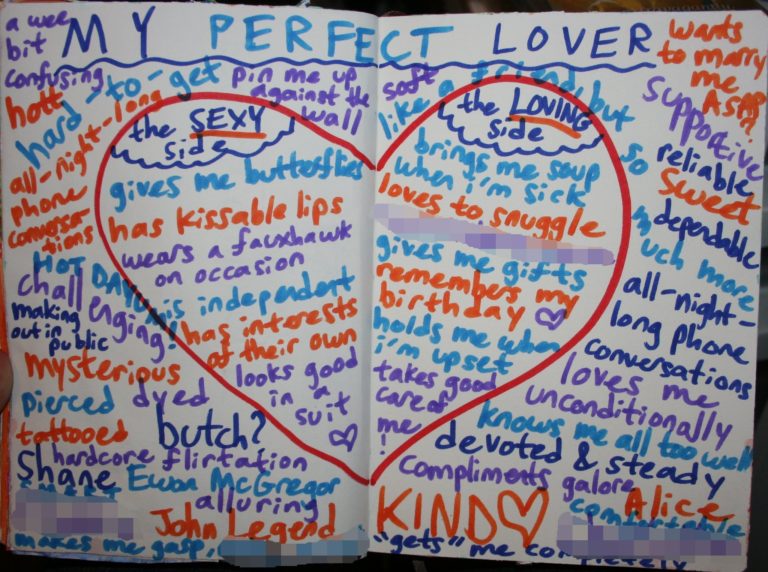
Should You Be Able to Rate & Review Sexual Partners?

I wrote this in high school but lots of it still rings true…

In 2013, a new app called Lulu was released which allowed female users to anonymously rate and review their male acquaintances, including friends, exes, and past hookups. The men were rated on a 10-point scale, for criteria like humor, manners, ambition, and willingness to commit.

There was immediately a media panic about it, with outlets referring to Lulu as “Sex Yelp” and speculating on what it portended about human relationships in the 21st century. Dating-app giant Badoo later acquired Lulu and shut down the ratings component of the app, but the question remained: is rating and reviewing sexual partners useful? And perhaps even more pressingly: is it ethical?

I’m sorry about the cissexism. We were young and shitty.

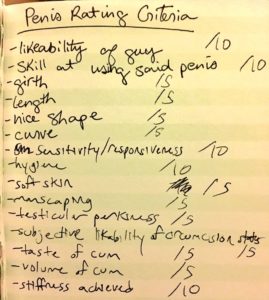
I thought about this again years later when a friend and I devised a rating scheme for penises we had known, featuring criteria like “hygiene,” “soft skin,” “taste of cum,” “testicular perkiness,” and so on. It seemed harmless to me at the time, a hilarious joke perpetrated while tipsy, but upon reviewing it in the light of day, I realized how objectifying it was. What I’d originally conceptualized as a tool for discussing sexploits with friends (“The dick I sucked last night was an 86 out of 100, can you believe?!”) now seemed like a process as cruel and dismissive as swiping through Hot or Not or scoring selfie-submitters on the “Am I Ugly?” subreddit. How could I call myself sex-positive and body-positive if I was literally assigning numerical scores to people’s anatomy? I couldn’t.

There are some cases where rating sexual partners seems fine, or even prudent. Sometimes clients offer public feedback about sex workers they’ve seen (check out USASexGuide for more on that), which can inform prospective johns’ decisions and drive clientele to service providers. There are also always backchannels where women and other marginalized people exchange notes on their dates and hookups with others in their community, warning friends away from abusers and boundary-crossers. These discussions are crucial for keeping people safe who would otherwise have trouble staying safe, because of the unfortunate ways our dating culture and sex work laws are set up. I don’t begrudge anyone for sharing info about “bad dates” and reading other people’s info of the same sort; sometimes these behaviors are the only recourse you have.

But rating people’s bodies and sexual skills is a different thing entirely. Sex is deeply personal, and sometimes embarrassing, and a lot of people have a lot of hangups about it; the same things can be said about our fallible human bodies. It seems unjustifiably cruel to rate people on these criteria in a venue as public as an app or a website, unless they’ve specifically solicited that feedback, like people do on “rate me” forums. (I often wonder if these people are suffering from low self-esteem, or discovering a sublimated objectification/humiliation kink, or both.) In a culture as sex-negative and body-critical as ours, you hardly need say anything at all to fuel someone’s deepest fears and insecurities. Even the most seemingly innocuous criticism can set off a spiral of self-hatred in those of us who are susceptible to this sort of thing, which is most of us.

So I can no longer justify rating and objectifying people (or penises) in the ways I used to. Eradicating sexual shame and encouraging self-love are two of my key goals, professionally and personally, and critiquing bodies and sexualities runs counter to these objectives. This is true not only for other people but for myself: the more you cast a critical eye on how other people look and what they’re doing in bed, the more you’ll tend to judge yourself in those areas as well, perhaps without even meaning to. These mental habits are dangerous, and insidious, and must be actively fought against to be extinguished.

Tell your best friend about last night’s mediocre hookup over drinks, if you like; write in your journal about genitalia that confounded you, if you must. But sharing these judgments online doesn’t really serve anyone, in my view, and it may even contribute to society-wide shame cycles. If you want to create a better world for humans who have sex, one of the best ways to start is to view everyone’s body and sexuality with the same compassion you’d hope they would extend to you.


This post was sponsored. As always, all words and opinions are my own.

8 Pieces of Useful Wisdom From Sex Workers

Each time I’ve dabbled in forms of sex work, like putting on cam shows and selling my used underwear, one of the best things about these endeavors has been connecting with other people doing similar work. I can’t think of a group more passionate, open-hearted, and resourceful than sex workers. They provide crucial services to people who need and want them, despite frequently encountering crushing stigma and legal roadblocks like SESTA/FOSTA. (See the last point on this list for more on that.)

So I’m delighted that I’ve partnered with Escorts & Babes – Sydney Escorts to put together this list of some of the major lessons I’ve learned from genius sex workers in my social spheres. Anyone who says you don’t need skills or smarts to do sex work is fooling themselves.

Trust is hot. Sex and kink, in my experience, just seem to get better and hotter the more trust there is between the participants. I imagine it must be hard to establish this trust as quickly and thoroughly as you would need to in a sex work context, which makes it all the more impressive that so many service providers do it on a regular basis. Their work invites me to look at my own sex life and ask: Where could I be more trusting, and how might that improve my experiences? And, inversely, where am I being too trusting, and how can I solve that?

Dirty talk is magic. After all the many, many hours I’ve spent having phone sex and being erotically hypnotized, I’ve come to think of dirty talk (and related sexual oration) as a form of literal magic: like casting a spell in the Hogwarts universe, you say some kind of incantation and it has real, observable effects in the body and brain of the person you’re talking to. Sex workers tend to wield this power better than anyone I know; it’s often a sharpened and well-loved tool in their toolbox, and part and parcel of what keeps their clients coming back. Hearing these stories makes me want to step up my own dirty-talk skills!

Disabled people can be (and often are) sexual too! I can’t believe there are still so many people who don’t understand this, but there you go… While it sucks that our ableist world too often tries to paint disabled people as unsexy and unsexual, I know some who’ve sought sex workers’ services and found them immensely healing and helpful. Obviously it sucks that this route is financially inaccessible for many, and that ableism continues to exist, but I’m glad some disabled folks have the option to pursue sexual touch on their own terms by hiring a sex worker. (Did you know there’s even been a recent push in Australia to get sexual services for disabled folks covered by national disability insurance? I hope the Aussie government comes around on this eventually; it could be a big life-changer for many disabled folks, as well as Australian sex workers, like those at Escorts & Babes – www.escortsandbabes.com.au.)

When it comes to kink, more communication is better. I admire the thorough negotiations many sex workers (especially pro dommes) insist on doing before sessions, and I think every sexually active person could benefit from adopting similar practices in their own sex lives. No partner can give you the mind-blowing sex you’ve been dreaming of if they don’t know what gets you hot. Share your likes and your limits – it can only make things better!

Kink can be startlingly intimate. Granted, just like vanilla sex, kink can feel awkwardly distanced, deliciously connective, or anywhere in between. But I find that intimacy and kink tend to go hand-in-hand moreso for me, and I can access depths of connection through kink that I didn’t even know existed back when I thought I was vanilla. I’ve heard from sex worker friends and acquaintances, over and over, that a large part of what their clients are seeking isn’t just sexual gratification but some sense of emotional communion with another human being. That’s what kink feels like to me, when it’s at its best.

Asking for consent isn’t hard. It’s sex workers’ job to ensure their clients have a good time, so of course they would tend to prioritize consent highly in their transactions. We all should take a leaf out of their book, and weave consent check-ins into the tapestry of our sexual encounters. This doesn’t have to be as unsexy as some people insist – as Lo points out here, there are tons of super hot turns of phrase you can use to make sure your paramour is into what’s happening and wants it to continue. You truly have no excuse.

Knowing what you want is half the battle. This is a major lesson I’ve taken from kink and repeatedly applied to my own life: you can’t progress toward the objects of your desires until you’ve identified what those desires are. Sounds simple, but it’s often deceptively difficult to figure out what your heart is actually calling out for. This type of soul-searching is worth doing, and is one of the initial steps on the path to enduring happiness.

SESTA/FOSTA is killing people and must be stopped. This is the most important item on this list, so listen up. If you don’t know, SESTA/FOSTA are “anti-trafficking bills,” signed into law in early 2018, that have actually taken aim at sex workers by raiding and shutting down escort listing sites (yes, this is why Craigslist’s personal ads got slashed) and getting tons of adult content banned from various platforms. It will come for us all eventually – and has already started to – but it mainly impacts sex workers, especially those who live and/or work in the USA. You can help by raising awareness about these laws in your networks, donating to sex work advocacy organizations like Red Light Legal and SWOP Behind Bars, contacting your political reps to demand they take action, and supporting sex workers directly by hiring them, buying their content, and giving them money.


What wisdom have you picked up from sex workers in all their industrious brilliance?


This post was sponsored by the folks at Escorts & Babes – Sunshine Coast Escorts. As always, all writing and opinions (except, of course, in quoted tweets) are my own.