Nope, I’m not April-foolin’ you… Here are the sexy things I enjoyed in March!
Sex toys
• A trip away from home with less-than-satisfactory vibes left me appreciating my Eroscillator Top Deluxe and Magic Wand Rechargeable even more than usual. There are reasons they’re my near-constant go-to’s: their vibrations are rumbly, they’re intuitively designed, and I never want to throw them across the room mid-session for making me numb and keeping me from getting off. *cough*
• I used my good old NobEssence Seduction dildo a couple times this month, and damn, it’s still an out-of-this-world G-spot stimulator. I’ve also noticed that if I’m turned on enough, using enough lube, and angling it just right, it can graze my A-spot the tiniest bit. Neat!
• SheVibe sent me something new and weird: Blush Novelties’ Drago “sword” handle and a couple of lock-on dildos to go with it. Essentially it enables you to feel like you’re fucking yourself (or a partner) with a sword, which is certainly somebody’s fantasy! My partner and I tried it once and liked it more than we were expecting to. Full review to come!
Fantasy fodder
• My partner and I have been re-watching The L Word (well, it’s his first time watching it, but my… I dunno, 4th?) and I am struck all over again by how hot Shane, Bette, and Dana are. Almost everyone on that show is hot but those three are the ones I’ve pictured fingerbanging me with their strong arms in my private moments.
• M’dude tried his hand at rope bondage for the first time this month, in a hazy scene that involved me being blindfolded and in trance. It was nice to feel like a vacant-brained doll he could move around to suit his needs. I always forget just how much I love being tied up until it happens…
• Still reminiscing fondly on a blowjob I gave my partner while he was sitting in a gorgeous blue velvet armchair. I’ve been saying for ages that I might have a velvet kink and, uh, yeah, that’s a thing.
Sexcetera
• I’m officially a columnist at Herizons magazine now! The first edition of my “Body Politics” column, which focuses on consent and culture, came out this month. It’s about forgiveness narratives and victim-silencing, and you can check it out digitally or in print.
• I submitted my first-ever Make Love Not Porn scene, so if you’ve ever wanted to watch me get high, jerk off, unexpectedly squirt on the floor, and accidentally knock my computer over, go rent it!
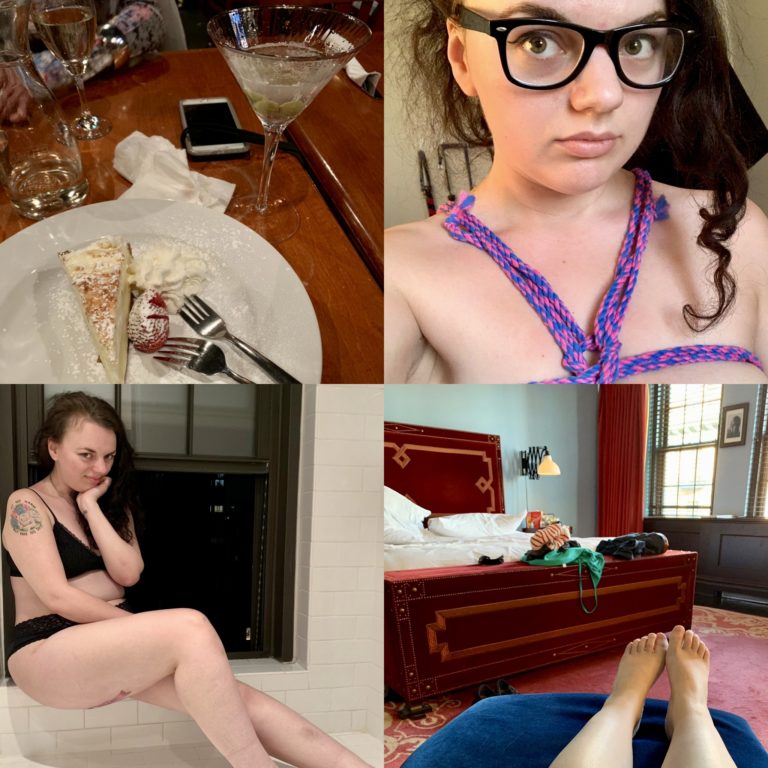
• I had occasion this month to reflect on how transformative it can be to pose for sexy photos taken by someone who thinks you’re hot AF. My love took some cute portraits of me in new lingerie and they made me feel better about my body at a time when I was pretty mad at it.
• Sextistics: this month my partner and I had in-person sex 15 times and phone sex 21 times, totalling 36 sex sessions!
Femme stuff
• I am obsessed afresh with Frederic Malle’s Carnal Flower, the bewitching scent I first sampled ages ago because it’s Helena Fitzgerald‘s favorite. It’s somehow both as fresh-scrubbed as a blonde soccer mom at a PTA meeting and as ruthlessly sexy as… that same mom, later, in lingerie she knows’ll make her husband wolf-whistle.
• I’ve been getting back into a slouchy star-print cardigan I bought in 2013 and wore throughout university. Sometimes it’s nice to wear cozy old favorites and feel like you’re rubbing shoulders with the version of yourself you used to be.
Media
• I read a lot of books this month but one of my faves was Nobody Cares by Anne T. Donahue, a series of confessional essays about everything from social media to alcoholism to anxiety to death. It’s been optioned to become a TV show, so apparently I’m not the only one who loved it!
• The other best book I read this month was High Heel by Summer Brennan. It’s a brilliant meditation on the high-heeled shoe as a microcosm of gender politics.
• The Japanese House – a.k.a. the musical brainchild of androgynous wunderkind Amber Bain – has a new album out, Good At Falling. It’s a stunning reflection on loneliness, told through a bunch of absolute bops.
I’ve never been much for aesthetics when it comes to my sex toys. The way I see it, if all I’m doing with an object is shoving it inside me or holding it on my clit while I stare at porn or my partner, then who really cares what it looks like?
But of course, that view is reductive, and doesn’t take into account the broad range of ways sex toys’ aesthetics can feel affirming or exciting to their users. Just because I don’t look at my sex toys during use doesn’t mean nobody does. A toy that feels in line with your gender presentation and ideal aesthetic can take a sexual experience from good to delightful. That’s part of why I’m so glad FemmeFunn exists.
FemmeFunn makes – as their name suggests – whimsical, feminine-looking sex toys. While there’s some debate about whether femme means feminine and whether a sex toy can, in fact, be femme, I have sometimes felt my femme identity being affirmed by toys like these. Not all of this company’s products are super girly – they have a range of realistic cocks and some masculine-coded butt toys – but girliness is what they’re known for and it’s what they do best.
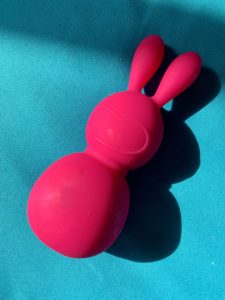
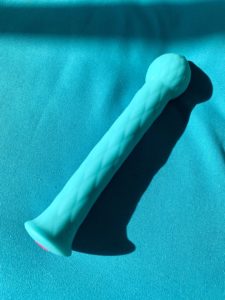
I requested two toys from their line: the insertable Diamond Wand and the clitorally-focused Bunny Massager. Let’s get into it, shall we?
It’s easier for me to talk about the Bunny Massager because my opinion on it is simple: I’m not a fan. I’d hoped I would like it because I’ve previously liked other two-pronged clitoral vibes, like the We-Vibe Gala and Jimmyjane Form 2. I like the way they wrap around the clitoral shaft rather than attacking the head of the clit like so many vibes do. It often makes them a better option for those of us with hypersensitive clits that protest when touched too directly.
This bunny’s flexible ears are optimally shaped and spaced for this type of stimulation: my clit fits comfortably between them, and their soft oval shape lets them stimulate both my clitoral shaft and the internal portions of my clit with aplomb. Or rather, it would, if this toy’s vibrations were rumbly at all.
But alas – this toy is buzzy as fuck. There’s very little gradation in intensity between the 7 different speeds and patterns, so it starts too strong and just gets stronger. The high-pitched, surface-level vibrations just annoy my clit and make it feel battered by sensation. I could get off with this toy, maybe, but it would take forever and wouldn’t even feel good, so what’s the point?
The Diamond Wand, by comparison, is a dream. Its bigger motor is rumblier, though still probably too buzzy to satisfy devotees of the Tango or Mona. Despite its name, it’s not a wand in the traditional sense – it isn’t Hitachi-sized or designed solely for external stimulation – but it does serve up power the likes of which I’d expect from a wand. My friend JoEllen even liked it, and she usually favors big-ass wands like the Doxy.
The Diamond Wand’s shape makes it useable either clitorally or vaginally (but not anally – no flared base), and I’ve enjoyed it both ways. Inserted, it lacks the curve it would need to please my G-spot or A-spot, but its vibrations are powerful enough that it still quakes those zones indirectly. Used externally, its pointed tip, bulbous head, and textured shaft all seem to conduct the vibrations equally well, so you can position it however feels best for you. It’s also got a fair amount of flexibility to it, which, as JoEllen points out, allows it to “wrap” around the body a bit, so you can stimulate, for example, the labia and vaginal opening at the same time.
Like the Bunny Massager, the Diamond Wand has very little variation in intensity between its many speeds and patterns – but it’s less of an issue with this toy because I can move it to different spots of my vulva more easily if I want to mitigate the sensation. The most annoying thing about this vibe, which is true of the Bunny Massager too, is that you have to scroll through all the modes using only one button. A single-button system is fine if your toy only has a few modes, but the Diamond Wand has twenty-one. Yes, that’s right: if you get overstimulated on a high vibration setting and want to get back to a lower one, you have to click a button about twenty times. I am someone for whom moment-to-moment shifts in vibration strength can make or break an orgasm, so this is a huge drawback for me and is the main thing keeping this toy from achieving top-drawer status.
So what’s my final verdict? At $74.99, the Bunny Massager is way pricier than a cheap watch-battery bullet and will numb you out just as badly, so you might as well not bother. FemmeFunn’s bestselling Ultra Bullet is much rumblier and only costs $69.99 (nice). The Diamond Wand is $89.99, and I think that’s a fair price for this versatile, vivacious vibrator – though if you tend to decrease and increase vibration speed a lot when you use vibes, you’d be better off with something that has more than one button, like the Lelo Gigi 2 or Jimmyjane Iconic Wand.
While these toys haven’t made their way into my top drawer, they do look nice on my nightstand. I’m pretty sure no object has ever distilled my gender identity quite like FemmeFunn’s bright pink and turquoise vibrators.
Thanks so much to FemmeFunn for sending me these products to try! This review was sponsored. As always, all writing and opinions are my own.
Friends, this blog is SEVEN YEARS OLD today, and that feels absolutely wild to me. I was not always the delightfully busy, proverbial-phone-ringing-off-the-hook sex writer you see before you. Even people who seem like they sorta “have their lives together” had to start somewhere. I’ve read my hero Alexandra Franzen’s post “A chronology of my life as a professional writer” many times seeking answers and comfort, at times when it seemed like the writer thing just wasn’t going to work out… and so it feels like good scribe karma for me to explain, in a similar fashion, how I got to where I am now. As the youths are saying on Twitter nowadays: Buckle up.
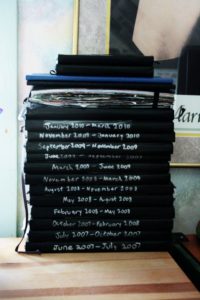
2000 or thereabouts. I am a voracious bookworm, a semi-closeted nerd, a precocious weirdo at age 8. I spend hours chronicling my days in my Little Mermaid journal – and, secretly, penning erotica in my ornate Anne of Green Gables journal. Later, I will rip all the filthiest pages out in a bout of shame – but for now, the anatomically ill-informed trysts on those pages fill me with joy.
2006. I’m knee-deep in a musical theatre obsession, and believe, genuinely believe, I will be a Broadway performer someday. I devour all the books I can find on the subject – Audition, Making It on Broadway– and go to voice lessons and memorize monologues and make lists of my dream roles. One night, at a family party, during a discussion of all the kids’ various ambitions, my wise older cousin turns to me and says, “I think Kate will grow up to be a writer.” I laugh, because she’s wrong: clearly I’m going to be singing and dancing on Manhattan stages instead. Right?
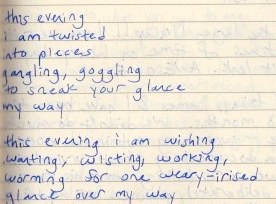
2009. My (hot, British) English teacher pulls me out of science class to tell me my recent essay for him was exemplary and that he wants to use it in future lessons. My glee cannot be quantified. That same year, I win first prize in a student poetry contest, and I get to read my extremely gay poem onstage in front of a bunch of literary types. They give me a $100 bookstore gift card which I promptly spend on a lot of Bukowski.
2010. I take a Writer’s Craft class where I get to explore various different forms, ranging from Shakespearian verse to sitcom scripts. Later, one of my favorite teachers lets me take a one-on-one literature/creative writing class with her, tailored to my tastes and goals as a reader and a writer. She assigns me twisted fairytales, feminist essays, Angels in America. I write a play about romance, non-monogamy, and gender confusion, and they do a staged reading of it at my school’s Fringe Festival. I cry a lot in the aftermath, having heard my words in other people’s voices and been utterly lit up by it.
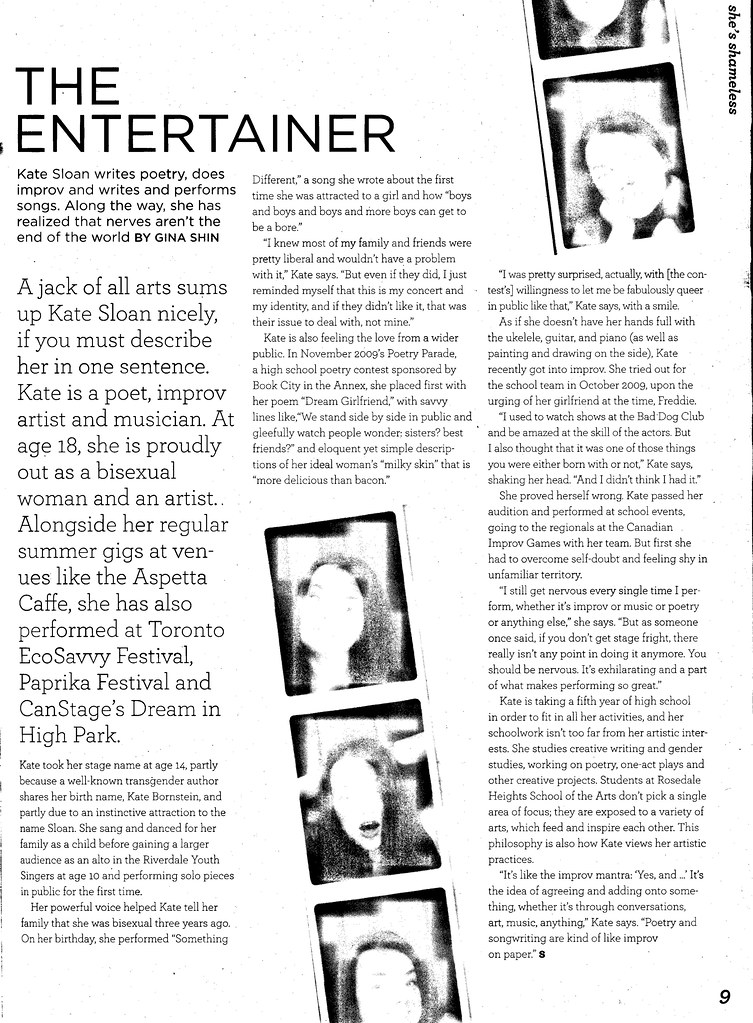
2011. That same teacher recommends me to Shameless magazine as someone they should profile, and they do. It’s my first appearance in a magazine, albeit not a byline. The article captures my frazzled artistic life at the time: improv, painting, poetry. I’m still not settled on the “writer” identity, though I’m getting there.
Early 2012. I take a year off between high school and university, trying to figure out what the hell I want to study. One night, at my commencement, I’m mesmerized by the ASL interpreter onstage, and ponder whether I should go to school for ASL translation, something I’ve often idly thought I might enjoy. But then I realize it would probably be best if I studied something I already know I enjoy and am good at… like… writing. Something clicks. I race home that night and write in my notebook: “MAYBE I SHOULD GO TO JOURNALISM SCHOOL??”
March 2012. I apply to a shitty retail job at a sex shop. I do some Googling about sex toys to make sure I know my shit incase they call me in for an interview – but they don’t. However, in the process, I discover sex toy reviewers like Epiphora and Lilly, and I think, “Hey, I could do that.” I start a Tumblr-hosted blog. I name it Girly Juice. “Could be a fun summer project,” I note in my journal.
April 2012. The owner of a website called Sex Toys Canada reaches out to inquire about a partnership. I’m still new to the sex toy reviewing game, so I eagerly negotiate a deal whereby I will get $140 in store credit each month in exchange for writing 2 articles for the company blog. I acquire my first “free” toys, including an Eroscillator, and feel like a business genius. (Over a year later, I will renegotiate and get them to start paying me in actual money. Only $50 an article, but still.)
September 2012. I start classes at Ryerson University’s School of Journalism. It’s hard – especially “streeters,” where you have to interview random people on the street for a story, the bane of my socially anxious existence – but I feel invigorated and inspired by the smart writers who surround me and the wonderful work I get to read every day.
2013. I get an unpaid internship writing and editing articles for a dating newsletter aimed at middle-aged women. A recommendation letter from my supervisor at the end of the summer says that I have “excellent written and verbal communication skills, [am] extremely organized, can work independently, and [am] able to effectively multi-task to ensure that all projects are completed in a timely manner.” I try to parlay the internship into a paying position, but they don’t go for it – probably, in retrospect, because their economic model hinged on not needing to pay people like me.
2014. I’m invited to write some pieces for on-campus publications, the Eyeopener and the Ryerson Folio; far from limiting me, my sex “beat” just makes people think of me first when they need a sex story written. A J-school colleague of mine interviews me for a story she’s writing for Herizons magazine about labiaplasty. In seeking out the mag so I can read the story, I realize they’d be a great fit for lots of the stuff I like to write about. I pitch the editor a feature story about toxic sex toys, and she loves it. My friends and family rejoice supportively about my magazine debut, a heavily-reported story called “The Greening of Sex Toys.”
2015. I attend a sex bloggers’ retreat called #DildoHoliday, and teach a workshop on generating content ideas and staying on task, since I am, according to one of the retreat organizers, “the queen of productivity.” Throughout the year, I’m interviewed for the University of Toronto campus newspaper, the Offleash podcast, Kinkly’s Sex Blogger of the Month feature, and Sex City Radio. Everyone seems suddenly interested in this weird sex writer girl.
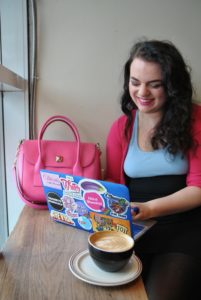
Early 2016. I do my final-semester internship at the Plaid Zebra, where they let me write about sexual health, social psychology, and dick tuxedos. It gives me a taste of what it might be like to be a full-time staffer at a publication – and I discover that I think I’d rather freelance. I take a gig writing monthly articles for a sex toy shop’s blog, to supplement my growing income from blogging and journalism.
July 2016. I pitch an essay to the Establishment about dating faux-feminist men. They accept it, I write it, and… it goes viral. For several days, I basically cower in my bed, overwhelmed by the onslaught of tweets and trolls and threats. I wonder, many times, if the sex-writer life is really for me. I conclude that it is.
Early 2017. I work a sex toy retail job, briefly, before they fire me for no real reason. At first I panic about how I’m going to make ends meet, but then somehow the sponsored post requests and freelance story assignments pour in at exactly the right moment. The sex and relationships editor of Glamour reaches out via DM to say she loves my blog and would welcome any story pitches from me. I write for her – and Teen Vogue, and the Establishment, and Daily Xtra. I dutifully update my portfolio every time a new piece goes up. The Daily Mail writes about what a slut I am, and I’m terrified it’ll incite the trolls again, but it doesn’t, not really.
June 2017. I start my new dayjob as a social media writer for a firm that works with adult-industry clients. It’s 10-15 hours of solitary, largely self-directed work per week. The steady work allows me to relax and not worry so much about whether my more creative work will be able to support me. I stop shopping for button-downs and pencil skirts in a gesture of supplication to some future office-job self; I accept that maybe I am just A Person Who Works From Home Now, and that therefore it’s okay for me to buy star-print leggings and sparkly T-shirts instead.
Early 2018. A Spanish newspaper calls me “the Canadian Bridget Jones.” At my boyfriend’s urging, I pitch a story to a dream publication of mine, Cosmo, and they say yes. When it goes up, my perfect brother tweets, “My sister is now a Cosmopolitan-featured writer!” and I don’t quite believe it until I see his words.
Late 2018. I win an award from the Association of LGBT Journalists. I get nominated for Best Blogger in NOW magazine’s Readers’ Choice Awards. I write big meaty reported pieces for The Walrus and an op-ed for Herizons. I sell several sponsored posts a month, and do odd jobs copywriting and ghostwriting for various sex shops, dating sites, porn sites, and adult content creators. I do my best to follow Alex Franzen’s advice: underpromise and overdeliver. Then I’m invited to teach a sex writing class at the Naked Heart Festival and it validates me, affirms me. This is really my career. Wow.
2019.Herizons offers me a column; I accept. I do more copywriting and ghostwriting and social media writing. I pitch, and write, and network, and brainstorm. The sex writer life, to my delight, goes on.
Big takeaways, if I had to choose a few:
Even if your heart is in a particular genre of writing, consider branching out into other areas. I wouldn’t be able to do my fun, creative blogging and essay-writing if it wasn’t supported at least some of the time by social media work, promotional copywriting, etc. – not to mention, going outside your comfort zone helps stretch your creative muscles.
Getting paid for your writing – particularly blogging – can be a slow, long haul. Don’t expect anything to happen overnight. It is more than okay to supplement your income with a dayjob along the way, and even once you become more established. We all gotta eat.
Trolls, h8erz, and rejection letters from editors can all feel much bigger and more important than compliments, fan letters, accolades, and achievements – but they’re not. Do your best to let setbacks fade into your history; they don’t have to define you, as a writer or as a person.
Thanks for being here! It’s been a pleasure spending seven years with you – or however long you’ve been around. ❤️
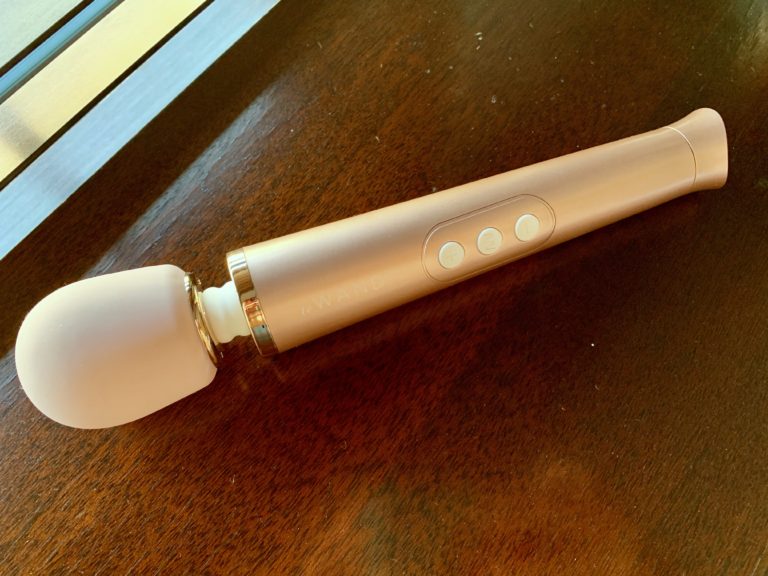
When I emailed Pleasure Delights a list of toys I’d like to review, I secretly hoped they’d send me the Le Wand Petite. I’m always looking for a good mini-wand these days, now that I’m in a long-distance relationship and have a lot of sex in far-flung hotels. I don’t always want to schlep my Magic Wand Rechargeable across national borders or through TSA – so I’ve been looking for a smaller wand whose size doesn’t preclude it from serving up strong vibrations.
I wasn’t thrilled with the only other Le Wand product I’ve tried, their regular-size wand, because it was 1) too loud, 2) too buzzy, and 3) too obviously a complete Magic Wand ripoff, down to the identical button shape and same charger. But my friend JoEllen loves her Le Wands and I trust her taste, so I decided to give this brand another shot.
It helps that the Le Wand Petite is very, very pretty. Pleasure Delights sent me the rose gold one, and it gives me the same femme joy I reluctantly suppressed when I opted against getting a rose gold iPhone. Le Wand founder Alicia Sinclair set out to make wands more elegant and feminine-looking than the bulky, androgynous Magic Wand and its ilk, and I think she achieved that goal. Of course, that means that masc-of-center folks might not resonate with the Le Wand Petite’s aesthetic, especially since the only other color option is a luminous purple.
So what’s the deal with this rechargeable dynamo? It’s about two-thirds the length and half the width of a standard wand vibe, so if you want something small enough to throw in your carry-on, this could well be it. It even has a travel lock function, since they’re obviously trying to work the “jetsetter-approved” angle (I feel directly pandered to and it’s great). It’s very light for a wand, at only 0.47 lbs (versus the 1.3-lb MWR), which adds to its travel-friendliness and also makes it a more workable solution for people with strength/mobility issues (my chronically achy hands thank you, Le Wand). It even comes in its own little zip-up case, which is big enough to fit the wand, its charging cable, and another toy or two (I’ve been stashing my Fucking Sculptures Pussywillow in there when I stay away from home overnight). If you want a wand to accompany you on adventures, this is one of the best I’ve found for that purpose, along with the mechanically flawed Doxy #3 and the awkwardly shaped Jimmyjane Iconic Wand.
One of the major selling points of the whole Le Wand line is the flexibility of each toy’s neck, but I’ve always thought this was kind of an overrated feature. If someone is pressing a vibe firmly enough against their body to make the toy’s neck bend, probably that person likes pressure – and a flexible neck just lessens the toy’s ability to provide that pressure. But if you’re into that, for whatever reason, this toy’s got it.
The body-safe silicone head is smooth to the touch, but unfortunately it can’t be screwed off for cleaning, the way the top of the Doxy #3 can. The Le Wand Petite isn’t waterproof, so you have to be careful when you clean it – which I need to do often because this particular silicone formulation is an absolute lint magnet.
There are a lot of features of this wand that I enjoy, but ay, here’s the rub… While the toy’s marketing copy repeatedly asserts that its many patterns and speeds are “rumbly,” rumbly it is not. Its rumbliest speed is its lowest one, which can make me come on a very sensitive day, but it becomes progressively buzzier as you crank up the power. Due to the numbing effects of buzzy vibrations, sometimes turning up the Le Wand can make it feel like I’m actually turning it down, as the sensation slowly drains out of my genitals. This wand accompanied me on a sexy weekend in New York, and several times, I found myself grabbing the rumblier Tango mid-session instead, because… I can’t get off if I can’t feel my bits, y’know?
Granted, my threshold for acceptably rumbly vibrations is pretty high, seeing as my fave vibes are the MWR, Tango, and Eroscillator, all thrumming powerhouses. I think the average person would be plenty happy with the Le Wand Petite if it otherwise fit their specifications. But if you’ve ever gotten annoyed with a vibrator for making you numb, it’s likely you need something rumblier than this toy. I would suggest the aforementioned Doxy #3 and Iconic Wand, as well as the reportedly rumbly Inspire wand. You deserve orgasms you can actually feel.
Oh, and if you’re curious about the noise level – since that was one of my major complaints about the original Le Wand – this one is definitely audible from across a room, but not nearly as loud as its predecessor, and also quieter than the two highest settings on the MWR. So I’ve got no beef with it on that front.
I’m sure I’ll still reach for the Le Wand Petite from time to time; it’s stronger than most vibrators of its size, and I like how it looks and feels in my hand. But it’s not the ideal travel companion I hoped it’d be; when I’m out of my element especially, I want something reliably rumbly, not a toy I have to eke a tricky orgasm out of. I hope Le Wand will keep listening to customer feedback and making better products, because if this toy’s motor got a makeover, I’d be in love!
Thanks to Pleasure Delights for sending me this toy to review! This post was sponsored, and as always, all writing and opinions are my own.
Y’all know how much I love improv, and you definitely know how much I love dating and hooking up – so, needless to say, I got excited when my favorite improv spot, the Bad Dog Theatre, launched a show a few years ago called Hookup.
The premise is simple: the cast says, “Raise your hand if you’re single!” and then picks two random people to talk to. They ask these volunteers about their lives, jobs, personalities, friends, hobbies, and what they’re looking for in a romantic partner. And then – with occasional input from these singled-out singles – the cast does an improvised one-act play about what might happen if those two people met and hooked up.
The show sells out week after week, and for good reason: it’s one of the best things on any Toronto stage anywhere right now. The cast – which includes, among others, the show’s director Paul Bates and his wife Christy Bruce – is incredibly hilarious, whip-smart, and always compassionate. The stories that unfold are wacky, unpredictable, and full of heart.
I reached out to director and cast member Paul Bates to interview him about the sexual and romantic aspects of the show, how he deals with sex and consent on stage, and why the show’s become such a runaway hit. Hope you enjoy reading our chat!
Photo via Paul Bates
Kate Sloan: Thank you for agreeing to chat with me! I know it’s a little bit weird for me to be like, “I have this sex blog; I want to talk to you about your improv show!” but…
Paul Bates: Yeah! I think that’s great. I think it’s fun. When we’re backstage, we’re often talking about the improv aspect of the show, but we’re rarely thinking about the sex point of view – other than the imperative that people have to have it in the show, you know?
KS: Yeah! Well, I think about and reference improv all the time in the work that I do because my improv training has been so helpful to me in things like conversational skills, but also dirty talk, roleplay, that kind of thing. So I always tell people they should take an improv class.
PB: Oh, great!
KS: Okay, so – I love the show so much. I’ve gone to see it like 6 or 7 times. It’s maybe my favorite improv show I’ve ever seen in like a decade of going to shows.
PB: Oh, wow. Thank you!
KS: The cast is incredible, it’s so well-structured, it’s consistently really really funny. Can you tell me a little about the conception of the show and where the idea came from?
PB: Yeah. Julie Dumais Osborne, the woman who runs the Bad Dog, invited me to come pitch her some ideas. I tried to think of a few, but this one was easily the most compelling one. It just felt like the easiest, simplest and cleanest idea. I don’t know if you know the game “Day in the Life,” but it’s a game that goes over really well in most improv shows, where you meet somebody in the audience, you talk to them, you ask them about their day and their lives and “What is an average day for you? What do you have for breakfast? Where do you go to work? How do you get there?” So I thought about that, and I was like, “How can I apply that to something a little more universal? Is there a way to talk to more than one person about their lives?” At first, hooking up just seemed like – well, that’s something everybody does! It felt like a very accessible and easy game to play. And after that, the question was, how does it fit together? The one thing that I didn’t want to do, and that nobody in the cast wanted to do, was make it a romantic comedy – a thing where everybody winds up happy at the end. So that was our big difference: this isn’t romantic at all! It’s gonna be a hookup, and what happens after that. There’s no imperative that anybody has to stay together. It’s probably, more often than not, better if they just go their separate ways. So, not trying to be cynical, but also not trying to be formulaically romantic about it.
KS: Yeah. I love that about it. It kind of takes the pressure off.
PB: Yeah, totally. We love the casualness of it, and when we’re trying to steer the show the way we want it to go, we’re always trying to push for however many casual hookups we can produce in the same show – and then, what will each one lead to?
KS: Yeah. I always love the romances between the secondary characters. They’re so much wackier, usually.
PB: Yeah, that’s my favorite, all the way. It’s hard to find somebody who wants to play the main characters. Everybody always wants to play the secondary characters. They’re the most fun.
KS: Oh, really! That’s interesting. Whenever I see the show, I always wonder if people ever get offended by how they’re portrayed in the show, ‘cause they’re kind of being caricatured.
PB: Yeah. It’s a fine line, and we always try to make jokes involving them and have fun with their lives, while still celebrating them and not just having fun at their expense. There’s only been a couple of times where we did do that, where we did have fun at the expense of people that we talked to, but each time, they kind of deserved it, and the audience was on our side. [laughing] One time, there was some guy who was just too self-assured, who kept talking about all the media projects he has going, and he was kind of bragging and boasting, and it was just too easy. But the audience was kind of like, “We get it. We get this dude’s vibe.” And then there was another guy… He put his hand up, and we talked to him, and we were like, “Who are you here with? How do you guys know each other?” and he was like, “Oh, we’re on a date.” Or, “We’re dating.”
KS: Yikes!
PB: So, you know how we say, “What’s a word to describe this person?” When we asked his date to describe him in one word, she said “douche.”
KS: Oh my god!
PB: So, already, I was like, oh man, has this date completely gone off the rails? But we basically played him as a complete douche, always dating someone all the way through. We gave a lot of power to the character of his girlfriend, and the audience loved it. I don’t know if he loved it. But by and large, I don’t know if we’ve ever really offended anyone. The closest may have been not too long ago: we did a show where there was someone involved in the world of finance who we were talking to. I can’t remember the exact job she had, but it was in the world of venture capitalism, where you’re buying companies, restructuring them, and selling them – which sounds to me like you’re laying people off. And so, the more we went into the show, the more we were critical of her line of work. We were making it sound like she’s destroying people’s lives. So it’s a pretty actor-y take on somebody’s Bay Street job. That might’ve been the closest, but we really try to avoid doing that. There was one guy who was on a first date that we wound up talking to once, and he was like, “Ahh, I’m on a first date,” but I totally got where he was coming from, because you can’t just say, “Oh, I’m not single” if you’re on a first date…
KS: Right.
PB: So it was a bit of a no-win scenario for him.
KS: Just don’t volunteer!
PB: Yeah, he shouldn’t have volunteered. But, you know, we also don’t exactly say what they’re volunteering for when we get them to put their hands up, so I totally understood the trap he was in.
KS: Yeah, true.
PB: But everybody played into it really well, and the audience was on his side, and he had a really good time. The strangest thing about it is, like, we might go off the rails in our caricature of some of these people, and then when we meet them afterwards at the bar, they’ll be like, “Oh my god, that is exactly my life!” and we’re like, “Really?!” Maybe it’s a case of people seeing what they want to see, but they usually, 99% of the time, walk out having had a really good time.
KS: That’s great. I guess maybe you wouldn’t know this, but, to your knowledge, have any of the couples ever actually hooked up?
PB: There was once where I’m pretty sure… Like, they definitely talked for a long time at the bar, and I think maybe they left at the same time. Usually, we’re watching. Especially Natalie [Metcalfe]. Natalie loves it. She stays and keeps an eye out. And if ever they’re talking, everybody’s just like, “Oh, what’s gonna happen!” We really want it to happen. We want to be responsible! But more often than not, there’s chatting done and then they kind of go their own ways. I don’t know if numbers have ever been exchanged. There’s often been cases where one person is more into it than the other, which is heartbreaking for me.
KS: Yeah. I feel like, someday, someone’s gonna come to your show and be like, “We met here and we’re getting married.” It’d be the best marriage toast story.
PB: I hope so. I’ve been in that situation before, where people have come up to me and said, “Hey, man, my first date was to your improv show,” and that always makes me feel good when the relationship works out.
KS: I’m really curious about how you to decide to handle sex during the show. Usually, it seems like sex things start and then you edit and go to the next scene. I did see one where Kris Siddiqi was, like, rubbing his head on someone’s ass, and this was his signature sex move, and that was one of the only times I’ve seen actual representation of sex in some form on stage. But how do you handle sex in the show?
PB: That’s a good question. I saw the pictures of Kris with his head in a butt – I wasn’t there that night – and as soon as I saw the pictures, I was like, “I wish I was there.” But sex, yeah… It’s interesting. Sex usually gets edited away and implied, for what feels like a couple of reasons. One is that sometimes the sex is gonna be funny – like with that example you cited, and there’ve been other ones as well – and then sometimes it feels, not gratuitous, but if we’re just simulating sex acts on stage, are we doing good comedy? We have to be like, “What’s the best joke here?” and I think we’re more likely to engage and act it out if we know that there’s gonna be a comedic payoff to the sex scene. Definitely there’s been other cases where something really acrobatic got going, where we were up against a wall or something… I remember pinning Christy [Bruce] against a wall and simulating sex with her for some reason, but I can’t remember why!
KS:[laughing]
PB: And then, the other reason is – everybody’s pretty good about physicality in the show, but if you’ve done improv, you probably know that physicality is one of the first things to go out the window. People are generally averse to touching a lot in an improv scene. It’s a tough habit to break, and it’s a good habit to break, because physicality is so important in a scene. But then you also enter into the question of what’s safe for everybody, what’s acceptable. We’ve actually gotten in the habit backstage of checking in with everybody in terms of, “How safe does everyone feel? Is anyone injured? Does anyone not want to be touched tonight?” It’s probably something that should happen before most improv shows. It’s a habit I’m happy everyone’s gotten into. But yeah, I think for the most part, to answer your question, it’s a narrative thing. I think it makes more sense to not feel like we owe a sex scene, but if there’s potential for a sex scene, then people are usually happy to jump in.
KS: I think that that’s really great that you have conversations about consent. I feel like I’m hearing more about that in the comedy community over the past few years, which is really nice.
PB: I know. It’s a little shocking that it took this long! But yeah, especially with our show, I can’t remember who first mentioned it, but oh my god, yes. There’s a lot of comfort to deal with, especially when you’ve got somebody coming in who doesn’t do the show every week. It would be weird to have a guest come in and be brought into this world of intense physicality. So they have to be given a heads-up beforehand.
KS: Yeah. So, the show is constantly sold out. I’ve been to the Bad Dog a lot; I think those are definitely the most crowded times I’ve ever seen it. I’m wondering: is it easier to sell tickets to shows that are about love and sex? What do you think it is about the show or the format that makes people go so crazy over it?
PB: Yeah. It is a little bit of a mystery. This is easily the most popular thing I’ve ever come up with. I think there’s a few really clear and good reasons, and one is, the content is universal. You could take it to every corner of the world and the themes still make sense. The title is clear; you get what the show’s gonna be about, it’s about hooking up. And then on top of that, the game that gets played, in terms of what improv is going on, is also very clear, very easy to understand and explain to your friends. “They talk to two single people in the audience and then they act out their lives and they show a story of what it would be like if those two people hooked up.” It was smartly marketed around Valentine’s Day when it first came out – like, “the Valentine’s show for singles” – so it got marketed towards a lot of singles, and I think the fact that it has a very clear idea, a very accessible, universal idea, made word-of-mouth very easy. I think word-of-mouth is basically what is making the show sell out. People see it and they bring back their friends and want to share it with their friends, and then that multiplies and multiplies. And then people come up and they want to be picked. Like, “Oh, it’s my friend’s birthday, pleeease pick my friend!” People literally showed up with Price is Right-style signs once, a couple years ago, with reasons they should be picked. I think almost all the improv at the Bad Dog is really really good; I think the difference is that this show has a hook that is easy to relate to people who haven’t been there. It’s a marketable show – not by design. We just kind of made a show we thought would be fun. And obviously, also, its success depends mostly on the fact that the cast is superb. It wouldn’t be there without the people in that cast.
KS: Yeah. I’ve brought so many people to see it. People get very excited about the concept, like you said.
PB: Oh, thank you! That’s great.
KS: So, you mentioned Christy, and – if this question is too personal, feel free not to answer, but – I’m just so curious what it’s like doing a show like this with your spouse.
PB: It’s very fun. Christy loves to play over-the-top characters. She likes to get into the seducing scenes, and she likes to get physical. She likes to get melodramatic. So it’s always fun to play with her. I think she has license to go over-the-top and go a little farther in this show, which is great. It’s fun to be able to do a scene with your wife where you don’t have to worry about wondering what the other’s boundaries are, I suppose. We kind of know. We’re able to have an intimacy that might be a bit much to ask of a partner on stage otherwise. That said, I’ve also seen her be just as intimate with other guys on stage, and that’s also kind of funny and fun to watch. So yeah, I think it’s really cool to have her in the show, and it really helps that she gets the show so well, and that she’s been doing it for so long, and that she has an energy that really works in the show. It’s nice. It’s become something that we enjoy doing together. Other couples, I guess, do pottery or whatever, and we get to go do this improv show. It becomes kind of a couples’ recreational time, in addition to a professional thing we’re both performing in. There’s no uneasiness about it or anything.
KS: She is just unbelievably funny.
PB: Yeah. She’s very funny. She’s great. She’s wonderful.
KS: This is a really big, broad question, but – have you learned anything about human relationships or sex or romance from doing this show?
PB: That’s a really good question. Yeah, a little bit. I’m not really somebody who did a lot of hookups or one-night stands or whatever, and through doing this show, I’ve become more aware of the wide spectrum of tastes and levels of comfort and approaches that everybody has, and I think that’s pretty cool. You really do talk to a bunch of different people, and you get a wide variety of styles and personalities and views on the subject from meeting people, which I think is really cool. It is almost more about the actual meeting people and communicating and negotiating that portion of it than it is about the sex in the show, now that I’m thinking about it. But it’s funny that you reached out about this interview at the time that you did, because at exactly the same time, I was trying to seek out a lot of sex-positive blogs, just to educate myself more on that term, because it was kind of new to me. I’ve started thinking about Hookup in terms of what it means to be a sex-positive show. I think it makes sense that it is one. I suppose something I’ve learned is to look at this show in the sense that, everything is celebrated, nothing is weird, and the show is about what everybody’s into. You have to do that, because you’re basing it on the people in the audience. They’re the heroes, and you’re not in a position to judge what they do. I like a show that’s super positive, super celebratory, and okay with everything. Part of that, also, was that right from the beginning, we were like, “We wanna make this show gay, we wanna make it straight, we wanna make it bi.” And now I’m like, gee, what else can we do? Can we make it polyamorous? Can we have a polyamory show?
KS: That’s so interesting, ‘cause me and my partner are polyamorous, and every time we go, I always kind of wish we could volunteer, because we’re available to date people, we’re just not single. It’s an interesting situation to be in.
PB: I was thinking about it after we agreed to talk. We’ve had a show specifically for a queer audience, a queer Hookup. A show specifically for a full polyamory audience would be a really interesting show, I think. I’m gonna float it around. But yeah, that’s what the perspective of the show has opened my eyes to.
KS: That’s really interesting and well-put. I hadn’t thought about it before, but I think you’re right, that is part of the reason I love the show: it isn’t sex-negative. I never feel like people are being shamed. It’s really nice.
PB: At the same time, it’s totally goofy – like Kris’s head in somebody’s butt. That might be how somebody has sex, or it might not. We are ready to do whatever on stage, and make it cool and normal and funny. I’m on board with that.
You can (and should) check out Hookup at the Bad Dog Theatre every Saturday night at 9:30 p.m. for the foreseeable future! Thanks so much to Paul for his candor and for creating a show I love so much. This interview was lightly edited for clarity and length.

 It’s easier for me to talk about the
  The
The 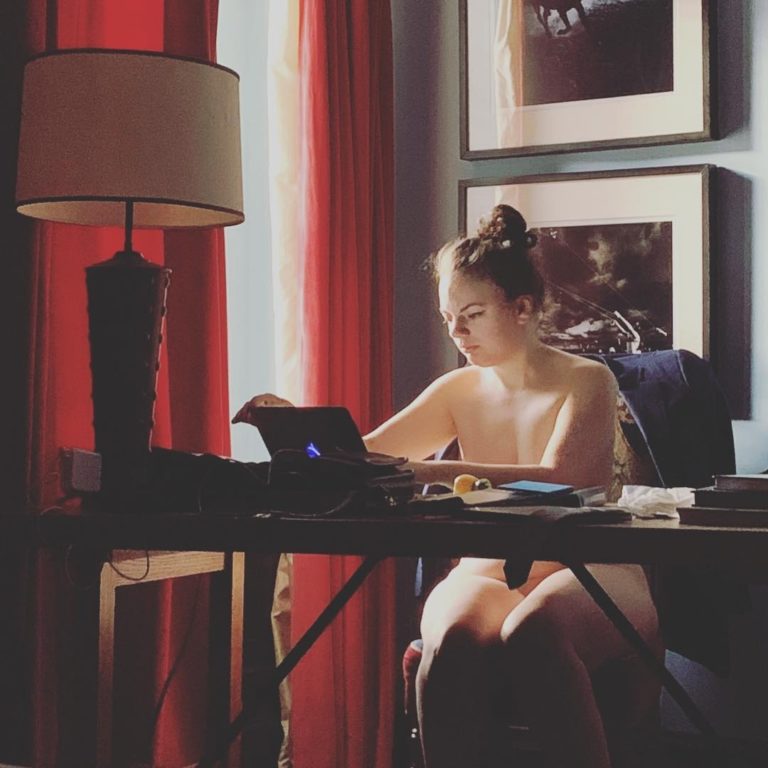
 2009. My (hot, British) English teacher pulls me out of science class to tell me my recent essay for him was exemplary and that he wants to use it in future lessons. My glee cannot be quantified. That same year, I win first prize in a student poetry contest, and I get to read my
  March 2012. I apply to a shitty retail job at a sex shop. I do some Googling about sex toys to make sure I know my shit incase they call me in for an interview – but they don’t. However, in the process, I discover sex toy reviewers like
  Early 2016. I do my final-semester internship at the Plaid Zebra, where they let me write about sexual health, social psychology, and
  Early 2018. A Spanish newspaper calls me “the Canadian Bridget Jones.” At my boyfriend’s urging, I pitch a story to a dream publication of mine, Cosmo, and they say yes. When it goes up, my perfect brother